
Southeast Asian leaders define the next chapter of public sector innovation
The closing panel at the recent GovInsider’s Festival of Innovation 2026 explored how the future is about shifting paradigms from control to trust, from pilots to sustainability, and from top-down approaches to collaboration.
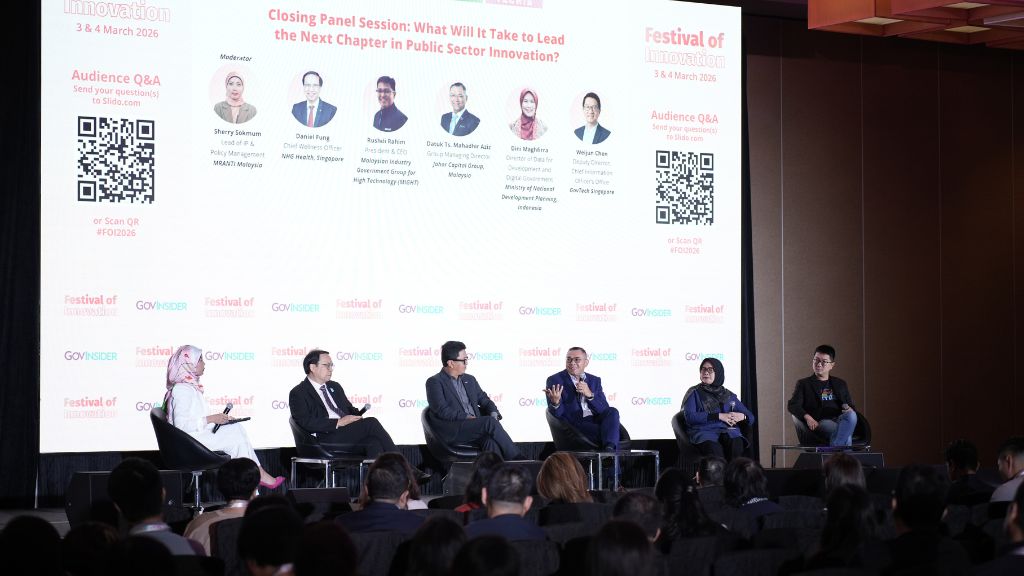
In a recent panel about the future of public sector innovation, Southeast Asian leaders underscored the importance of participatory, collaborative, and citizen-centred approaches. Image: GovInsider
Conversations around public sector innovation often default to technology adoption and policy frameworks, which often lead to fragmented and unsustainable initiatives.
In the closing panel session on the first day of GovInsider’s Festival of Innovation (FOI) 2026, held on March 3-4 in Singapore, speakers across Southeast Asia agreed that the next chapter of innovation must begin with a shift in how governments think and operate.
NHG Singapore’s Chief Wellness Officer, Daniel Fung, opened the discussion by highlighting the limitations of government dominance in planning and control in an increasingly complex and fast-changing world.
“I think the future is a little bit more about managing control, but more trust. Trust people to develop things that are good for the public,” he said.
According to Fung, this shift would reshape how governments engage with citizens, collaborate with the private sector, and design public services.
He also stressed the need for governments to rethink the idea of delivering “programmes for people” into co-creating “systems that are person-centred” through strategic partnerships.
Making public sector innovation sustainable
Moderated by Malaysian Research Accelerator for Technology and Innovation (MRANTI)’s IP & Policy Management Lead, Sherry Sokmum, the discussion turned to how innovation could go beyond addressing immediate needs and become sustainable.
Malaysian Industry Government Group for High Technology (MIGHT)’s President & CEO, Rushdi Rahim, spoke about finding the right balance between addressing today’s needs and planning for the future.
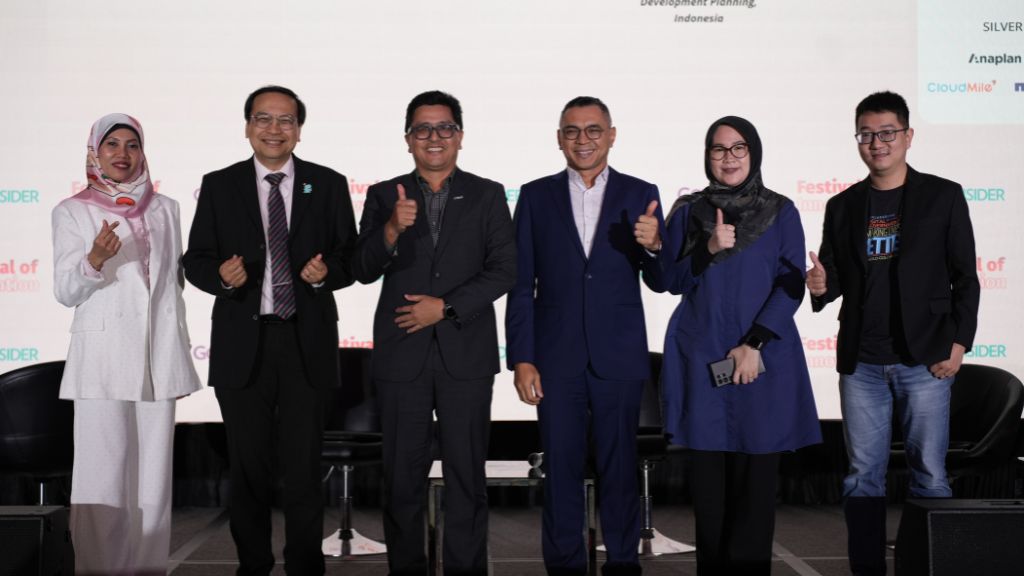
He noted that 90 per cent of the public sector still focused on addressing immediate challenges rather than long-term planning.
“Taking the next chapter in public sector innovation is finding the people who could find the right balance; managing today’s crisis but also strategically think about tomorrow as well,” he said.
GovTech Singapore’s Deputy Director (CIO Office), Weijun Chen, added that governments are strong at launching pilots but often struggle to sustain them.
Chen outlined three Ps (problem, policy, and people) to ensure innovation is sustainable.
First, governments must ensure that the problems they address were meaningful and sufficiently ambitious.
“Many of our pilots get stuck because sometimes we don’t have sufficiently ambitious goals. Even after we hit those objectives, people are ambivalent about whether that pilot should continue.”
Second, policies and structures must support continuity. Often, operational teams were not involved from the outset and feel that the project was simply handed over to them to continue.
Third, people were critical, as the teams that drive early-stage innovation were often highly entrepreneurial, but not always suited for long-term operations.
“Your day two teams are going to be quite different. How do you bring in the right people in order to sustain these initiatives?” noted Chen.
The challenge of collaboration and coherence
The panel highlighted that policies and pilots alone were insufficient without collaboration and coherence.
Indonesia’s Ministry of National Development Planning (Bappenas)’s Director of Data for Development and Digital Government, Dini Maghfirra, explained how the Indonesian government was using an artificial intelligence (AI) sandbox for its free nutritious meals programme for students and pregnant women to monitor food distribution and assess its impact on health.
Given the programme’s vast scale and the lack of standardised data exchange protocols, it was ultimately made possible through cross-ministerial collaboration.
“It was indeed difficult to get started. We brought all stakeholders to the same table and asked them to set aside their sectoral egos,” she said.
Johor Capital Group Malaysia's Group Managing Director, Mahadhir Aziz, added that once a country has made significant investments in digital infrastructure, AI, and new institutions, what is needed next is clear alignment.
“If resources, budgets, and direction are not aligned, they will merely become a collection of uncoordinated initiatives,” he said.
He also stressed the importance of aligning ambition with readiness. Without sufficient infrastructure, talent, and funding, innovation risks remain aspirational.
Inclusive innovation and the courage to take risks
As digital transformation accelerates, speakers emphasised that innovation must remain grounded in the principles of inclusion and the willingness to adapt and take risks.
Maghfirra highlighted the importance of a human-centred approach in every innovation, reminding that the purpose of digital transformation is to address citizens’ needs.
“If the digital transformation even makes life harder, so what point of digital transformation?”
Aziz underlined that innovation should focus on impact rather than individual or political interests.
“A lot can be achieved if nobody cares about who gets the credit.”
Chen and Rahim emphasised that governments need to serve all segments of society. Therefore, public service design must ensure accessibility, capability, and a sense of security for users.
By understanding who they serve, governments can better prepare for various scenarios, rather than merely responding after problems arise.
Fung pointed out that innovation inherently involves uncertainty and the potential for failure. He also noted that a risk-averse culture in the public sector can hinder learning.
“The likelihood is that you would not admit the mistake until it’s way too late.”
Click here to watch the full session.