
Sweden’s health data challenge is agreeing on what the data means, not connecting it
By Valeryn Liaw
As the European Health Data Space raises the bar for data exchange, Sweden is working to align its regional systems, standards and legal mandates, shares Annemieke Ålenius, Deputy Director General at Swedish eHealth Agency.
-1793933225934.jpg)
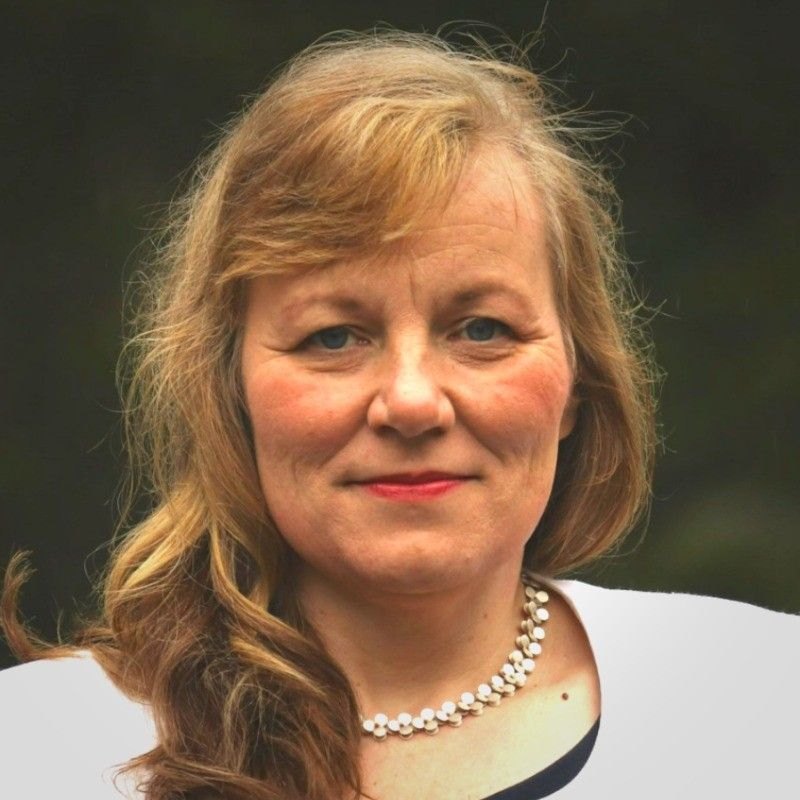
The real challenge isn’t getting systems to connect technically, but getting them to agree on what the data means, according to Annemieke Ålenius, the Deputy Director General at Swedish eHealth Agency, and AI Expert at AI Sweden. Image: Canva
Despite having a long history of healthcare digitalisation, Sweden’s 21 regions have been developing their own healthcare data systems.
With new mandates around the European Health Data Space (EHDS) in 2027, there is now an interoperability challenge.
The real challenge isn’t getting systems to connect technically, but getting them to agree on what the data means, according to Annemieke Ålenius, the Deputy Director General at Swedish eHealth Agency, and AI Expert at AI Sweden.
The EHDS is a harmonised framework governing the processing, access, exchange, and secondary use of electronic health data in the European Union (EU).
Ålenius’ agency is tasked to set up the national digital infrastructure and services, allowing healthcare professionals to access medication information across regions.
“As we were an early adopter of digital systems, we developed on our own terms and definitions, which made it more difficult to exchange data with each other,” she explains.
As the National Medication List covers prescribed medication across regions, Swedish eHealth Agency is also now working towards a more complete overview, including medicines administered in hospitals.
Currently, some of Sweden’s registers remain manual, requiring further digitalisation efforts before connecting with other systems.
“We have long registers, but that means very manual registration, and if you want to do this automatically or with electronic solutions, you need interoperability.”
Addressing this interoperability challenge is to make sure that "there won’t be any bad decisions made for the patient due to the lack of information,” she says.
Addressing data interoperability challenges
“Many regions in Sweden have recently procured or are in a procuring process for Electronic Health Records,” Ålenius shares.
While increased interoperability can reduce clinicians’ administrative tasks, the implementation requires efforts in aligning across organisations operating under different systems and developing users’ skills.
“This takes place at the same time as human resources are diminishing and demands for care are growing,” she adds.
The same system integration challenge is also shared among the Nordic countries.
The Nordic AI Health Map, a large-scale collaborative mapping across publicly funded healthcare in the Nordic region, has identified more than 800 healthcare AI initiatives, but only one-third have reached routine use.
Hence, countries are working on data integration and exchanging knowledge through channels such as the Nordic Council of Ministers’ eHealth Group.
Other challenges include cybersecurity issues in remote care and developing evidence-based treatments with AI.
“It's very much a matter of knowledge, leadership, and also this change management which is needed,” she adds. “Because it's not just taking an AI solution and putting it in the existing organisation.”
Coordinating the technical and legal foundations for health data-sharing remains a complex task.
While the Swedish eHealth Agency has set requirements for the National Medication List, it currently lacks the authority to make the healthcare standards mandatory across other parts of healthcare.
“At the moment, we do not have the legal authority to decide how the data sets should be defined,” Ålenius highlights.
The agency encourages healthcare organisations to use standards such as HL7 for exchanging health information and SNOMED CT for standardising clinical terminology.
However, adoption of these standards remains voluntary across much of the healthcare system.
Hence, the eHealth Agency is now preparing for the EHDS to establish common requirements for accessing and sharing health data.
Preparing for the next phase of digital healthcare
One part of the work is Sweden National Services for Access to Swedish Health (SENASH), an EU-funded project aimed at preparing Sweden for the secondary use of health data for purposes such as research and innovation.
Under the project, eHealth Agency works with the National Board of Health and Welfare, and other agencies to map across health data and set up a national metadata catalogue, ensuring a more accessible and understandable datasets for healthcare professionals.
“One country exchanges the experiences with the other countries while learning from each other,” Ålenius says.
Through SENASH, all organisations receiving grants are connected through a Community of Practice.
“Within this community, all recipients of the grants shared experiences with each other, such as how to handle the application processes in getting access to data, or issues around metadata, secure processing environments where the data could be analysed.”
Building on the EHDS initiative to improve access and use of health data, the EHDS Regulation establishes the legal requirements for implementing this framework.
Under the regulation, Sweden is preparing to establish Digital Health Authority, a function to implement and oversee rules on the use of health data.
The Swedish eHealth Agency has been tasked in assessing the legal and organisational requirements for a potential coordinating role, while other agencies like Swedish Medical Products Agency and the Health and Social Care Inspectorate are preparing to oversee compliance in their respective areas.
Also as Sweden explores the wider use of AI, the underlying data infrastructure will determine how easily existing health data can be turned into useful solutions, she adds.