
Syifa Ulhadira, Legal Analyst, Ministry of Health, Indonesia
Meet the young public sector officials in the inaugural Young & Official Report 2026.
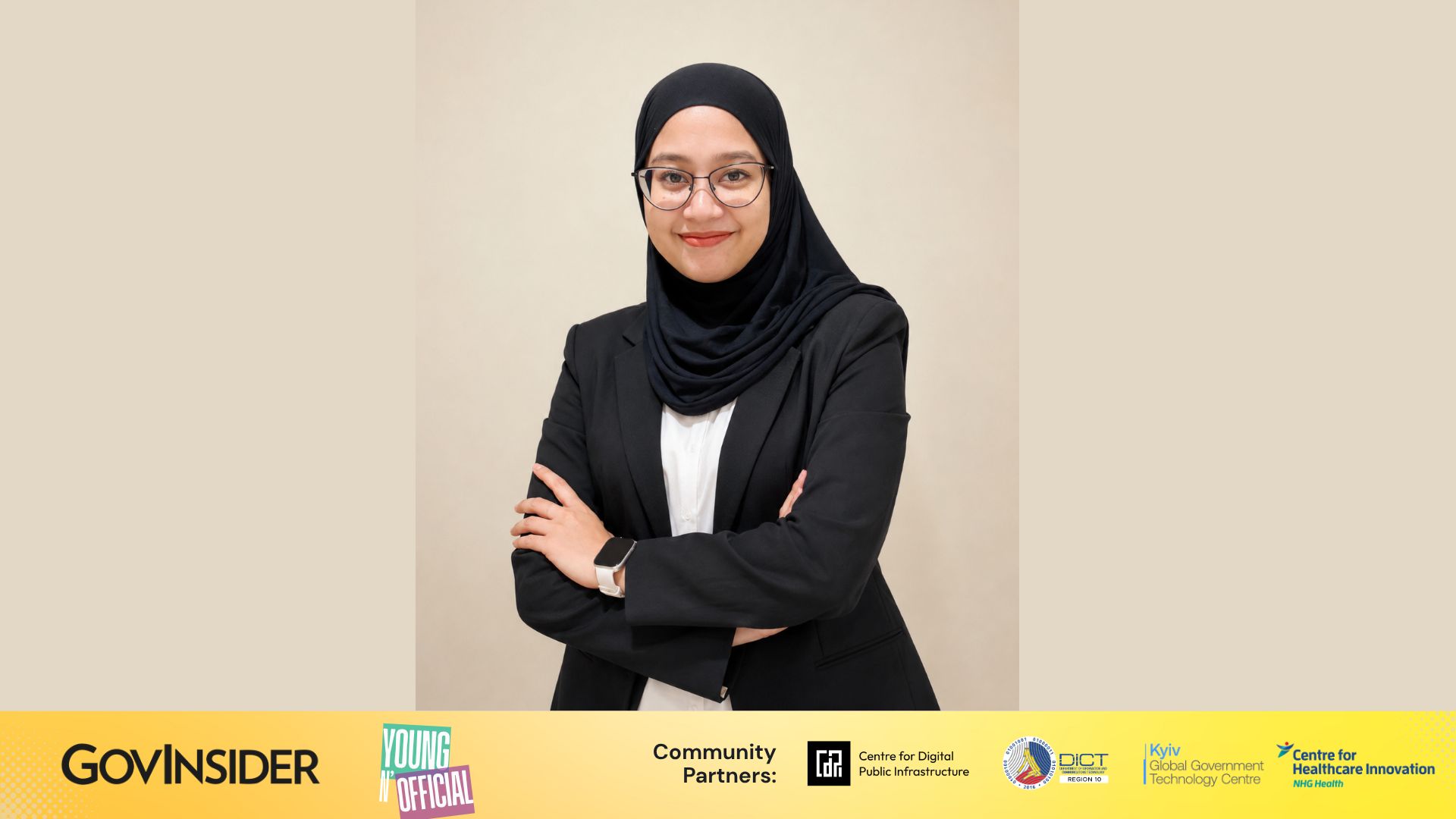
Syifa Ulhadira, Legal Analyst, Ministry of Health, Indonesia
1) What does public service mean to you? Can you share more about your role?
To me, public service is not merely about carrying out duties or fulfilling administrative obligations. It is about ensuring that every policy written can be genuinely felt and benefited from by the public. A single sentence in a regulation can determine how hospitals operate, how medical and health professionals practise their professions, and how the public receives healthcare that is equitable, safe, and of high quality.
I work at the Directorate General of Advanced Health Services, which plays a role in formulating and strengthening policies related to the provision of hospital services and advanced healthcare. My role may not be in an operating theatre or a ward, directly facing patients.
However, behind the scenes, I am committed to ensuring that every regulatory framework and policy drafted is capable of building a healthcare system that is safer, higher in quality, more effective, and more equitable. There is a conviction I always hold: "Not all change happens on the front line. Some of the greatest changes are born from decisions, policies, and regulations that are carefully crafted behind the scenes."
The public may not know who drafted a particular regulation, but they will feel its impact when they receive better services, when hospitals have clearer standards, and when health workers are able to practise within a stronger and more protective system.
2) Tell us about an important project you pioneered. What impact did it have on the community?
One of the most meaningful professional journeys for me was my involvement in the transformation of national health regulations following the enactment of Health Law. This regulatory transformation did not merely update rules that had been in place for decades. It also built a new foundation for Indonesia's health system, covering the provision of hospital services, hospital governance, quality improvement, patient safety, and the strengthening of healthcare oversight.
Prior to this, I was also part of the Centre for Analysis, Harmonisation, and Synergy of Systems and Strategies of the Ministry of Health, whose role was to support the Minister of Health and the Deputy Minister of Health in the preparation of policy materials, strategic analysis, and decision-making in the health sector. That experience gave me an invaluable opportunity to witness firsthand how a national policy is formulated, deliberated, and translated into concrete steps that have an impact on the public.
That journey continued when I was entrusted with becoming Head of the Legal, Guidance, Supervision, and Complaints Management Working Team at the Directorate of Quality of Referral Health Services. This working team is a newly established unit formed as part of strengthening the quality oversight function in healthcare services.
Through this team, I contributed to strengthening risk-based licensing oversight through the Online Single Submission (OSS) system, ensuring that oversight is not only carried out administratively, but also on the basis of data and compliance with healthcare service standards. I believe that licensing must not stop at the stage of issuing a permit, but must serve as an instrument to ensure that the quality of services received by the public is consistently maintained.
In addition, I was also involved in various discussions on regulatory sandboxing in the health sector, including in telemedicine services and other health technology innovations. This experience reinforced my conviction that regulation must be capable of adapting to technological developments.
The law should not serve as a barrier to innovation — rather, it should create a safe space for innovation to flourish without compromising patient safety, service quality, or the protection of the public. The greatest challenge in health transformation today is not choosing between innovation and protection, but ensuring that both advance together.
3) As a young professional, how has your unique background or perspective provided solutions that others in your organisation might not have considered?
I am accustomed to working at a fast pace, collaboratively, and in a data-driven manner. However, my background in law has also shaped a different way of thinking – that every decision must be built on a solid foundation, be accountable, and provide certainty for the public.
For this reason, I always strive to balance the need for innovation with the principle of prudence in policy formulation. The combination of these two perspectives has helped me see that transformation does not always have to be realised through something entirely new. Often, the greatest changes occur when we are able to simplify something complex, making it easier to understand, easier to implement, and more beneficial for the public.
In various regulatory drafting processes, I have frequently translated complex legal and policy materials into infographics, regulatory maps, monitoring dashboards, policy matrices, and other data visualisations.
Beyond that, I greatly enjoy data management and dashboards as tools for monitoring work progress, mapping strategic issues, and documenting coordination processes involving many parties. For me, data is not merely a reporting tool, but also a tool for building collaboration. Through data that is transparent and easy to understand, all parties can share a common understanding of the goals to be achieved.
4) What is your strategy for maintaining your creative energy when faced with bureaucracy?
I do not view bureaucracy as a barrier to creativity. For me, bureaucracy plays an important role in ensuring that every public policy and decision is carried out in an accountable, transparent, and responsible manner.
The challenge lies in ensuring that this process remains capable of moving swiftly and responsively to the ever-changing needs of the public. To maintain my creative energy, I always try to view every bureaucratic challenge as an opportunity for improvement. When I encounter a lengthy or seemingly complex process, my first question is not how to get around it, but how to simplify it without reducing the quality, accountability, or legal certainty that must be upheld.
I believe that creativity in the public sector does not mean disregarding rules. It means finding better ways to achieve the same goals. Creativity in bureaucracy is not about doing something different simply to appear innovative; it is about finding more effective ways to deliver better services to the public.
5) If you could choose one fundamental investment to accelerate transformation in the public sector, what would you choose and why?
If I had to choose the single most fundamental investment to accelerate transformation in the public sector, I would choose to invest in talent. Technology can be purchased. Regulations can be drafted. Infrastructure can be built. But transformation will never happen without people who possess integrity, competence, ethics, and the courage to drive change.
Indonesia has many young people who are intelligent, adaptable, and full of idealism. The greatest challenge is not finding these talents, but creating an environment that enables them to keep learning, collaborating, innovating, and making their best contribution to the nation.
At the same time, the spirit of innovation must also be balanced with values of ethics and public responsibility. Good innovation is not only that which is fast and efficient, but also that which upholds integrity, accountability, and the public interest. Technology is merely a tool. What determines the direction of change is the people who use it.
6) What is your greatest ambition in your public service career?
My greatest ambition in my public service journey is to see more and more members of the public feel and acknowledge that healthcare in Indonesia is getting better. For me, the success of a policy is not measured solely by the number of regulations issued or programmes implemented, but by the real experience felt by the public when they access healthcare services.
I want to see more patients receiving care that is faster, safer, more comfortable, and more humane. I want to see hospitals that not only have good facilities, but are also capable of delivering a service experience that makes people feel valued and well cared for.
7) What is a "universal value" that connects everyone in your workplace — from interns to directors — and how do you use that to drive collaboration?
The universal value that connects everyone in our workplace is a shared purpose: to deliver benefit to the public. Backgrounds, ages, experiences, and positions may differ, but ultimately we work towards the same goal, improving the quality of healthcare for the community.
In the policy formulation process, differences of opinion are entirely natural. In fact, such differences often enrich the quality of the decisions produced. When discussions become complex or multiple differing perspectives emerge, I always try to bring the focus back to a fundamental question: "What will deliver the greatest benefit to the public?"
On the other hand, I also believe that good collaboration must be built on ethics and mutual respect. As a civil servant, I have learnt that sharing ideas and opinions is not only about what is communicated, but also about how it is communicated. When everyone is able to place the interests of the public above their own, and to appreciate one another's contributions, collaboration is no longer constrained by position or age, it becomes a collective force for creating real and meaningful change.
8) What is the best piece of advice you have received and would like to pass on to the next generation of civil servants?
The message I wish to pass on to the next generation of civil servants is this: do not be afraid to have ideas, do not be afraid to learn new things, and do not wait for a particular position before you start contributing.
Innovation does not always arise from the highest position. It arises from the care to improve something that is not yet working as well as it could. I believe that great change often begins with people who care enough. The drive to learn, innovate, and contribute will always flourish, wherever we may be. It is worth remembering: a position may confer authority, but it is caring that gives birth to change.
9) What is a myth you wish to debunk about young civil servants?
The greatest myth I wish to debunk is the assumption that young civil servants merely serve as administrative executors, have no room to contribute, or lack the drive to create change.
My experience points to quite the opposite. I see many young people in government who are directly involved in formulating national policies, driving digital transformation, reforming regulations, innovating public services, and strengthening government governance. They are not simply sitting behind desks. They are contributing ideas, analysis, and solutions to address a wide range of development challenges.
Of course, these contributions do not come of their own accord. What is required is not only the opportunity and the desire to contribute, but also the willingness to keep learning, the courage to voice one's ideas, and the readiness to bear responsibility when trust is placed in us. Opportunities often come to those who have prepared themselves well.
I believe that the younger generation has distinct strengths in adaptability, leveraging technology, collaborative thinking, and approaching challenges from different perspectives.
At the same time, we must also continue to uphold professionalism, ethics, and respect for the experience of our seniors who have served before us. Young civil servants are not merely the future of the bureaucracy, we are part of the change that is already taking place today.
10) Write a letter to your future self in 2035.
Hi Syifa, I hope that as you read this letter, you still carry a great sense of curiosity, a passion for lifelong learning, and the courage to stand up for what is right. Remember that from the very beginning, your goal was never simply to complete tasks. You chose the path of public service because you believed that good policy can deliver real benefit to the public and improve the quality of life for many people.
Do not let routine, pressure, or challenges cause you to forget that reason. If today the journey feels heavy, remember that no great change is born overnight. Many of the finest contributions come from unseen hard work, small but consistent decisions, and the courage to keep moving forward even when circumstances are not easy.
Keep upholding your integrity, your ethics, and your passion for serving. Keep opening doors for the younger generation who come after you, just as many people have given you the opportunity to learn and grow.
Whatever your position and role today, I hope you remain humble in success, resilient in the face of challenges, and sincere in working for the interests of the public.
Thank you for never giving up. Keep dreaming, keep learning, and keep making a difference.