Thailand’s plan to build a stronger home-grown defence industry by 2037
Public sector speakers at the inaugural Thailand Defence and Security Innovation Dialogue discussed how the country is investing in skills, research, manufacturing and partnerships to get to sovereignty.
-1795065029371.jpg)
The inaugural Thailand Defence and Security Innovation Dialogue 2026, organised by GovInsider and Thailand's Defence Technology Institute (DTI), happened in Bangkok on November 17. Image: DTI
A stronger defence industry cannot be built on technology alone. It depends on research, skilled talent, and a collaborative ecosystem between the government, industry and academia.
This was the key message behind the inaugural Thailand Defence and Security Innovation Dialogue 2026, organised by GovInsider and Thailand's Defence Technology Institute (DTI), in Bangkok on November 17.
Opening the dialogue, DTI’s Director, General Charat Oumsomrit, PhD, positioned the dialogue as
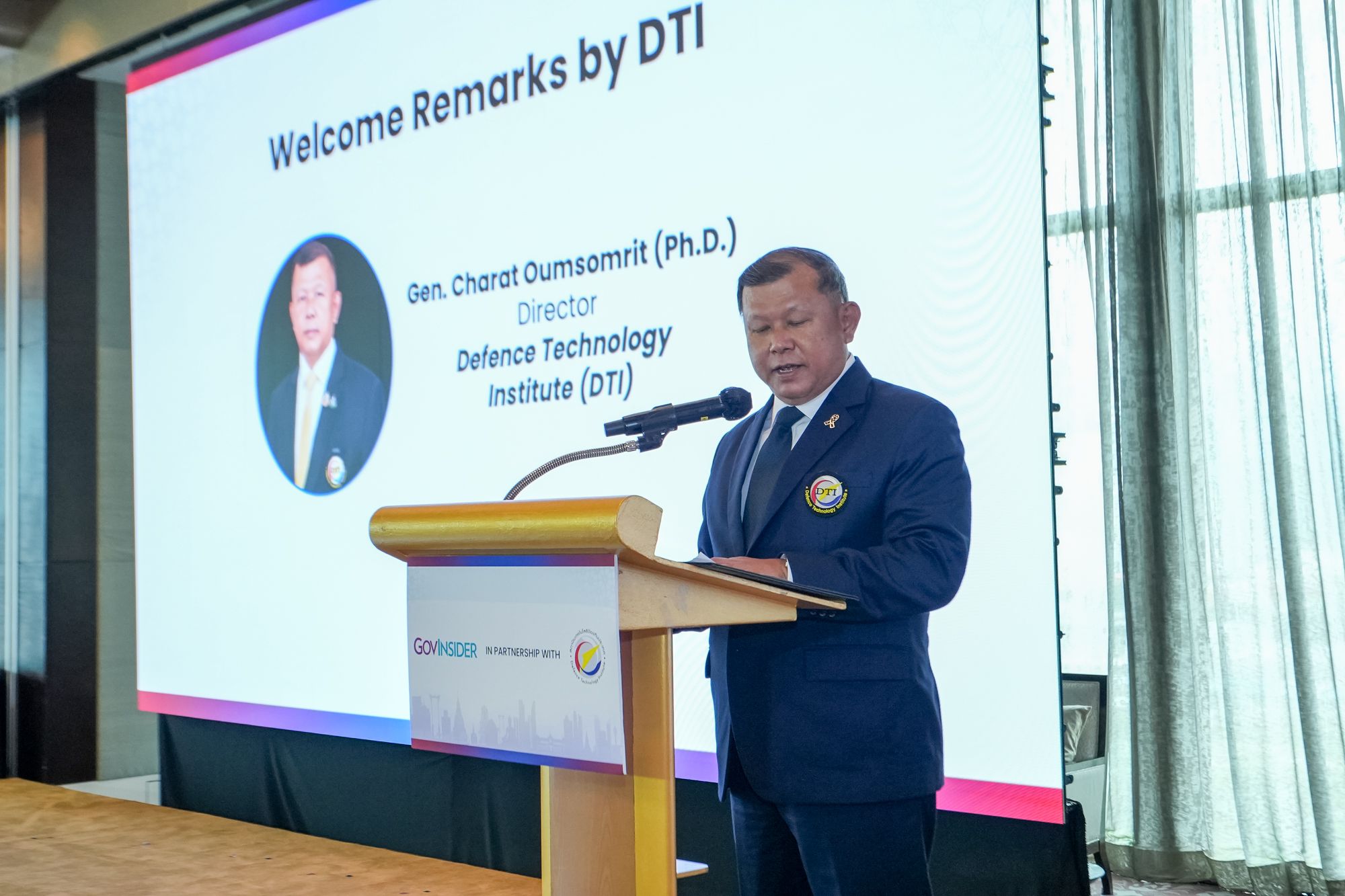
a platform to bring together stakeholders across the defence and technology sectors to share knowledge, explore opportunities and foster collaboration.
By 2037, Thailand wants a stronger and more competitive domestic defence sector, said DTI’s Deputy Director, Colonel Ampun Janpengpen, PhD, in his keynote address.
The discussions at the event went further than building indigenous capabilities, exploring how defence innovation could support other sectors and broader economic growth.
Here are five takeaways for public sector leaders on building domestic capabilities, developing emerging technologies, and strengthening collaboration.
1. Build tech sovereignty through collaboration
Thailand wants to shift from buying advanced defence equipment to building the domestic expertise to design, maintain and upgrade its own systems.
A country’s ability to sustain and develop its own capabilities rests on five foundations, namely technological knowledge, domestic manufacturing capacity, maintenance and sustainment, research and innovation, and international cooperation that enables knowledge transfer.
To build on this groundwork, Colonel Ampun sets out five strategic priorities that DTI is focusing on: capability-based defence acquisition, stronger maintenance, repair and overhaul (MRO), investment in emerging technologies, competitive domestic supply chains and skilled personnel.
DTI helps connect the operational requirements of the defence sector with universities, research institutions, private companies, and international partners.
He stressed that developing technological sovereignty doesn't mean working in isolation.
Rather, it’s building sufficient domestic expertise and industrial capacity, while benefiting from international cooperation.
2. Pair emerging tech with security and control
Artificial intelligence (AI), autonomous robotics and cybersecurity create new opportunities to strengthen defence capabilities and support national security.
On AI, Natthapong Chuabamrung, representing Thailand’s National Sovereignty, AI and Robotics Initiative, addressed the need for greater control over AI infrastructure, models and data, particularly for sensitive applications.
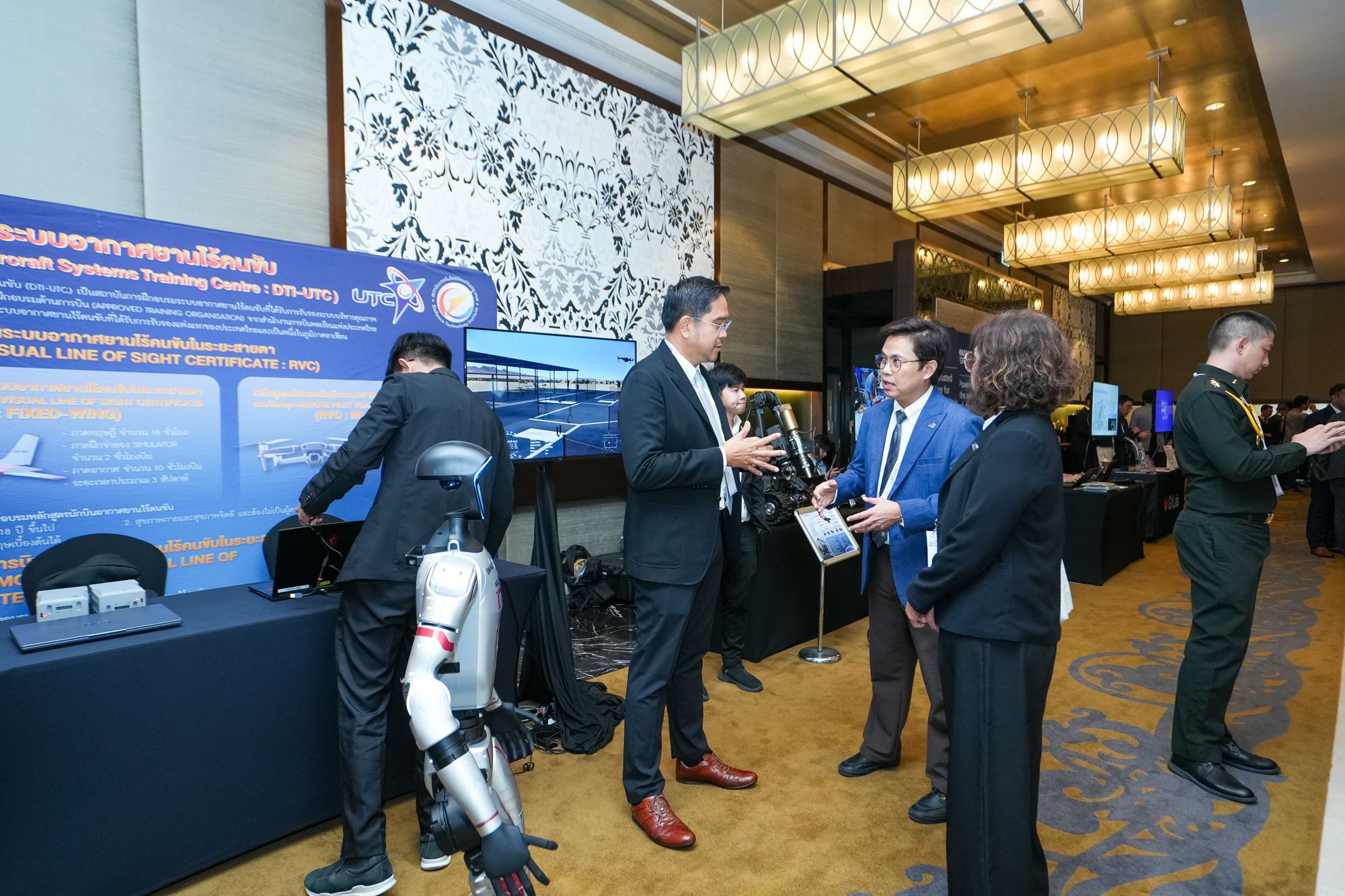
Strengthening domestic AI capabilities must go hand in hand with security, reliability, and data protection, the discussion noted.
In robotics, Asawan Ruengchoo, representing Thailand’s National Defence and Security Industry Self-Reliance, AI and Robotics Initiatives in the electronics sector, presented research with DTI on a humanoid robot training platform.
The project trained robots to walk, identify targets, and carry out other operational tasks, with potential use in hazardous environments where human personnel face risks.
Cybersecurity was another important area.
The Royal Thai Armed Forces Cyber Command’s Deputy Commander, Air Vice Marshal Narongchai Nimitbunanan, pointed out the need to strengthen domestic capabilities in defensive and proactive cyber operations.
Speakers added that agentic AI brings new opportunities for innovation but also calls for stronger cybersecurity expertise.
DTI’s work with Thai startups and smaller technology companies would be key to develop a stronger domestic ecosystem.
3. Build interoperable simulation across the defence sector
Augmented reality (AR), virtual reality (VR) and extended reality (XR) could support how military personnel train and prepare for complex operations.
The Royal Thai Air Force has already put them to use for technical and operational training, including virtual cockpit experiences, aircraft maintenance and simulations of platforms such as the Gripen and F-16.
Practising complex procedures in controlled settings could help cut costs and risks of some real-world exercises.
These technologies also offered potential for joint training across the Army, Navy, and Air Force, making interoperability a key consideration.
Different organisations need systems that can exchange information and work together.
The discussions pointed to application programming interfaces (APIs) and common data exchange standards as requirements for future technology procurement.
AI further improves these virtual training environments by making simulations more realistic and supporting performance analysis.
The applications also extend to civilian sectors.
DTI is working with Chulalongkorn University on digital twin technologies to develop immersive training environments for both defence and civilian applications, from medical education and industrial safety to humanitarian assistance and disaster relief.
These examples showed how technologies could support collaboration across agencies.
4. Use space tech to deliver better public services
Space technology is becoming increasingly important to communications, environmental monitoring, disaster preparedness and national security.
Speakers framed space sovereignty as the ability to access and manage critical data, operate essential services and maintain technological capabilities through domestic expertise and international cooperation.
The next challenge is to strengthen domestic manufacturing, reduce production costs, and build a sustainable satellite ecosystem.
Suggestions included standardising satellite components and interfaces, procuring in a series rather than isolated projects, and developing domestic ground infrastructure.
Integrating AI into satellites could also help improve data processing and decision-making.
Regional cooperation could provide further opportunities for Thailand and ASEAN members to share satellite infrastructure, ground stations and technical expertise.
5. Turn defence procurement into opportunities for wider industry
Speakers also discussed about the proposed national Offset Policy, highlighting how defence procurement could contribute to Thailand's wider industrial development.
The framework aims to encourage foreign suppliers to contribute to the domestic economy through technology transfer, investment, local manufacturing, and workforce development.
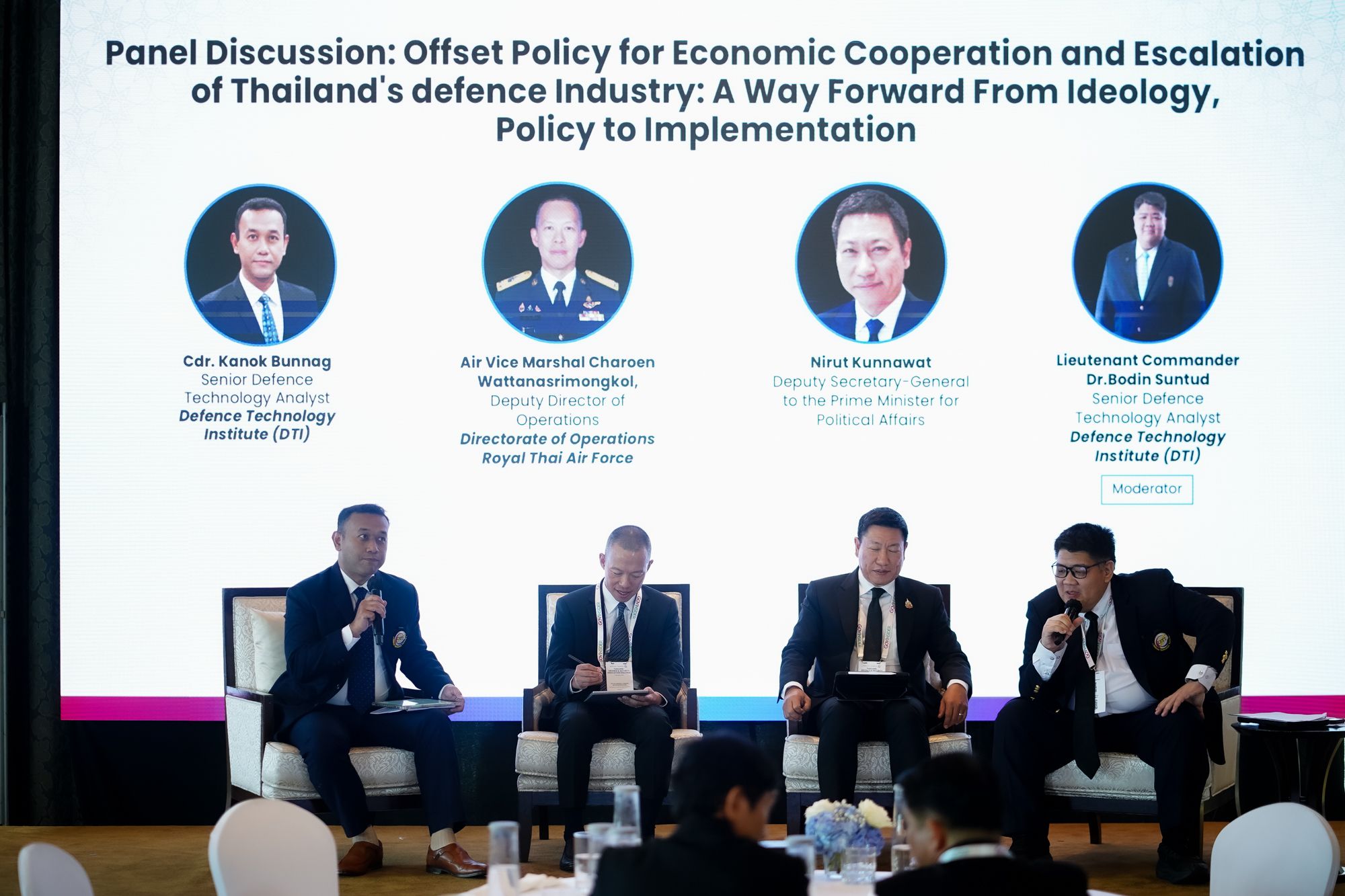
DTI’s Senior Defence Technology Analyst, Commander Kanok Bunnag, explained that the policy sought to make procurement a strategic investment for Thailand.
Its potential applications extend beyond defence manufacturing to healthcare, scientific equipment, space technology and infrastructure.
The policy and accompanying handbook have reportedly been completed, although seven to eight administrative and legislative procedures remain before implementation.
A 180-day transition period is planned after its publication in the Royal Gazette, which is the Thai government’s official communication channel to the public.
Making offsets work depends on partnerships.
Nirut Kunnawat, Deputy Secretary-General to the Prime Minister for Political Affairs, emphasised the importance of maintaining strategic flexibility and international partnerships amid changing global economic and geopolitical conditions.
That means going beyond traditional equipment purchases towards joint research, co-development, co-production and longer-term industrial partnerships, which can accelerate research, support knowledge exchange and provide access to advanced technologies.
Recognising defence innovators
The GovInsider-DTI Defence Innovation Awards also celebrated those driving innovation, capability development and industrial transformation across Thailand’s defence and security ecosystem.
Three awards were presented:
Defence and Security Engagement of the Year: Kasetsart University’s Flood Monitoring Research Team
The agency award recognises projects showcasing national or international cooperation, military diplomacy and strategic partnerships that build trust, enhance defence capabilities and address shared security threats.
Defence and Security Best Practice of the Year: Chiang Mai University’s Climate Change Data Centre (CCDC)
The agency award recognises model organisations whose best practice can be expanded within and beyond the organisation.
Rising Defence and Security Star Award: Colonel Carukris Ruangsawan, Deputy Director of Cybersecurity Regulation and Ministry of Defence Computer Security Incident Response Team (MODCSIRT), Ministry of Defence, Thailand
The individual award recognises evidence of ideas and concepts relevant to defence and security at the national or international level.