
The AI government playbook, according to South Korea's govtech agency NIA
Governments tend to invest heavily in data centres and sovereign AI models, but neglect the data ecosystem that makes them work, says National Information Society Agency (NIA)'s Vice President of Global ICT Cooperation, Yoon-Seok Ko.
-1787897974388.jpg)
The National Information Society (NIA)'s Vice President of Global ICT Cooperation, Yoon-Seok Ko. Image: Maldives Digital Service
Asked what's missing from most government's artificial intelligence (AI) plans, the National Information Society Agency (NIA)'s Vice President of Global ICT Cooperation, Yoon-Seok Ko, doesn't point to compute or AI models.
He says these two components are usually well-funded. What's missing is the data ecosystem underneath them.
I speak to Ko when he landed back in Seoul after spending one week in Kazakhstan and Uzbekistan.
For him, this is a familiar routine in his role at NIA and as World Bank's Senior Advisor, where he helps governments work out how to build their own AI governments.
After spending more than two decades in these conversations, he noticed the same blind spot showing up again.
A strong data ecosystem takes at least 10 years to build, he says. But governments only realise this after they've invested in data centres, AI models and services.
By then, many "face almost no performance improvement or performance stagnation in their AI services."
What a data ecosystem actually is
According to Ko, three things go into building an AI government: data centres, sovereign AI models, and data.
"While many governments speak often about the importance of data, I believe they neglect the construction of their national data ecosystem relative to the other two elements," he notes.
Ko further illustrates the importance of data using the example of the education system, with data centres being the school buildings, AI models being the teachers, and data being the textbooks.
"Once the buildings stand and the teachers are trained, what matters most from that point onward is the textbook the students will actually learn from," he explains.
Unlike conventional ICT services, AI services also require "a continuous supply of new data after deployment in order to sustain the performance it was designed for," he adds.
The challenge for every country becomes then how to keep supplying fresh data to a growing number of AI services, he notes.
This is where he stresses the distinction between just providing data and managing the data ecosystem.
While the former refers to individual datasets used to train AI, the latter is the infrastructure that manages these datasets across their full life cycle from collection, cleansing, processing, utilisation to storage.
He breaks the data ecosystem down to six components: governance, laws and regulations, standards, systems, assessment, and utilisation promotion.
"All six are indispensable for operating and maintaining AI services.
"If even one is weak or absent, the ecosystem breaks down, and that breakdown will materially affect the performance of the country's AI services in the years ahead," he notes.
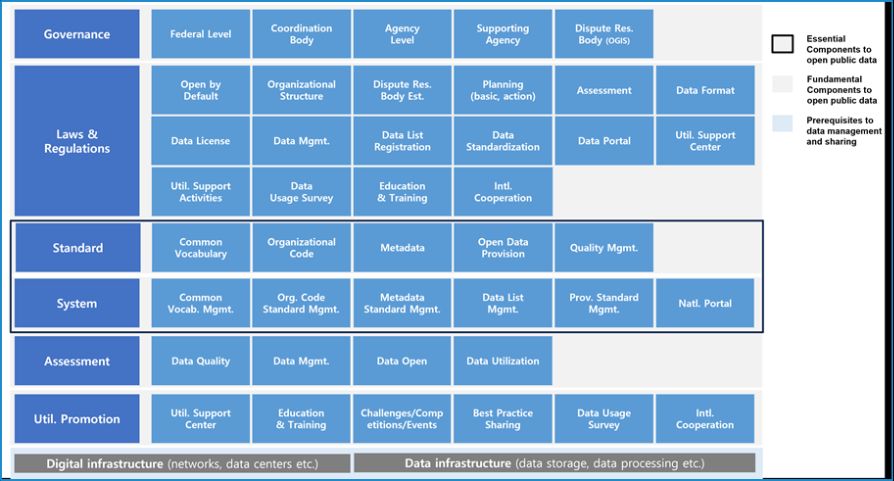
Ko underlines South Korea's efforts in building its data ecosystem as early as 1987 when it embarked on its e-government programme.
Almost four decades on, NIA still considers the work unfinished.
"Building data itself does not take very long, but building a data ecosystem takes the longest of the three elements of AI," he says, with the latter "likely to remain the hardest task facing many countries going forward."
Where policy and platforms work together to enable a data ecosystem
South Korea's data ecosystem is supported by a data policy framework and three principal data platforms, namely through the AI Hub, national open data portal, as well as big data platforms, Ko notes.
In building a data ecosystem, many governments struggle with devoting too much resources to building data platforms while neglecting the data policy framework, he says.
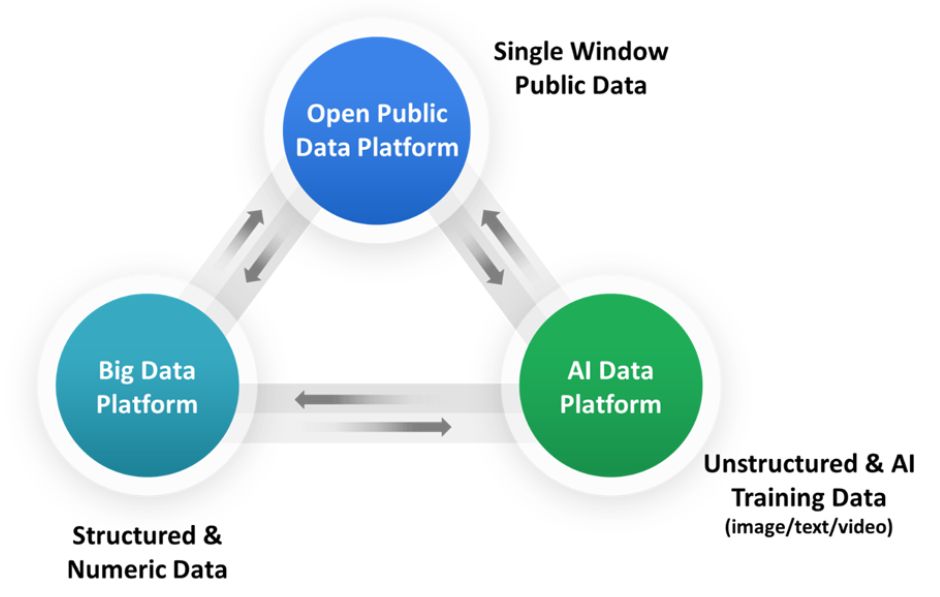
According to him, the first and most important step before building any data platform is to first establish a classification scheme that determines how data will be classified, linked, and used.
"In the AI era, the sheer volume of data is beyond anything we can readily imagine.
"To manage it, the question of how data will be classified must be settled first," he adds.
He cautions governments against thinking that "simply accumulating enormous quantities of data means it will be usable for AI."
Why international cooperation matters in AI
NIA's international cooperation and capacity-building work in countries like Indonesia, Laos PDR and Mongolia had stood out in my earlier coverage of the agency.
This led me to ask Ko more about South Korea's motivations to collaborate across borders when it comes to digital governance.
This June, NIA and multilateral organisations launched the Global AI Hub initiative, which is a platform set up to share AI capabilities, use cases, and knowledge across borders, he says.
On why South Korea is actively pursuing international cooperations, Ko says that unlike previous waves of digitalisation, AI's effects reach beyond government IT systems into industry, employment, and the wider social fabric.
"Our policy judgement is that no single country can respond to this alone, and that the problems we face now and will face in future must be solved jointly by the international community," he notes.
How cross-border collaboration looks like in digital governance
Cross-border support runs along two tracks, shares Ko.
The first track taps into the South Korean government's official development assistance (ODA) budget, where NIA designs and implements programmes alongside a requesting government or organisation.
The second track taps into direct funding provided by the requesting government or organisation.
On what sets NIA apart from multilateral organisations like UN and the World Bank, Ko says: "Because we govern the full lifecycle of an ICT service, we are able to build integrated and seamless services across the whole of government's resources."
Another difference is NIA's ability to plan and develop networks, data centres, data, and services together.
"This plays a decisive role in strengthening the interoperability of ICT services and in maintaining consistency of governance," he explains.
Sustaining a data ecosystem is a political problem
Ko has found that the reasons why governments who stall in their efforts in building a data ecosystem tend to be more political than technical.
The first challenge is sustaining policy continuity.
"When a new administration takes office, or when new officials rotate in, they tend to look for new initiatives rather than continue those already
planned and underway," he explains.
Physical infrastructure like data centres survive this challenge as they are visible and are in constant use.
As for data, "it is invisible and hard to experience directly, which makes consistency and continuity of policy far harder to maintain," Ko says.
The result of this is a data ecosystem that is only partially built and fragmented, therefore not functioning.
The second challenge is the absence of a dedicated institution to hold and support the work.
Ko points to NIA's own role in South Korea as the single agency responsible for everything data-related, from policy, collection, cleansing, opening, and education.
"Building the data ecosystem remains an ongoing effort even today," he says.
----------------------
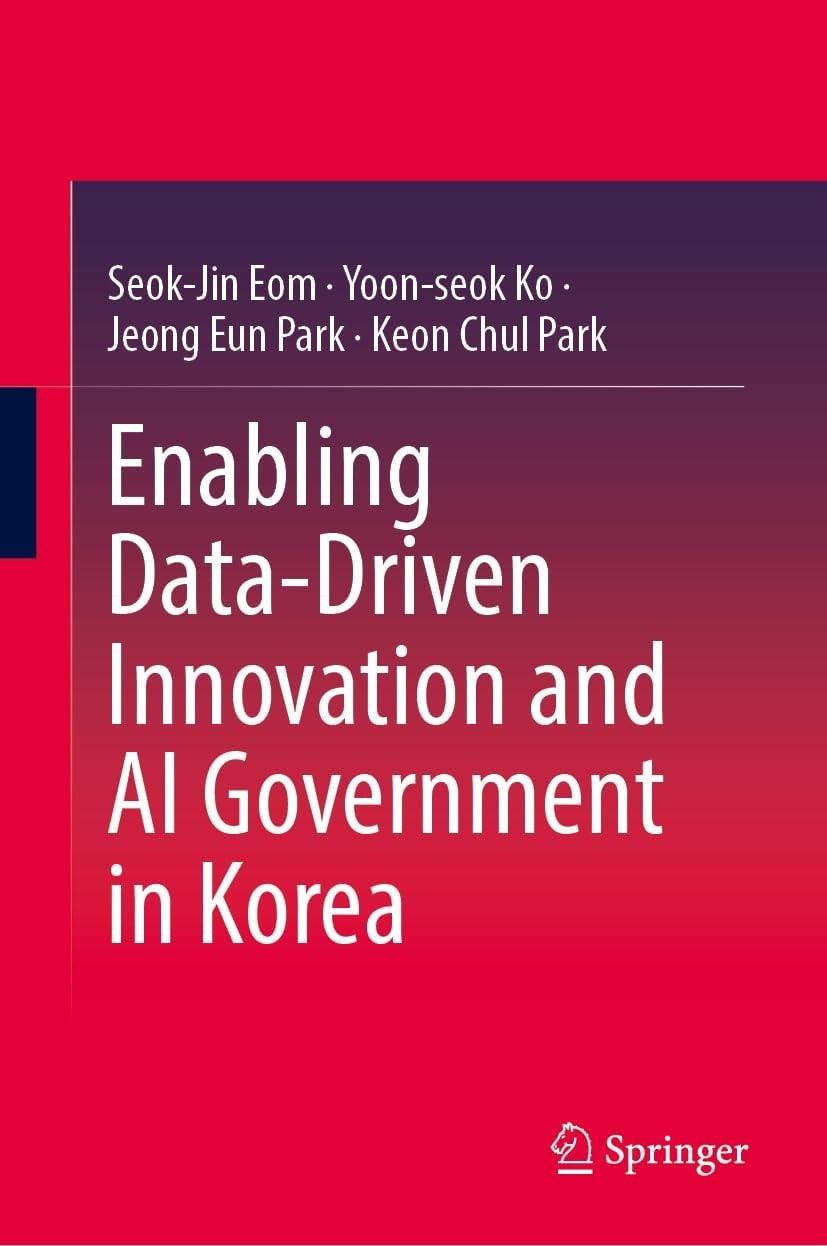
Ko and his team recently published a book titled "Enabling Data-Driven Innovation and AI Government in Korea," detailing NIA's work in building an AI government. He's written on his LinkedIn page on the breakdown of the book's content.