
The Philippines looking to reform education sector with AI and connectivity
By Yen Ocampo
The Department of Education is driving transformation with a slew of reforms and technologies to make the sector more efficient, accessible for learning and ready for the future.
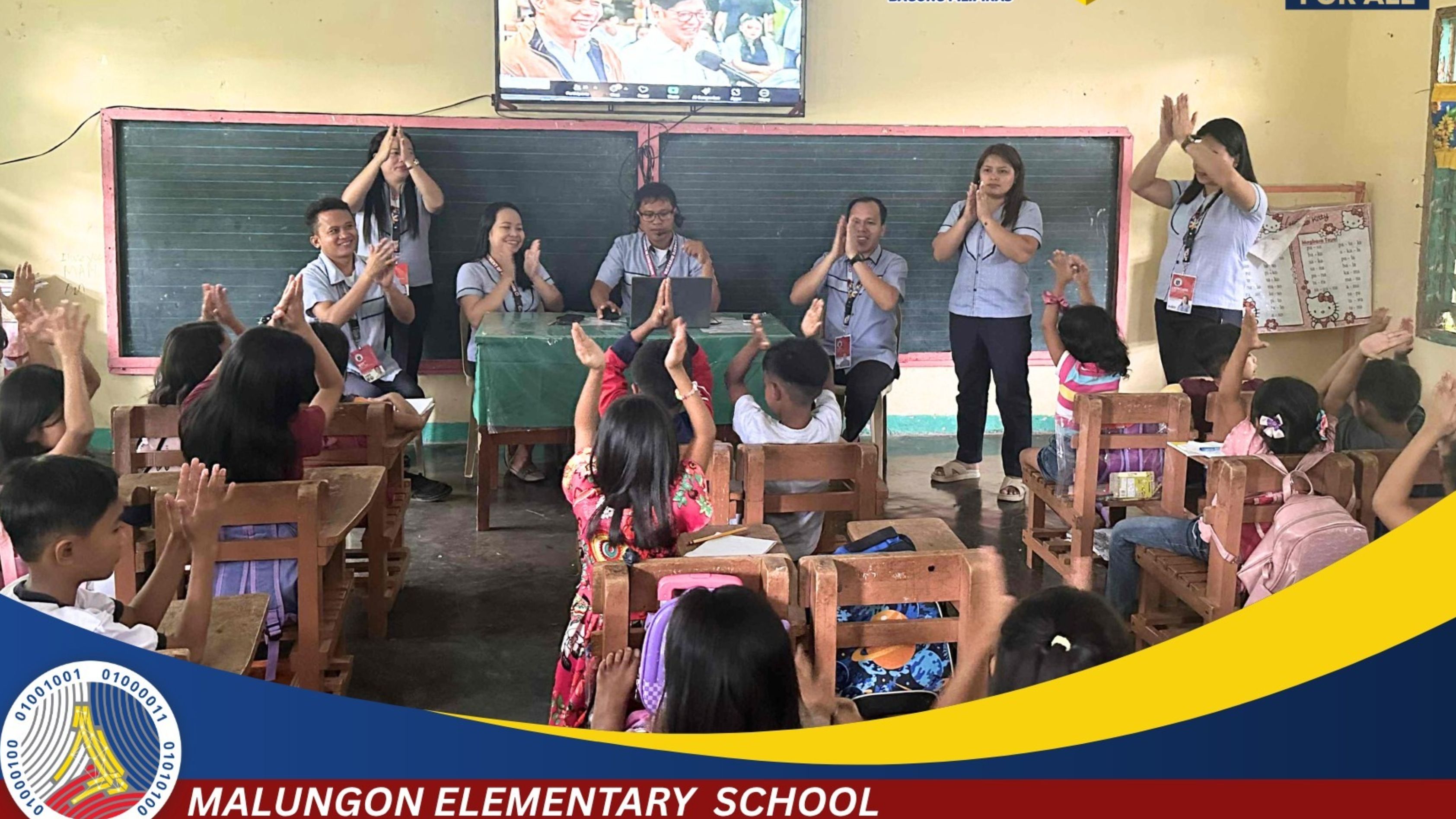
Teachers and students of Malungon Elementary School in Makilala, Cotabato. one of the Philippines’ most remote schools, now enjoy internet access as part of the DepEd and DICT partnership to provide reliable internet connectivity to all public schools nationwide by the end of 2025. Image: PIA
Motivated by the Philippines’ relatively low ranking in the global education readiness (74th out of 177 countries in the Global Education Futures Readiness Index), the country’s Department of Education (DepEd) has been developing policies and programmes to address long-standing issues in teaching, planning, and school management in the country.
The aim has been to develop a system that was modern, responsive, data-driven, and better equipped to keep pace with rapid global changes.
Before the introduction of technologies like artificial intelligence (AI), the Philippine education system was largely textbook-based, with slow, paper-driven processes and limited interactions due to connectivity challenges.
All this resulted in delays in student assessments and general data management that widened the learning gap.
In a press statement, DepEd Secretary Sonny Angara emphasised that efforts were underway to make the education system more efficient, modern, and beneficial for teachers, parents, and students.
He acknowledged the challenges but stressed that the reforms must begin and be pursued collectively.
Angara added that the DepEd was driving future-ready reforms in the Philippine education system through the Education Centre for Artificial Intelligence Research (ECAIR) and nationwide digital connectivity project.
At the same time, Digital Bayanihan ensured that learners and teachers in remote areas gain equal opportunities for digital learning and innovation.
Towards smarter schools
Aligned with a future-ready reform, ECAIR aimed to pioneer digital tools like SIGLA, TALINO, and DUNONG, which were being used to streamline student health monitoring, school mapping, and exam data processing.
As an application, SIGLA enabled faster measurement and tracking of students’ height and weight, making health monitoring more efficient; while TALINO was a geospatial mapping tool under the Adopt-a-School Programme that mapped school locations and resources to guide planning and resource deployment.
DUNONG assisted school leaders by processing exam data, streamlining the management of assessment results and related information.
To subscribe to the GovInsider bulletin, click here.
Secretary Angara stated that all these AI tools, developed under ECAIR, would follow a “strict AI Governance Framework” anchored in international standards.
The framework intended for deployment was responsible, humane, and transparent. This meant considering ethical issues like fairness, privacy, safety, ensuring human-centred design, and making data and processes visible or understandable to stakeholders.
The Philippine education department also developed an AI chatbot called SALIKSeek, to speed up access to data and insights for those in DepEd and other stakeholders.
Another chatbot was SABAY, which was still in the prototype stage; its goal was to help in the early assessment of cognitive risks in children. If successful, it could enable early detection of learning or developmental issues so interventions can be made sooner.
There was also LIGTAS, which was tasked to identify geohazards around schools, helping communities and LGUs improve safety by spotting risks like landslides, floods, and earthquakes for preventive action.
Angara said DepEd would launch Project Bukas, which aimed to make 22 datasets publicly available, including data on enrollment, resource inventory, and learning outcomes.
With these datasets, schools, local government units (LGUs), and other stakeholders could use actual, up-to-date data to assess needs, plan interventions, allocate resources more effectively, monitor their performance, and make evidence-based decisions.
The transparency and accessibility of data should help improve planning, accountability, and perhaps policy formulation at various levels, he said.
“We are making education stronger and more meaningful, grounded in data, open to technology, and supported by the whole community,” Angara added.
Digital Bayanihan
DepEd’s Future-Ready Reforms run concurrently with the government’s Digital Bayanihan initiative.
As a result, significant changes were unfolding in the country’s education sector.
These programmes focused on bridging the digital divide, particularly in Last Mile Schools, by improving connectivity, providing technological support, and promoting innovation in teaching and learning
Teachers reported that lessons were now delivered faster and more efficiently, while students find research easier with internet access. Availing free WiFi has also brought a sense of renewed hope and improved morale among both learners and educators.
Moreover, connectivity has enabled the use of digital tools such as tablets and Smart TVs in classrooms, further enriching the teaching and learning experience.
Currently, 15 remote schools have been connected under the programme.
In addition to internet access, schools have been receiving extra provisions like electric fans and learning materials to enhance classroom conditions.
To tackle power shortages, solar panels have been set up in off-grid schools, while the National Electrification Administration (NEA) works to extend electricity to remote areas, ensuring that digital tools and connectivity are fully maximised.
DepEd has committed to ensuring that all public schools nationwide will have reliable internet connectivity by the end of 2025, in collaboration with the Department of Information and Communications Technology (DICT), targeting nearly 12,000 currently offline schools, Angara said.
Angara stressed that this proved what could happen when the government, private sector, and local communities came together for education, “this is digital bayanihan in action. When we connect schools, we also connect students to a brighter future.”