
The value of gentle innovation in an ageing society
An important aspect of healthcare for the elderly who are suffering from dementia and delirium is providing, along with medication, familiar surroundings and a human connection.
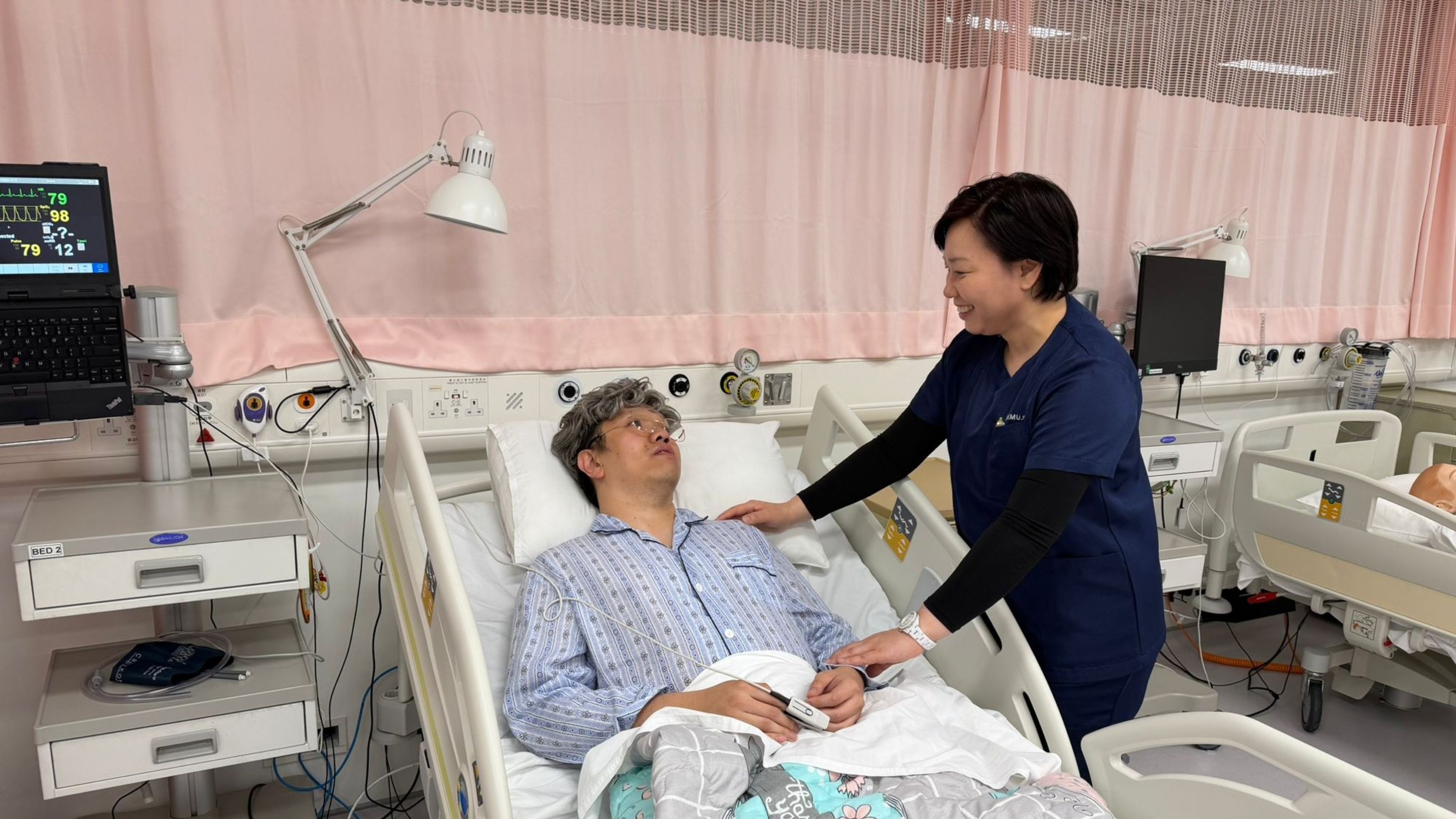
Caregiver attending to a patient at Hong Kong Metropolitan University's Nursing Facility for Delirium/Dementia patients. Image: UnBound.
Hong Kong and Malaysia are both growing older, and with that change comes a quiet shift in how the two countries must care for their people.
As two of Asia’s rapidly ageing populations, both are entering an era shaped by an ageing society.
While longer life expectancy is a sign of progress, it also brings new pressures: rising healthcare costs, stretched nursing teams, and families navigating the emotional and financial realities of caring for elderly loved ones.
Among the most complex challenges faced by both societies are dementia and delirium, conditions that affect memory, awareness, and emotional stability, which often occur in hospital settings.
The cost of inaction
Without new approaches, dementia and delirium cases are expected to rise sharply, leading to longer hospital stays, higher risks of falls and medical complications, and increased reliance on medication.
Hospitals may face overwhelmed wards, nurses pushed beyond capacity, and families forced to make painful decisions about long-term care earlier than expected.
For some elderly patients, repeated episodes of confusion can accelerate cognitive decline, turning what could have been a temporary condition into a lasting one.
Delirium is alarmingly common among older adults in hospitals and post-acute care, yet is frequently under-recognised and under-reported by clinical staff, leading to missed opportunities for timely intervention.
These conditions are not rare moments; they are everyday realities in wards, care homes, and recovery rooms.
At the same time, many older adults in Malaysia and Hong Kong express the desire to age in place: to remain in familiar surroundings that preserve their autonomy, dignity, and social connectedness as they grow older.
However, current systems rarely align clinical care with emotional and psychological needs, leaving a gap between aspiration and reality.
For an older patient with dementia or delirium, waking up in an unfamiliar environment can be frightening. The lights feel harsh. The room feels strange. Time no longer makes sense.
Anxiety and agitation can quickly follow, placing emotional strain on patients, caregivers, and nurses alike.
Partnership to tackle the problem
In response to this growing need, the School of Nursing and Health Sciences at Hong Kong Metropolitan University (HKMU) has partnered with UnBound Malaysia to explore a different kind of healthcare innovation.
-1771816115692.jpg)
The initiative focuses not on medication alone, but on calm, familiarity, and human connection.
Both parties signed a Memorandum of Understanding (MoU), committing to collaborate on artificial intelligence (AI)-powered, experiential technologies designed to support older adults living with dementia and delirium.
Signed between Hong Kong Metropolitan University (HKMU) Dean of the School of Nursing and Health Sciences, Professor Janet Wong Yuen-ha, and Director of UnBound, Ryan Kang, the partnership reflects a shared belief that innovation in the ageing economy must be measured not only by efficiency but by kindness.
The inclusion of AI-powered technologies in public hospitals and aged-care facilities marks a meaningful shift in how care environments are designed for ageing populations.
Rather than introducing technology solely for monitoring or administration, this approach embeds intelligent, adaptive systems directly into patient spaces. Using immersive visuals, personalised cues, and responsive environments to reduce anxiety and confusion among older adults.
In public hospitals, such tools can support nurses by calming patients during periods of disorientation, while in aged-care settings they help maintain familiarity and emotional stability over time.
By integrating these technologies into everyday care, healthcare systems can move towards preventive, non-pharmacological support that improves patient wellbeing, reduces caregiver strain, and aligns digital innovation with the lived realities of ageing.
The shared vision is to create low-cost, accessible calming tools that can be used in hospitals and care facilities, gently reducing confusion and anxiety through immersive, sensory experiences.
Ageing societies need solutions that are sustainable and compassionate. When someone is confused or afraid, a calm environment can make all the difference. The collaboration aims to make these tools affordable and widely accessible, so care is not limited by cost.
Human-centred care
Instead of complex machines, the innovations being explored are intentionally simple and human-centred.
These calming systems can project familiar environments, soothing visuals, or personalised cues that help patients reorient themselves. Reminding them where they are, what time it is, and that they are safe.
For patients, these moments of calm can reduce distress and restore dignity.
For nurses, they can ease workloads and support care without replacing human touch.
For families, they offer reassurance that their loved ones are being cared for with empathy.
For dementia and delirium, technology should never overwhelm. It should feel familiar, gentle, and reassuring, like a quiet presence that helps someone feel grounded again.
As both Malaysia and Hong Kong prepare for a future shaped by longevity, this collaboration offers a hopeful reminder: sometimes, the most powerful innovations are the ones that help people feel calm, understood, and at home even in the most unfamiliar moments.
----------
Ryan Kang Jee Hong is Director of UnBound Malaysia and Australia, while Natalie Loi Yoke Kei is Head of Technology, UnBound.