‘There are no handovers’: How Singapore’s military and cyber defenders work together
This year’s national critical infrastructure cyber exercise (CIDeX 2026) featured AI on both sides, new testbeds, and national servicemen leading the defence. Its technical director Sim Swee Horng shares how military and civilian defenders face the threats together.
-1795424733136.jpg)
Critical Infrastructure Defence Exercise (CIDeX) 2026 happened from November 17 to 20 at the Singapore Institute of Technology (SIT). Image: GovInsider
This year, Singapore’s cyber defenders had to fight a swarm of artificial intelligence (AI) agents attacking multiple testbeds across different critical infrastructure (CI) sectors.
For the first time, human defenders worked alongside fully agentic AI defenders against the same threats.
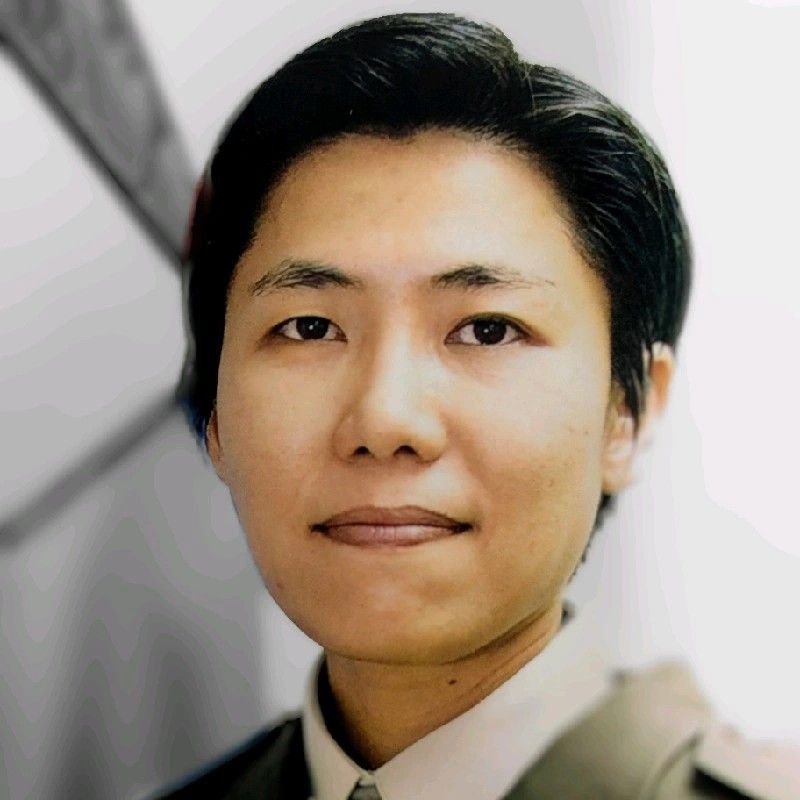
As Singapore pushes for a whole-of-nation approach to cyber defence, the way its defenders train together matters as much as the tools they use, says Sim Swee Horng, Head of Cyber Training and Experimentation Centre (CyTEC), Digital and Intelligence Service (DIS), to GovInsider.
Sim is also the technical director of the annual Critical Infrastructure Defence Exercise (CIDeX) 2026.
Co-organised by the DIS and Cyber Security Agency of Singapore (CSA), CIDeX is an annual, national cyber defence exercise that convenes cyber defenders from government agencies and all 11 CI sectors.
This year’s exercise, which happened from November 17 to 20, involved more than 250 participants from 44 other organisations to test AI-driven and autonomous defence capabilities.
What ‘no handovers’ looks like
Sim notes that today’s attacks don’t strike in isolated incidents, but in sustained and coordinated campaigns across multiple sectors.
“It takes a campaign to defend against a campaign,” she notes.
To do so, defenders today must be equally persistent, coordinated and adaptive. It’s no longer enough today to simply detect and contain an individual incident.
This is what DIS calls the "Advanced Persistent Defence" approach, which Commander of Defence Cyber Command (DCCOM), BG Clarence Cai, shared with GovInsider recently.
“In CIDeX, like in national cyber defence operations, there are no handovers,” she says.
Beyond picking up technical expertise and learning from other agencies, trust and relationships take time to build – and this is where CIDeX’s true value lies.
Sim says DIS assesses its military defenders not only on how well they detect, investigate, contain and respond to threats, but also on how well they coordinate responses with their civilian counterparts.
For example, during Operation CYBER GUARDIAN (Singapore's largest coordinated cyber incident response effort to date), the Defence Cyber Command (DCCOM) under DIS worked alongside national agencies and telecommunications operators to investigate affected networks and hunt for persistent threats.
DCCOM also established Sectoral Cyber Defence Teams (SCDTs), which comprise Regulars and National Servicemen (NSmen) with specialised cybersecurity expertise, aligned to Singapore's critical infrastructure information (CII) sectors.
New testbeds and AI-fighting-AI in this year’s exercise
This year’s CIDeX saw several firsts.
Firstly, two new testbeds, namely healthcare and aviation, were included to the existing mix of maritime, energy, telco, land and water, alongside an enhanced multi-cloud environment.
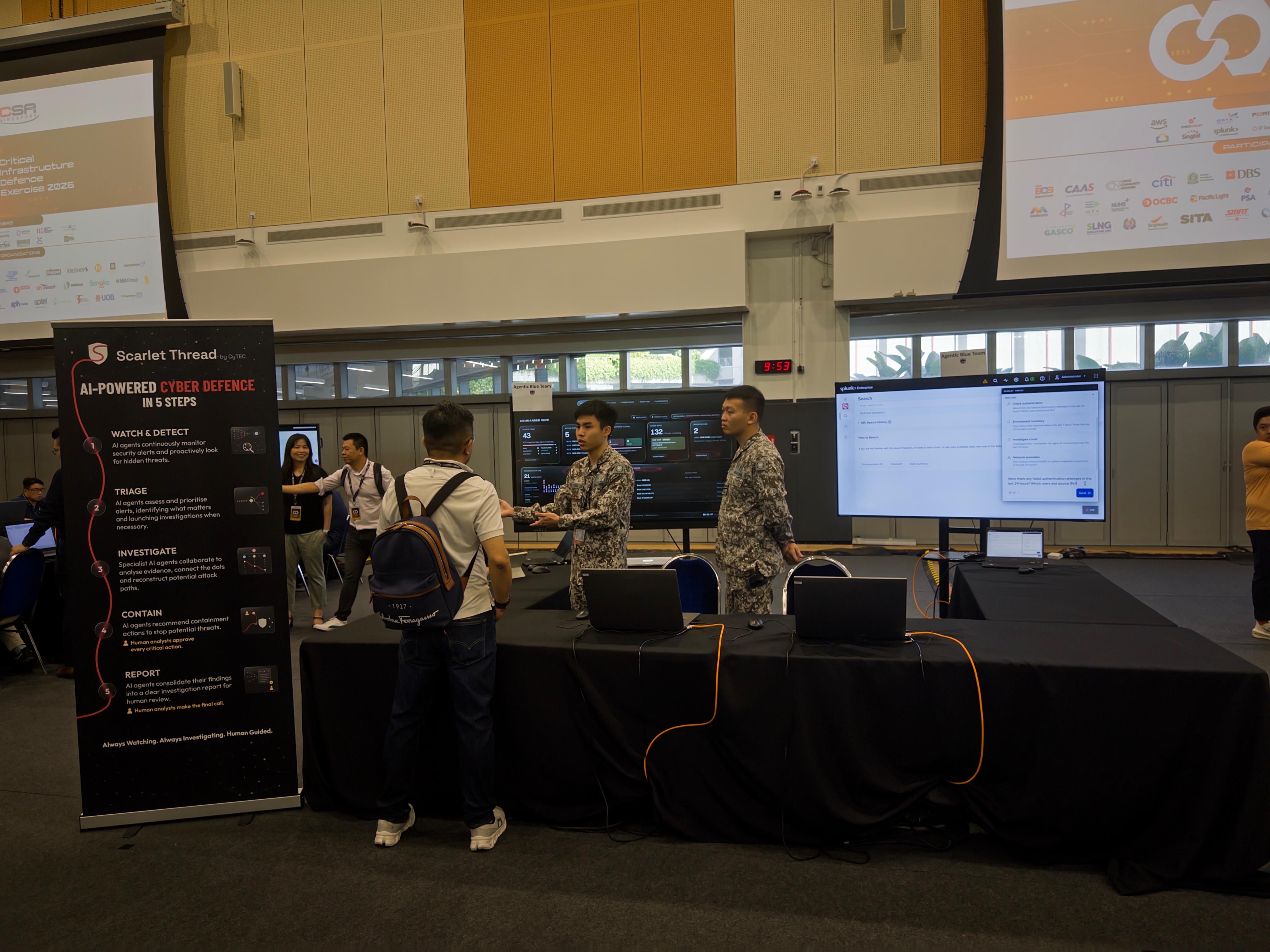
Secondly, DIS trialled a fully agentic AI Blue Team, alongside their human defenders, to fight the exercise threats.
These human defenders also used AI-enabled defensive tools that were developed in-house by the CyTEC.
Thirdly, this was the first time where SCDTs and NSmen participated in the exercise.
According to the official release, the NSmen led the Blue Teams (defenders) to improve the SAF's ability to work with each CII sector.
The Blue Teams defended their own CII sector’s digital infrastructure against live simulated attacks launched by a team of attackers.
The attackers were personnel from CSA, DIS, the Defence Science and Technology Agency (DSTA), GovTech Singapore, the Infocomm Media Development Authority (IMDA) and the Land Transport Authority (LTA).
“We have progressively expanded the sophistication and realism of our exercise environments to reflect the evolving cyber threat landscape, including using AI to generate attack scenarios,” Sim adds.
Since 2022, CIDeX has more than doubled from its initial over 100 participants to over 250 in 2025 involving 35 organisations; and expanded its reach across Singapore’s CII sectors from six in 2023 to all 11 in 2025.
Widening the circle beyond government
Beyond the government, Sim highlights a role for every stakeholder when it comes to whole-of-nation cybersecurity.
Industry brings emerging tech and global threat intelligence, academia contributes research and helps co-design the exercise testbeds, and smaller local companies offer specialised expertise suited to Singapore's operating environment.
This year’s exercise saw the participation of global tech companies including Amazon Web Services, Check Point Software Technologies, Google Cloud, and more, in making the exercise more realistic and contributing to the training and tools.
“By continually refreshing our scenarios with industry expertise, CIDeX helps our military and civilian cyber defenders build the operational readiness and adaptability needed to confront tomorrow's threats,” she says.
Sim adds that DIS is also organising its first closed-door sharing session where industry partners will share TLP:RED (the most restrictive sharing label in the Traffic Light Protocol (TLP)) information on CI directly with invited CISOs.
“Industry partners will share sensitive threat intelligence and insights into the cyber threats facing critical infrastructure from cyber market leaders with “planetary-level” intelligence,” she shares.
“Cyber resilience is a collective endeavour, built on capable people who train, learn and defend together,” she concludes.