
Turning culture into a digital economy driver
By Sol Gonzalez
Malaysia’s public sector leaders highlighted the growing impact of the creative industry in the national digital economy at the Borneo Animation & Games Festival (BAGFEST) 2026.
-1787709018706.jpg)
Malaysia’s public sector leaders attended and spoke at the BAGFEST 2026 official opening ceremony. Image: BAGF 2026.
Think of the last video game you’ve played, or the last animation you’ve watched – a variety of talents and skills were involved in making them a reality.
From illustrators and directors to musicians and designers, these talents exist everywhere in the world, and Sarawak, Malaysia is one such place.
The Borneo Animation & Games Festival (BAGFEST) 2026 held in Kuching, Sarawak, from August 19 to 23 was organised to celebrate, spotlight and elevate the creative industry with a series of panel sessions, networking opportunities, workshops and exhibitions.
The event was organised by Malaysia's Digital Economy Corporation (MDEC) in partnership with Sarawak Digital Economy Corporation (SDEC) and the Sarawak Government.
GovInsider was a media partner for this event, which was one of the highlights as part of MDEC's 30th anniversary.
“We wanted to create a platform that could connect our talent and companies with industry, investment, and opportunities in Malaysia and beyond,” said Malaysia’s Minister of Digital Gobind Singh Deo, who spoke at the opening ceremony.
“BAGFEST is not simply a celebration of animation and games. It's about creating opportunities for our talents, helping our country, building partnerships, and enabling Malaysian ideas and intellectual properties (IPs) to reach larger markets.”
Sarawak was the state chosen to host the event given the growth of the local creative community, the growing digital ecosystem, and the potential of turning its unique local stories and cultures into IPs of international reach.
“We are already seeing talents contributing across animation, film, music, games, and digital content. The opportunity now is to build on these tracks. We want to see more ideas and make sure that we have more IPs created and owned,” noted Gobind.
The industry has generated more than RM 92.5 billion (S$ 29 billion) revenue in Malaysia and RM 12.1 billion (S$ 3.8 billion) which has created over 11,000 high-value jobs in the country.
The impact on the digital economy
Gobind said that Malaysia is on track to see the digital economy contribute 30 per cent of the nation’s GDP by 2030 and create 500,000 digital job opportunities over the next four years.
“But growth at the national level must translate into opportunities at the local level,” he asserted.
In the case of Sarawak, the local digital economy was steadily growing, with the digital creative sector emerging as a key contributor.
To enhance this growth, Gobind pointed out that collaboration between federal and state governments was essential, working toward building bridges that connect local talents to opportunities within and outside Malaysia.
BAGFEST 2026 was seen as an important example of facilitating this exchange of talents and knowledge sharing within local Sarawakian talents with the broader Malaysian and Southeast Asian digital creative industry.
The role of Sarawak
Also speaking at the opening ceremony was Sarawak’s Premier, Abang Haji Abdul Rahman Zohari Openg, who underlined the vision of building a data-driven, innovation-led Sarawak.
Deputy Premier Datuk Amar Douglas Uggah Embas attended and delivered speech on behalf of Premier, who emphasised that digital creativity was a driving force for an inclusive, competitive, and sustainable economy.
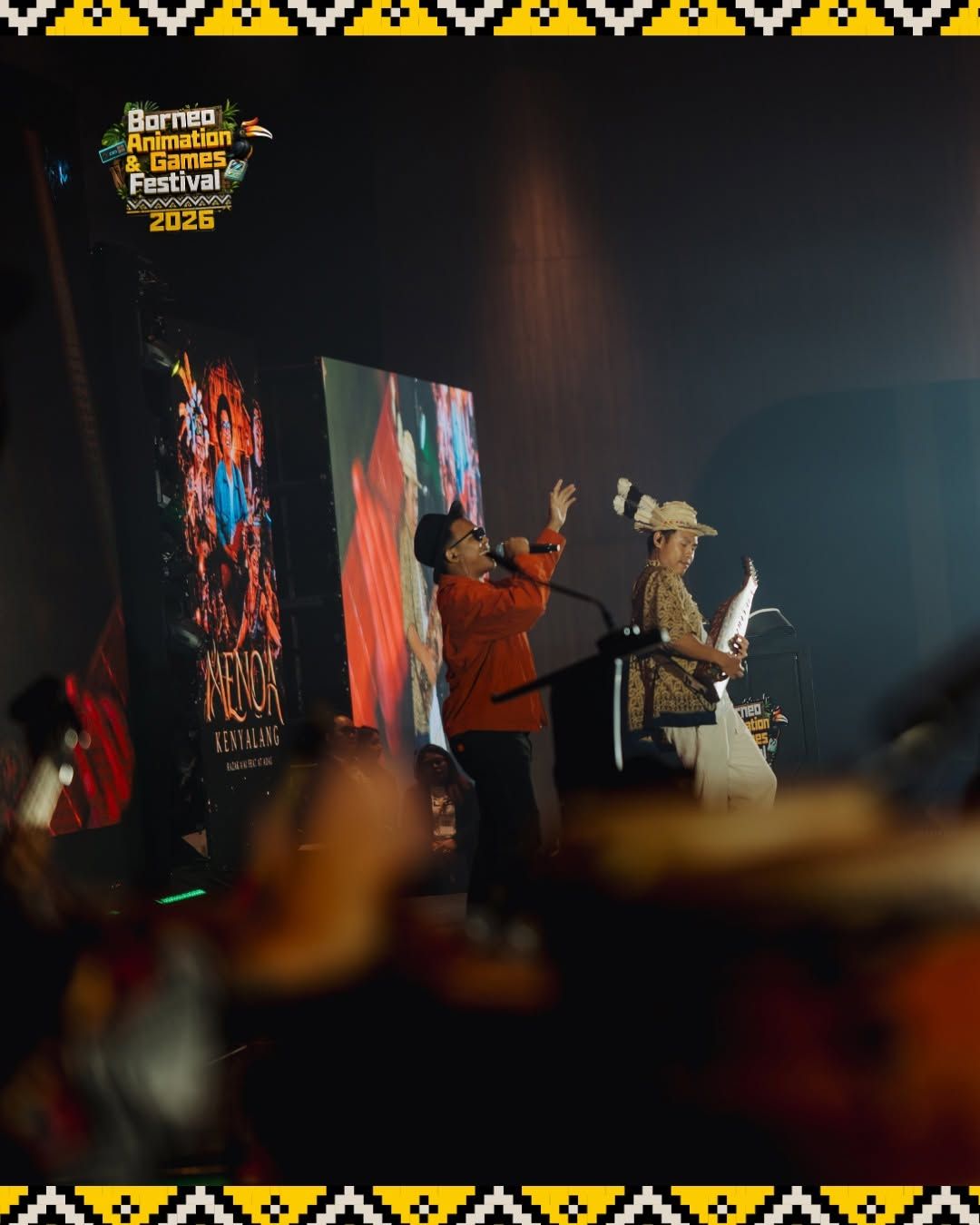
This vision sought to transform local culture and biodiversity into global IP through animation, games, and immersive media. The objective was to establish Sarawak as a regional digital creative hub and develop a full value chain covering talent, production, commercialisation and global distribution.
“Sarawak has stories that are unique to this part of the world, our culture, our heritage, our communities and our biodiversity provide a rich foundation of creative content,” he said.
“We want Sarawak to be known as a place where creators can develop their ideas, where studios can collaborate, where investors can discover new talent, and where communities can participate in the digital creative economy.”
Abang Johari's speech also emphasised that this sector has the potential to activate other sectors of the economy as well, such as when open-air screenings occur and public spaces are activated along with the local night economy.
This was the case with the “Wayang Pacak” initiative, which brought cinema back to public spaces and showcased local productions.
“[With these initiatives] we create reason to bring communities together, we support local vendors, we create visibility for local content, we bring creative experience closer to the people.
“The future of creative economy will be shaped by those who can combine culture with technology, creativity with businesses, local identity with global relevance,” he concluded.