
Using bits and bytes to fight corruption
Albania appoints its first AI Minister, Diella, to handle government contracts and tackle the country’s endemic corruption.
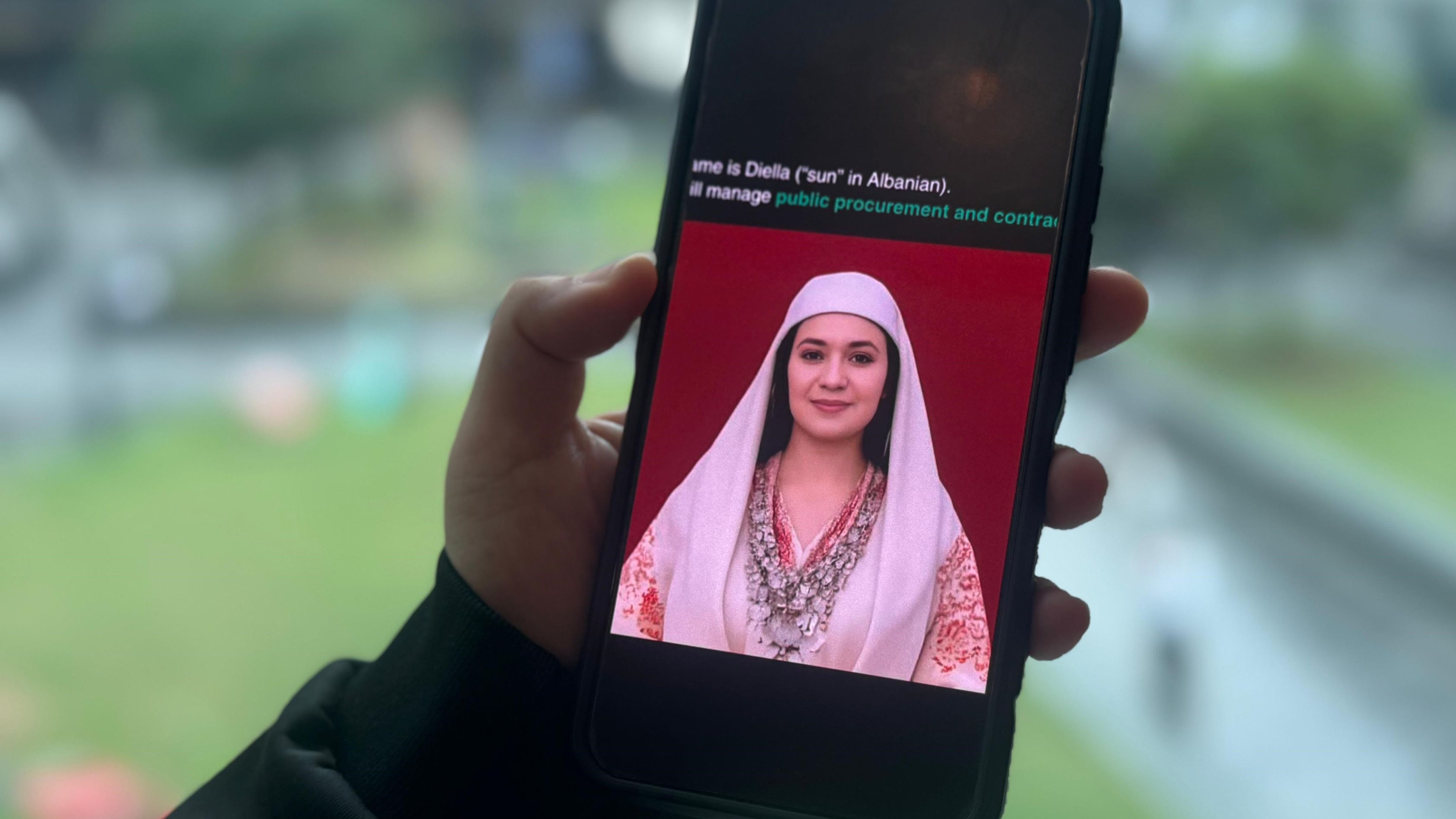
Diella, the virtual minister, has been touted as a panacea for the bribery scandals that have plagued Albania. Image: GovInsider.
Tucked away on the banks of the Adriatic Sea in Southeastern Europe with stunning mountain ranges and its own Riviera, Albania has not been much in the news in a continent that is witnessing a war and geopolitical tensions – that is, until now.
Last week, it became the first country in the world to appoint an artificial intelligence (AI) programme as a full-fledged Minister in the country’s government. That caught the immediate attention of the world’s media.
Speaking at the country’s ruling Socialist Party meeting in its capital, Tirana, on September 11, the Albanian Prime Minister, Edi Rama, announced the AI programme, Diella, would be responsible for overseeing all government procurement contracts.
Diella, meaning sunshine in the Albanian language and virtually represented as an Albanian lady in a traditional dress, has been touted by Rama as a panacea for the bribery scandals that have plagued the country.
What this means
The virtual Minister would eventually handle all procurement decisions of the government, ensuring that “the tender process is 100 per cent legible,” said Rama, as quoted by various media reports.
All this makes for great headlines, which is why the news started trending across social media platforms.
Would this turn out to be all hype without any substance?
To find out, it is important to investigate the context and history behind the Diella announcement.
The AI platform is not new and has been built on Azure OpenAI and Microsoft AI models by Albania’s National Agency for Information Society (AKSHI), known as Agjencia Kombëtare e Shoqërisë ë Informacionit.
Launched in January this year, the Diella platform powers the country’s e-Albania platform, which allows citizens to access almost all government services digitally.
Why corruption is an issue
Albania has a long history of corruption, particularly in government procurement, and this has been one of the major stumbling blocks for the country’s entry into the European Union (EU).
Rama won the election last year with the mandate of joining the EU by 2030, and hence, eliminating corruption has been high on his agenda.
The government has been tackling corruption over the past few years, and the results have started to show. According to Transparency International, Albania’s scored 42 out of 100 in the agency’s corruption perception index (CPI) in 2024.
The higher the CPI, the lower the corruption perception. In 2020, Albania scored 36, indicating that the situation has improved over the four years since then.
A report by Transparency International said specialised anti-corruption prosecution and courts (SPAK) in Albania have earned citizens’ trust after convicting former politicians.
After his election, Rama said AI was a tool to stamp out corruption and increase transparency.
Rama has claimed that Diella would eliminate bribery and increase transparency in the government’s functioning.
According to him, decisions on tenders, which used to be taken by various ministries, would be gradually shifted to Diella in a phased rollout.
He also said that the virtual minister would have the right to “hire talents [for Albania] from all over the world”.
Will the world’s first virtual minister help to eliminate corruption, the ostensible reason behind its “appointment” in the first place?
To answer that question, it is important to acknowledge that the statement on Diella included a bit of media management or what is known as a headline-grabbing announcement.
Streamlining services
Shorn of the hyperbole, Albania is looking to use AI to streamline government services, not just in the frontend (that is, citizen services) but also in the backend and, in the process, tackle the corruption issue.
In that respect, Albania joins many other nations which are using AI to improve government functioning and provide better services to its citizens.
For example, the United Arab Emirates (UAE) is using AI to improve the government’s performance at all levels using AI.
The UAE’s Artificial Intelligence Strategy 2031 includes eight key objectives which collectively aim to build the UAE’s position as a global hub for AI.
Estonia has digitalised 100 per cent of its government services, while Ukraine has launched the world’s first government AI agent.
Singapore’s Smart Nation 2.0 policy seeks to use AI to improve government service delivery and provide transparent services to citizens.
It is a no-brainer that the use of AI improves government service delivery, and there are countless examples.
What else is needed
Studies have shown that a balanced human-AI partnership is required to create more efficient, responsive and accountable public administration systems.
This brings us back to Rama’s announcement.
As an artist, sportsman and teacher, Rama brings in a fresh perspective to politics and appointing an AI minister can be counted as one of them.
The first in the world is good publicity and serves the intended purpose of shining a spotlight on the country’s need to focus on tackling the stigma of corruption.
For it to work, there is a need for humans in the loop for oversight of AI systems.
At the end of the day, even the world’s best AI systems are extremely vulnerable to manipulation, hacking and data tampering.
The Albanian government will need to improve overall governance by building checks and balances into the system if it really wants to take full advantage of having an AI programme to impartially take decisions on public procurement without fear or favour.
If Rama succeeds in using his AI Minister to stamp out corruption and increase transparency in government, it will start a new chapter in the use of technology to deliver better citizen services.
The progress of Minister Diella would be keenly watched by public service experts and government officials from around the world.
AIxGov 2025 goes beyond the hype to bring together leaders from across Singapore’s public sector to explore how government agencies can lead responsibly amid agentic AI, digital sovereignty challenges, and rising misinformation threats. The event is free for public officers to attend. Register here >>>