
Vicdario Neo, Assistant Nurse Clinician, Nursing Informatics and Innovation, Woodlands Hospital, NHG Health, Singapore
Meet the young public sector officials in the inaugural Young & Official Report 2026.
-1782891522322.jpg)
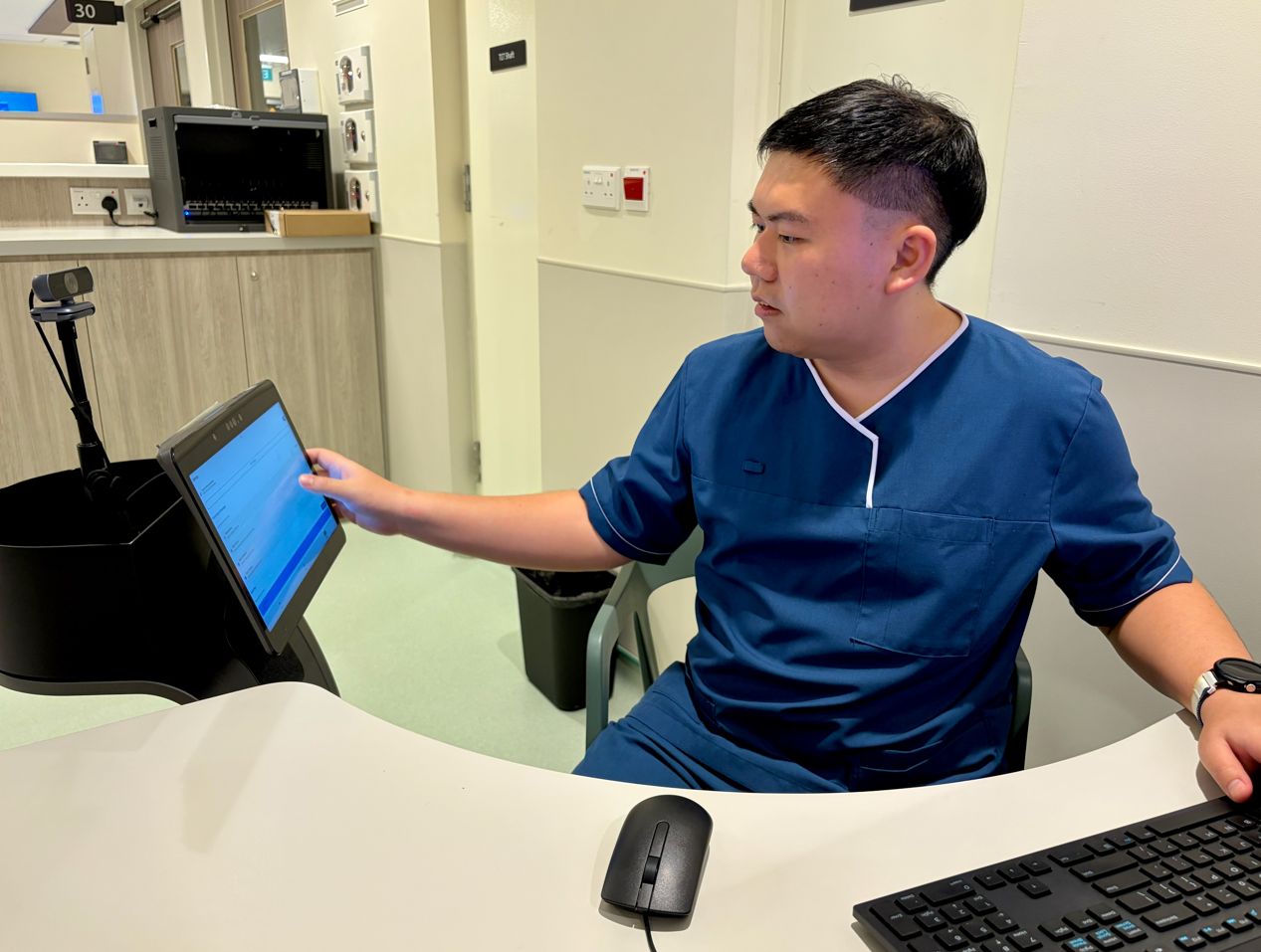
Vicdario Neo, Assistant Nurse Clinician, Nursing Informatics and Innovation, Woodlands Hospital, NHG Health, Singapore. Image: Vicdario Neo
1) What does public service mean to you? Can you share more about your role in the public sector?
Public service, to me, is about creating sustainable, compassionate systems that support and uplift efficiency in day-to-day activities for better, safer patient care.
I see my role in healthcare informatics as the vital bridge between bedside care and the digital infrastructure.
My role allows me to reimagine software and workflows together with exceptional peers to empower nurses through better data and technology.
Whether it's small group deep dives or macro view discussions with visiting professors, my goal is to ensure that the technology we use aligns with policies that genuinely support our healthcare professionals on the ground.
2) Tell us about a project you championed. What impact did it have on the community?
My most fulfilling endeavour has been to see through all NGEMR go-lives in both NHG Health and NUHS institutions.
It brings me much joy to see the things we had scrutinised and mulled over the years leading up to go-live finally come to fruition, becoming a heavily digitalised healthcare system rooted in reason and logic. The impact was palpable.
The need to switch between software significantly reduced, workflows came together into one system, and documentation efficiency was on the uptrend.
Still, there is always more work to be done to further loop in the few remaining legacy programmes that have not been well integrated.
3) As a young professional, how has your unique background or perspective allowed you to identify a solution that others in your organisation might have overlooked?
I’d like to think that us 90s kids grew up in a special transition period.
We were the first generation of children in Singapore to have access to education using information and communication technologies, as MOE rolled out the ICT-in-Education Masterplan 1 in 1997.
This pioneering phase exposed me to my passion for digital tools and technology in primary school.
Many times, I would be able to point out outcomes that would differ from what was originally discussed because of my understanding of human behaviour when using IT-enabled tools.
This would lead the team to make changes in design, workflow, or even re-think whether using a digital tool is required for the task. I often look at healthcare solutions through the perspective of long-term compounding value.
With the advent of tools like robotic process automation and artificial intelligence, where others might see an administrative bottleneck, I see an opportunity to build a quick automated flow.
Applying a budget-friendly and efficient mindset to utilising public resources ensures we are prudent.
4) What is your personal strategy for maintaining your creative energy when faced with bureaucracy?
Bureaucracy is a very complex, slow-moving puzzle! I tell myself that most of the time, such processes have been created to keep us safe to prevent a recurrence of past mistakes.
To keep my creative energy high, I make sure to disconnect completely when I'm off the clock.
I often find myself immersing in videos about new technology and catching up on self-help blogs and articles that shape my perspective of current events.
Finding joy in the little, seemingly geeky things provides a fantastic counterbalance to the heavy policies of governance.
5) If you had just one area to invest in to accelerate transformation in the public sector (regulation, technology, talent, etc.), which one would you choose and why?
Without a doubt, it would be people.
You can buy the most sophisticated technology in the world, but if you don't have empowered, well-supported people running it, it becomes an expensive paperweight. In nursing, transformation happens when the staff feels heard and equipped to handle the task.
Investing in people means not just hiring but making active steps towards improving their digital literacy and mental wellbeing.
Once you have a resilient, forward-thinking team, they will naturally drive the adoption of new technologies and advocate for smarter regulations.
Trustworthy team members are more valuable than any technology.
6) What is your greatest ambition as you grow in your public service career?
My greatest vision is for Singapore to continue leading in informatics and to share these capabilities meaningfully with the global community.
Even today, we can see how far Singapore has progressed in areas such as transport, security, and other public sectors.
As we continue to advance within the healthcare landscape, I hope to see a system where both patients and healthcare professionals are empowered to voluntarily contribute their data for the collective advancement of health sciences.
Through this spirit of trust, collaboration, and innovation, Singapore can grow into a global exemplar and a preferred destination for high quality and data driven healthcare.
7) What is a “universal value” that connects everyone in your department – from interns to directors – and how do you use that to drive collaboration?
Empathy is our true north.
Whether you are creating a new module in a software or managing a hospital ward, the ultimate end-user is a patient in need of care.
As an advocate for patients, I use this universal value to cut through disagreements or departmental silos. Whenever we get bogged down by technical specifications or budget constraints, I bring the conversation back to the patient and the healthcare team.
Grounding our digital and policy discussions in empathy ensures that every person, from intern to director, is pulling in the same direction.
8) What is the best piece of advice you’ve got for the next generation of public servants?
Don't lose your humanity in the machinery of governance. It’s easy to become a cog that only performs a certain role, but your true value lies in your unique passions and quirks.
Bring your whole self to tasks that you’re doing. For example, if you love optimising personal finances, apply that efficiency to public budgets.
If you know how to build a community around trading card games, use those skills to engage stakeholders. Innovation rarely comes from doing things the way they’ve always been done.
We can apply outside perspectives to inside problems. Also, don’t forget to enjoy the little detours along your journey. Because that's where you will find things more important than what you want.
9) What is a myth you wish to debunk about young public servants?
There’s a persistent myth that young public servants are impatient disruptors who want to tear down legacy systems overnight without understanding them.
In reality, many of us are deeply respectful of the institutional knowledge that came before us. I’m sure no one joins in earnest to break the system.
Our enthusiasm shows we want to optimise it but can come out in unconventional ways.
While we are eager to learn from seasoned professionals, we also want to equip those systems with modern tools, like better automation and data analytics so we can survive and thrive for the generation to come.
10) Write a letter to your future self in 2035. Please keep it within 200 words.
Dear 2035 me,
I hope you are reading this in a period where nursing informatics is no longer just an emerging path, but an established and celebrated pillar of the nursing chapter.
Back in 2026, we were working hard to ensure informatics could stand proudly alongside the myriads of paths nurses could become. I hope you’ve helped make that a reality.
Beyond our profession, I hope you’ve helped shape a truly integrated healthcare landscape.
I dream of a nation where citizens are fully empowered to review their own care journeys and make healthier choices effortlessly through intuitive healthcare apps.
Have we reached the point where we have improved our backend systems to be integrated and seamless to the end user? I truly hope so.
That means our nurses are spending less time wrestling with software and more time doing what they do best, caring for the patients.
Keep pushing those boundaries, keep championing our nurses, and never lose sight of why we started this journey.
Stay curious, stay compassionate, never lose your empathy and humanity.
We become smarter every day.
The story was made possible due a partnership with the CHI FLYING (Future Leaders and Young INnovators Guild) Network, hosted by NHG Health's Centre for Healthcare Innovation, with over 300 members connecting young health and social care leaders across Singapore and beyond.