
Vicky Toh, Manager, Planning & National Community Progs, New Facilities Programme, Synapxe, Singapore
By Sol Gonzalez
Meet the young public sector officials in the inaugural Young & Official Report 2026.
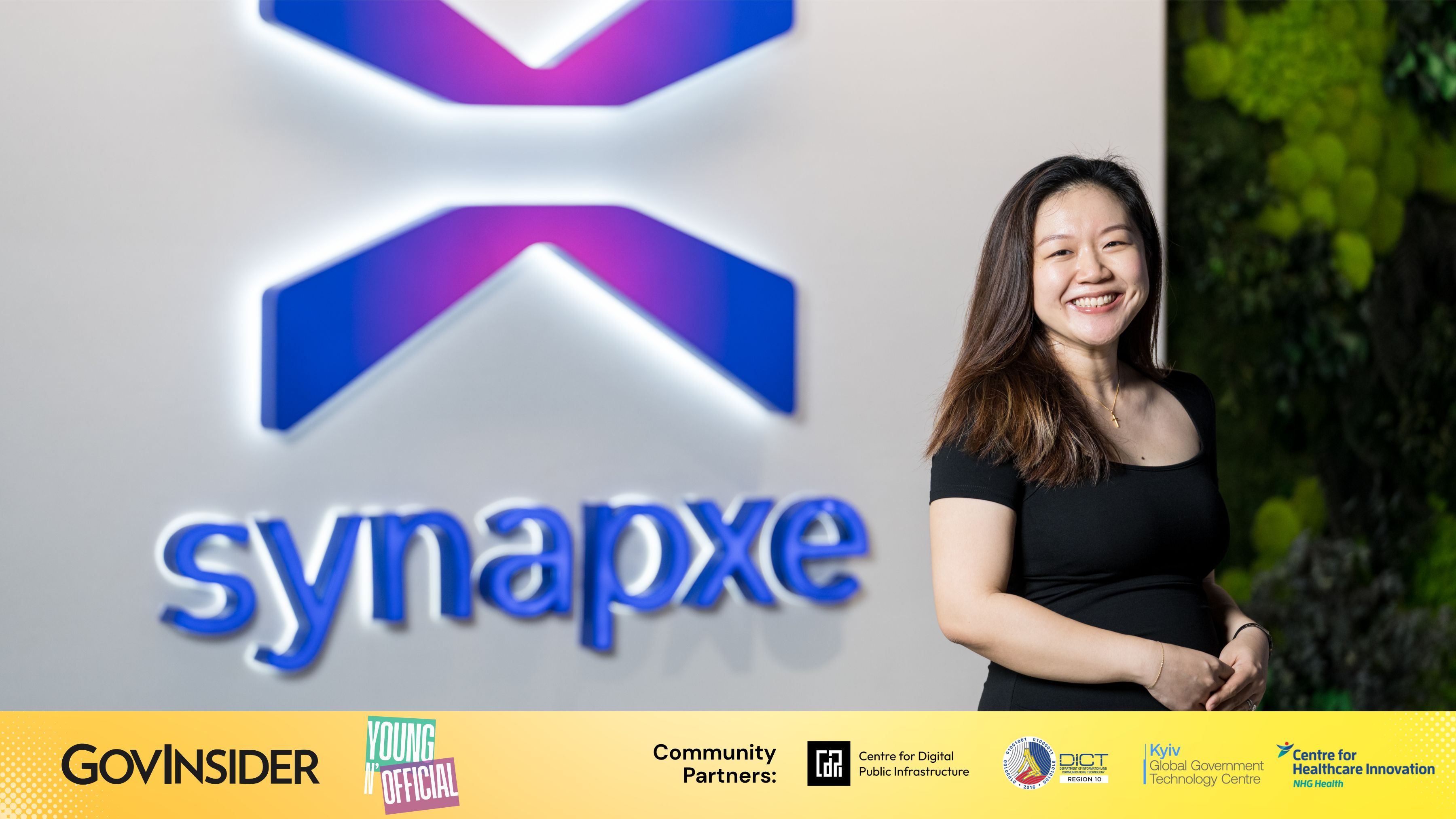
Vicky Toh, Manager, Business Services Group Planning, Centre of Programme Management, New Facilities, Synapxe, Singapore. Image: Synapxe.
1) What is your role in Synapxe and how do you/your team contribute to the public sector and the national agenda?
I lead and work alongside a team of project managers who implement critical IT services for new healthcare facilities across Singapore.
Our role goes beyond technological deployment. We collaborate with stakeholders, healthcare professionals, MOH Holdings (MOHH), consultants and vendors to ensure that the new facilities are operationally ready, digitally connected and able to provide secure healthcare services for our patients from day one.
From securing funding approvals to coordinating complex system integration and operational readiness exercises, we plan and oversee the end-to-end IT system deployment journey to ensure that new facilities open successfully and on schedule.
Our work directly supports Singapore’s national agenda of delivery accessible, sustainable and future-ready healthcare. As healthcare demands continue to evolve with an ageing population and increasingly complex care needs, our responsibility is to ensure that the systems and infrastructure we implement contribute to better patient experiences, stronger healthcare resilience and improved care outcomes for our communities.
2) Tell us about a project you championed. What impact did it have on the community?
In recent years, my team have successfully enabled major new healthcare facilities, including the relocation of the National Cancer Centre Singapore (NCCS) in 2023 and the Singapore General Hospital (SGH) Emergency / National Neuroscience Institute (NNI) in 2026.
For NCCS, the facility was enhanced to support Singapore’s growing cancer care needs.
My team worked extensively with stakeholders to ensure that NCCS was fully equipped and integrated with the necessary IT systems to support smooth patient flow, efficient clinical operations and better patient experiences.
Behind the scenes, this involved countless coordination sessions, workflow reviews, system integration testing, rehearsals and full-dress dry runs to ensure everything functioned seamlessly on opening day, including making adjustments and adaptations to ensure the spaces were practical, efficient and fit for purpose.
The SGH Emergency / NNI project was another large-scale and highly complex project. The facility was redesigned as a one-stop integrated treatment centre, bringing together triage rooms, resuscitation cubicles, critical care areas, clinical consultation rooms and isolation rooms under one roof to enable faster and more coordinated emergency responses.
Most of these rooms require sophisticated medical equipment to be tightly integrated with IT systems to support real-time patient care.
One particularly meaningful aspect was the inclusion of a hospital decontamination station to support Singapore’s preparedness during crises. In light of the COVID-19 pandemic, knowing that our work contributes not only to the day-to-day healthcare delivery but also the national emergency preparedness, gives the project an even greater sense of purpose.
I am most proud of our team’s dedication in delivering both projects – from the long hours of rehearsals, proactive troubleshooting and fine-tuning workflows with healthcare staff. Seeing patients benefit from these improved healthcare environments reinforced the importance of the work we do behind the scenes.
3) As a young professional, how has your unique background or perspective allowed you to identify a solution that others in your organisations might have overlooked?
I started my career as a system analyst in a hospital IT office, which allowed me to understand how IT systems, hospital operations and patient care are deeply interconnected.
In healthcare, any disruptions to critical systems can significantly impact hospital operations, staff operations and patient safety.
Being on the ground gave me a deeper appreciation of operational realities beyond the technical perspectives – besides understanding the technical root causes of the incident, I was able to observe how healthcare staff adapt during disruptions through workarounds and business continuity plans.
Today, as a project manager in CoPM - New Facilities these experiences help me identify potential risks and operational gaps much earlier during project planning and implementation.
In this modern age of technological advancement, majority of the IT systems are tightly integrated with data communication and exchange. By bridging both operational and technical perspectives, I can contribute more effectively.
4) What is your personal strategy for maintaining your creative energy when faced with bureaucracy?
My personal strategy is to keep sharing ideas and never stop trying!
When I have new ideas or perspectives, I like to discuss them with my colleagues, and even my husband. It helps me refine my thinking, challenge assumptions and see issues from a different perspective.
I believe that a picture speaks a thousand words. A storyboard or workflow illustration can sometimes communicate an idea far more clearly than words.
While we have processes and hierarchy to respect, it should not stop us from sharing and showcasing our ideas to our team leads or department heads. Don’t give up or be discouraged if your ideas are rejected. Keep thinking and keep sharing!
5) If you had just one area to invest in to accelerate transformation in the public sector (regulation, technology, talent, etc.), which one would you choose and why?
I would choose talent to accelerate transformation. With the right talent in the industry, we can innovate faster and more effectively. We need our talents to be dedicated, motivated and have a strong belief in their work. With the right attitude and mindset, we would be able to accelerate transformation effectively.
In my opinion, transformation in the public sector, particularly the healthcare sector, requires individuals who are not only technically capable, but also passionate, with the right attitude and mindset to improve outcomes for citizens.
For example, technology can improve our quality of life and help to ease processes. But it takes a capable team to implement solutions effectively, and simplified processes to truly benefit the people we serve.
For me empowering talents will always be the driver of progress.
6) What is your greatest ambition as you grow in your public service career?
My greatest ambition is to build a healthcare system where every resident in Singapore can access quality healthcare services closer to their homes.
This aspiration became more personal as I watched my family members and relatives grow older and navigate their own healthcare journeys. As healthcare needs evolve in our society, I hope to continue growing professionally so that I can contribute to this vision.
7) What is a “universal value” that connects everyone in your department – from interns to directors – and how do you use that to drive collaboration?
An unspoken value that everybody in my department shares is: never leave another teammate to struggle alone.
Whenever a teammate needs our help, be it driving a workflow during a full-dress rehearsal or encounter issues or queries, our teammates will volunteer and assist to the best that they can.
Through working together closely, we understand each other’s weaknesses and strengths, and navigate through our projects effectively.
8) What is the best piece of advice you’ve got for the next generation of public servants?
Don’t be afraid to speak up and share your ideas. Some of the most valuable learning opportunities come from sharing your thoughts and learning others’ views of the issue.
Fresh perspectives can strengthen your ideas and lead to better collaboration. It could be a learning opportunity for everyone in the conversation!
9) What is a myth you wish to debunk about young public servants?
There is a myth that young public servants are less loyal to the organisation and are therefore not worth investing in for the long term.
I believe that the majority of young professionals actively seek self-development and continuous improvement in their careers.
When organisations provide mentorship, meaningful opportunities and a supportive environment for growth and purpose in their work, young public servants are more likely to stay and build long-term careers.
Having been in the same organisation for 10 years since I graduated from NTU, I am grateful for the mentor and colleagues who guided me in my journey. I was glad to have the opportunity to work across different teams and functions, allowing me to continuously learn, grow and deepen my understanding of healthcare.
10) Write a letter to your future self in 2035.
Dear Future Me,
Right now, you are navigating one of the most meaningful phases in your life - growing both personally and professionally, while preparing to welcome a baby to my family.
Some days feel great with the right attitude and mindset while others bring uncertainty and self-doubt; “Will I live up to the standards that I hold myself to?”. Have trust that your resilience will see you through every challenge.
I hope you have become more confident in life and are still in this industry finding joy in your work. I also hope that you have managed to fulfil your ambition and dreams for yourself.
Stay strong in whatever situations you face.
Take care,
Me (from 2026)