Vietnam’s strategy to move from emerging market to financial powerhouse
The government is banking on a mix of robust institutions and sandboxing to establish its new international financial center as a leader in fintech and other emerging finance models.
-1754466889808.jpg)
Rather than merely becoming a special urban area carved out to attract investors, Vietnam aims to position its International Financial Centre to develop new financial models and create space for emerging sectors. Image: Canva
Vietnam is establishing an international financial centre (IFC) by the end of this year.
This is a bold move for a country traditionally known for its centrally planned economy and whose financial system has been dominated by state-owned banks.
With ambitions to compete with regional financial leaders like Singapore and Hong Kong, the Vietnamese government is actively laying the groundwork to build its dual-city IFC plan in Ho Chi Minh City and Da Nang.
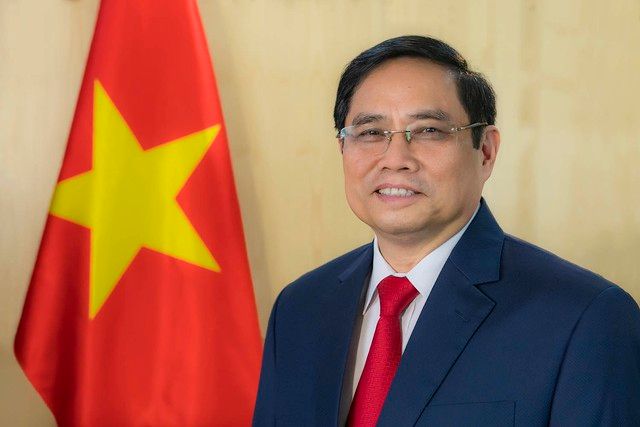
Speaking at a conference recently, Vietnam’s Prime Minister Pham Minh Chinh emphasised that the key to an IFC's success lies in its institutional design, its own legal provisions, a specialised and professional management body, and a policy sandbox.
Rather than merely becoming a special urban area carved out to attract investors, he sees the new IFC to develop new financial models and create space for emerging sectors.
These emerging sectors include digital assets, the green economy, the circular economy, carbon credits, digital banking, and commodity and derivatives exchanges.
Robust regulations and institutions
Speaking to GovInsider, Tony Blair Institute for Global Change (TBI) Vietnam’s Manager, Ly Nguyen, says the recent IFC Resolution, passed in June in the National Assembly, a "groundbreaking" move by the government.
The country’s Ministry of Finance (previously the Ministry of Planning and Investment) as well as the local authorities have also partnered with the TBI to help design the country’s new IFC since July 2023.
The resolution outlines high-level commitments such as establishing an autonomous IFC authority, liberalising capital flows, allowing offshore borrowing, eliminating foreign ownership limits for key financial sectors, enabling innovative trading platforms, and more.
Such “big, meaningful steps” set out in a legal foundation, she says, signal country's commitment to open its market and compete at a global level.
TBI’s work with the government ranges from shaping the IFC’s regulations and governance by studying global best practices, to providing strategic advice on developing key financial sectors including traditional banking and insurance and newer areas like fintech, digital assets green finance.
As part of the resolution, the government will establish an autonomous IFC Management Board with significant decision-making authority, which is supported by TBI.
Ly describes the new board as "an important institutional innovation," emphasising its key role to not only uphold integrity and autonomy, but to adapt quickly and decisively, particularly in the face of emerging risks.
Top officials in Ho Chi Minh City and Danang have announced new plans to invest in infrastructure, train city officials abroad, and recruit foreign experts for key management roles.
To subscribe to the GovInsider bulletin, click here.
Ringfencing and sandboxing innovations
Balancing a dynamic, pro-business financial environment with the need to safeguard the economy's stability is a fundamental challenge for any financial regulator.
Anticipating potential risks, the resolution includes safeguards such as "ring-fencing" the IFC.
What this means is that the IFC is treated as a distinct jurisdiction with its own rules, sandbox mechanisms, and governance, separate from the rest of the domestic financial system.
Recognising fintech as a driver for financial inclusion and IFC innovation, TBI has advised the government early in the project to adopt a regulatory sandbox model to enable this growth, says TBI Vietnam’s Associate, Tu Nguyen.
The resolution supports innovation by offering companies in the sandbox various benefits, she adds. These include certain legal exemptions, liability protection, and financial support that does not need to be repaid.
Learning from established financial centers like London, New York, Singapore, and Hong Kong, TBI has also found that these countries have adopted either a phased or multi-pronged approach to maintain a balance between innovation and stability.
For example, both Singapore and Hong Kong used a phased approach to capital liberation, initially permitting capital inflows for productive investments while restricting more volatile, short-term flows.
Additionally, these financial hubs have made significant investments in deepening and broadening their local capital markets.
Remaining challenges
Building on the resolution, TBI will continue to assist the Vietnamese government with implementing and delivering the IFC.
This involves helping both central and local governments put the sandbox framework into practice.
Ly highlights a few key areas Vietnam should focus on in the implementation phase:
-
Real-time monitoring: The IFC authority needs a robust, real-time infrastructure to track capital flows, financial exposures, and systemic risks as they emerge.
-
Quick-response mechanisms: With risks emerging overnight, especially in digital finance, the authority needs emergency powers and a clear protocol for coordinating with central government agencies during a crisis.
-
Human capital: The authority must be able to recruit top-tier experts in fintech, capital markets, and international law. This is crucial for properly assessing and monitoring new innovations.
“The adoption of the IFC resolution by the National Assembly is a major milestone, but in our view, it’s only the starting point.
“The real challenge and opportunity lie ahead in the delivery phase, turning what has been promised into tangible outcomes that inspire investor confidence and generate real economic impact,” she shares.