
What a gender-sensitive digital public infrastructure (DPI) looks like
The Women Building DPI panel at GovInsider’s FOI 2026 event underlined the value of gender-sensitive design, hybrid systems, as well as informal mentorship networks as key to create sustainable digital ecosystems.
-1772787764983.jpg)
Supported by GovStack, the Women Building DPI: From Vision to Delivery panel was represented by speakers from government and multilateral organisations across Asia, the Americas and Europe.
While technology could always create the rails, people are the ones who create the engine for what makes digital public infrastructure (DPI) work.
These were the words of World Bank’s Global Lead AI Business Line, Sharmista Appaya, on the Women in DPI panel at GovInsider’s Festival of Innovation (FOI 2026) event on March 4.
Supported by GovStack, the Women Building DPI: From Vision to Delivery panel was represented by speakers from government and multilateral organisations across Asia, the Americas and Europe.
Relative to infrastructure and policy frameworks, people consistently receive the least attention and funding globally, despite being the most important layer for sustainable digital ecosystems, Appaya added.
Ahead of International Women’s Day on this Sunday, we surfaced the key takeaways from the panel underscoring the transformative potential of women-led DPI initiatives in driving more inclusive and people-centered digital transformation.
Weave inclusion across high-level policy and last mile delivery
DPI is only as effective as its reach among users. Indonesia’s Ministry of National Development Planning (Bappenas) provides a master class in designing around the user’s realities rather than expecting the user to adapt to the system.
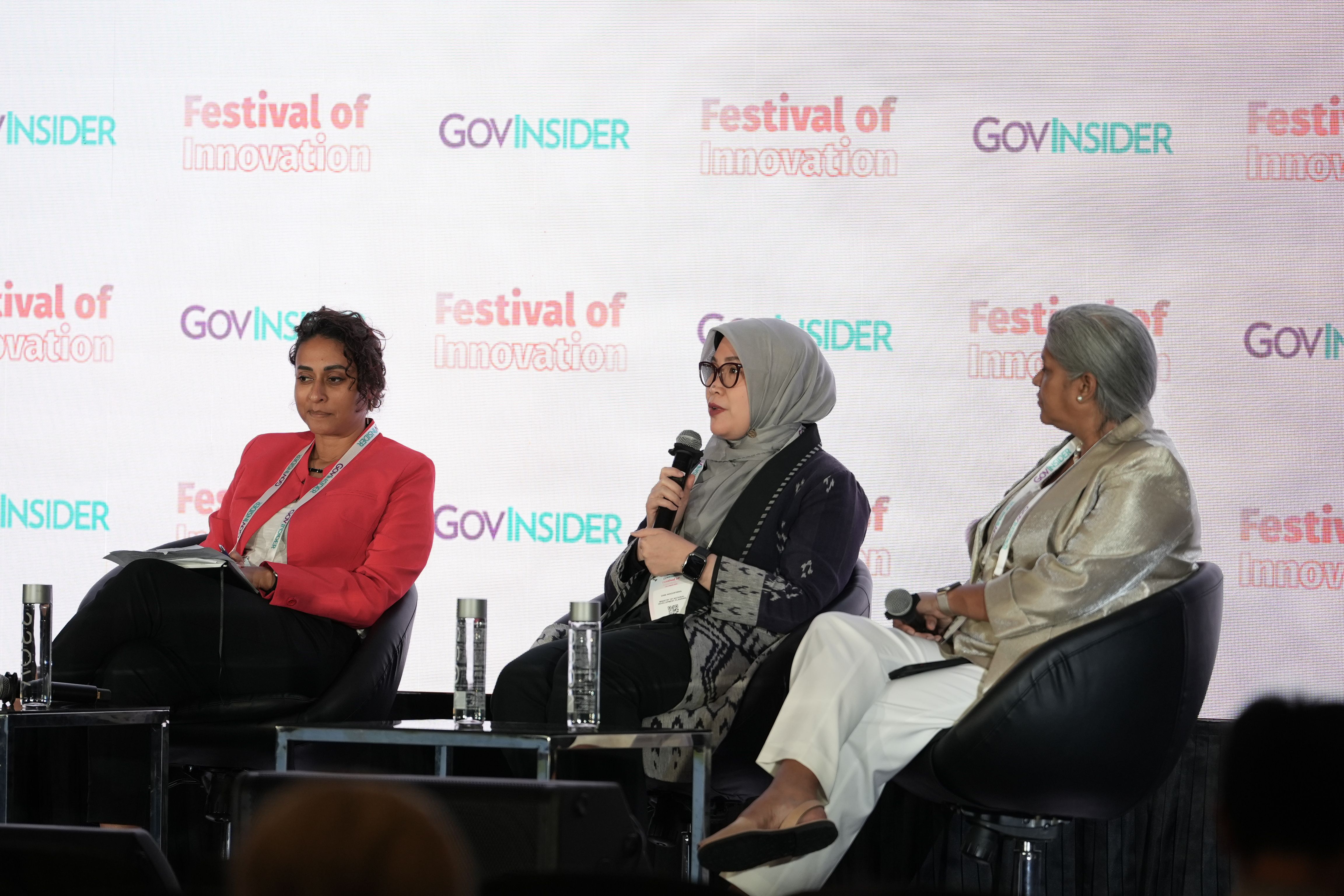
Bappenas’ Director of Data for Development and Digital Government Dini Maghfirra shared how her team adjusted data collection schedules to account for women's domestic routines, by avoiding 10:00am to 12:00pm when women prepare lunches.
Inclusion must be weaved in not only terms of representation at the highest level of policy, but also at the infrastructure’s design and last mile delivery at the village, she said.
“DPI looks fancy,” she said, adding that effective implementation in reality requires putting in place both digital means and public officers in-person.
"We need to understand that not everyone in Indonesia [across] 287 million has a smartphone.
"So, what we found right now is making sure that the last mile can be reached through a public officer,” she said.
Design inclusive DPI and use DPI to promote inclusion
DPI generates a virtuous cycle of inclusion by enabling localised innovations. While the inclusive design of DPI provides access, the innovations that emerge from DPI deliver the impact of underserved populations.
World Bank’s Appaya cited an example of an innovative solution led by female entrepreneurs in India using alternative data points and artificial intelligence (AI) to solve the longstanding problem of women’s lack of property collateral.
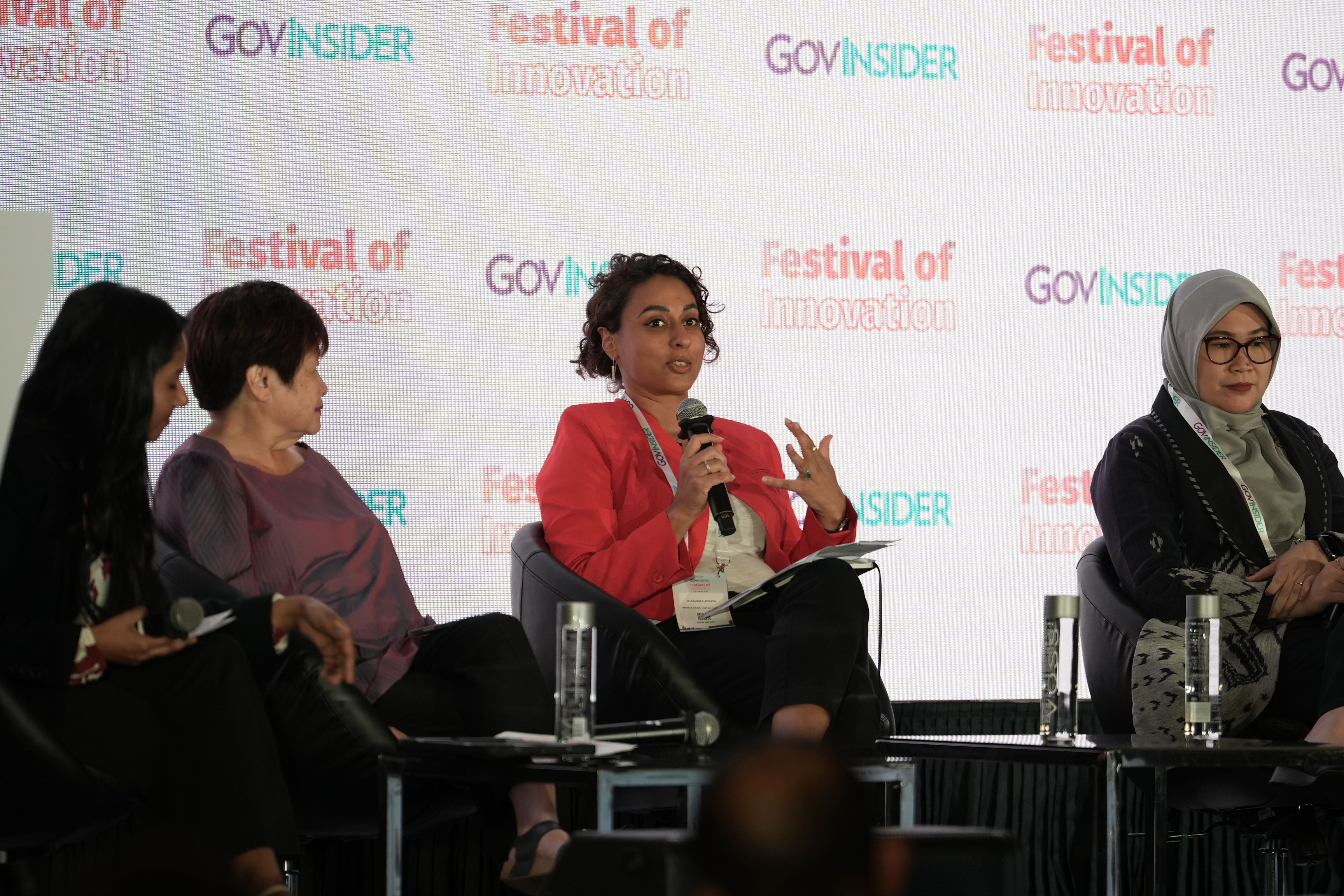
Since land and homes were often registered to men, women have traditionally been locked out of the credit market.
Seamless data exchange, enabled by DPI, has allowed lenders to track when small women-owned businesses gave credit to customers and when invoices were paid.
Combined with AI-driven modelling, the alternative data points create a reliable credit score that allows women to secure independent loans based on their business performance rather than their assets.
“How do we expect to design good DPI when the people designing DPI aren't allowed to look after their family?” said People-Centered Internet’s Co-Founder Mei Lin Fung.
Inclusive DPI also needs to account for the needs of the informal care economy, including childcare and parental care which are largely managed by women, that keeps the society running, she added.
Champion mentorship and informal networks
The speakers reflected how informal communications and peer networks, such as WhatsApp groups, often enable faster decision-making than formal channels.
Acknowledging that women frequently battle imposter syndrome, Trinidad & Tobago’s National Information and Community Technology Company Limited (iGovTT)’s former Team Lead for Communications, Nicole Greene, highlighted that the remedy is “giving back.”
Greene is a participant of GovStack's Women in GovTech Challenge this year.
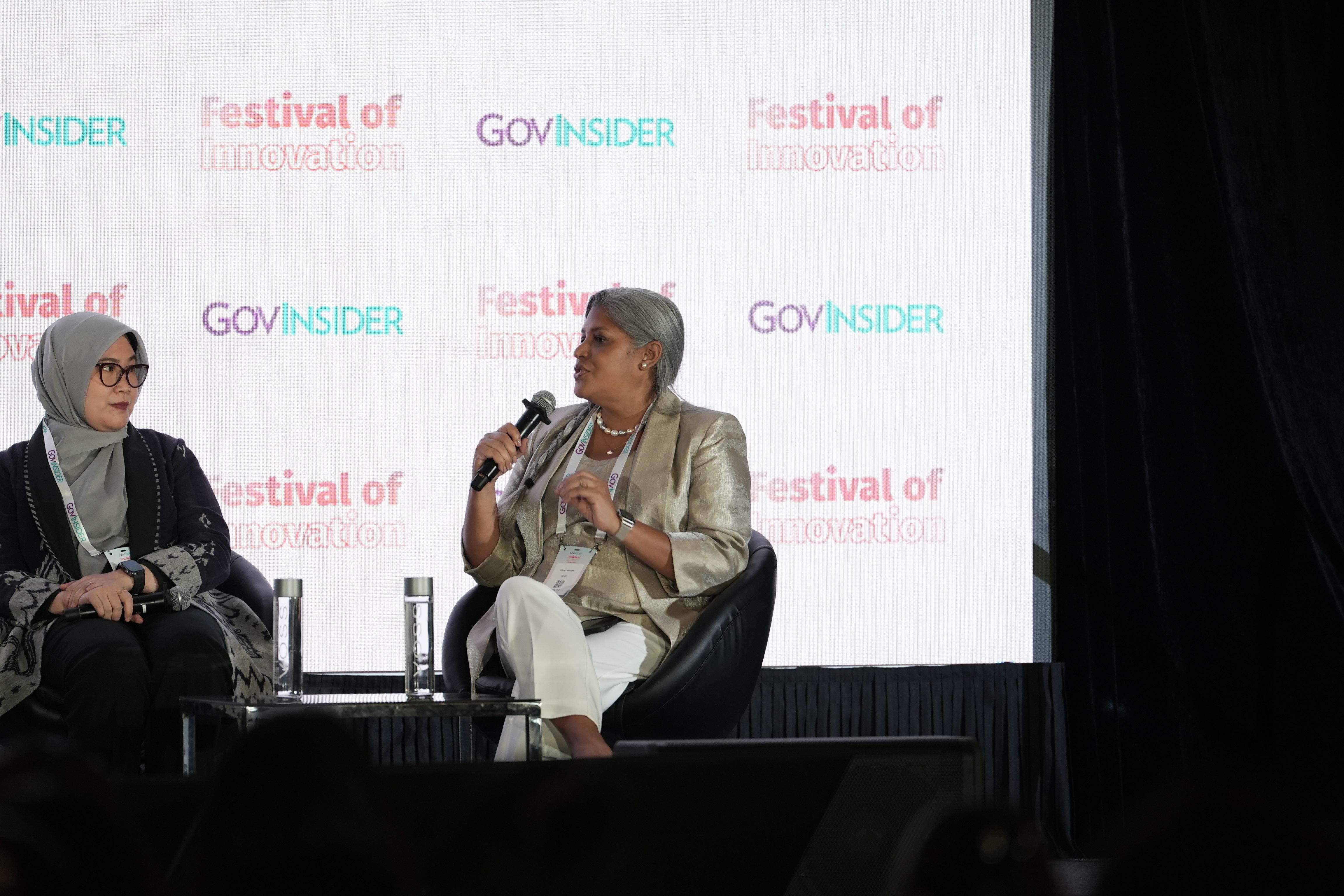
She suggested agencies to take a tiered approach with empowering female public officers, starting with individual encouragement, mentorship programmes, moving to collaborative business groups, and eventually seeking funding to become more institutionalised structures.
The panel moderator, GovStack’s advisor Puja Raghavan shared about the Women in GovTech challenge. Currently in its third cohort, the mentoring programme received 1,370 applications from 137 countries, with 30 per cent coming from Asia.
“The numbers really speak for the need for such a programme,” she said, adding that the programme was intended to build a community of DPI practitioners across the public sector, private sector and civil society.
As the World Bank’s Appaya noted, mentorships do more than just build skills but help tackle the mid-career “brain drain” where female officers leave before they can lead DPI implementation.
To move beyond mere women in STEM numbers, the public sector must actively build a support system around the career trajectories of women, Bappenas' Maghfirra and Appaya said.
You can watch the video of the panel on-demand here.