
What if you don’t need a superapp for every other digital service?
HTX, Inclus and Microsoft speakers at GovTech Singapore’s Digital Services Awards 2025 event discussed the importance of simplicity and avoiding unnecessary complexity in digital services.
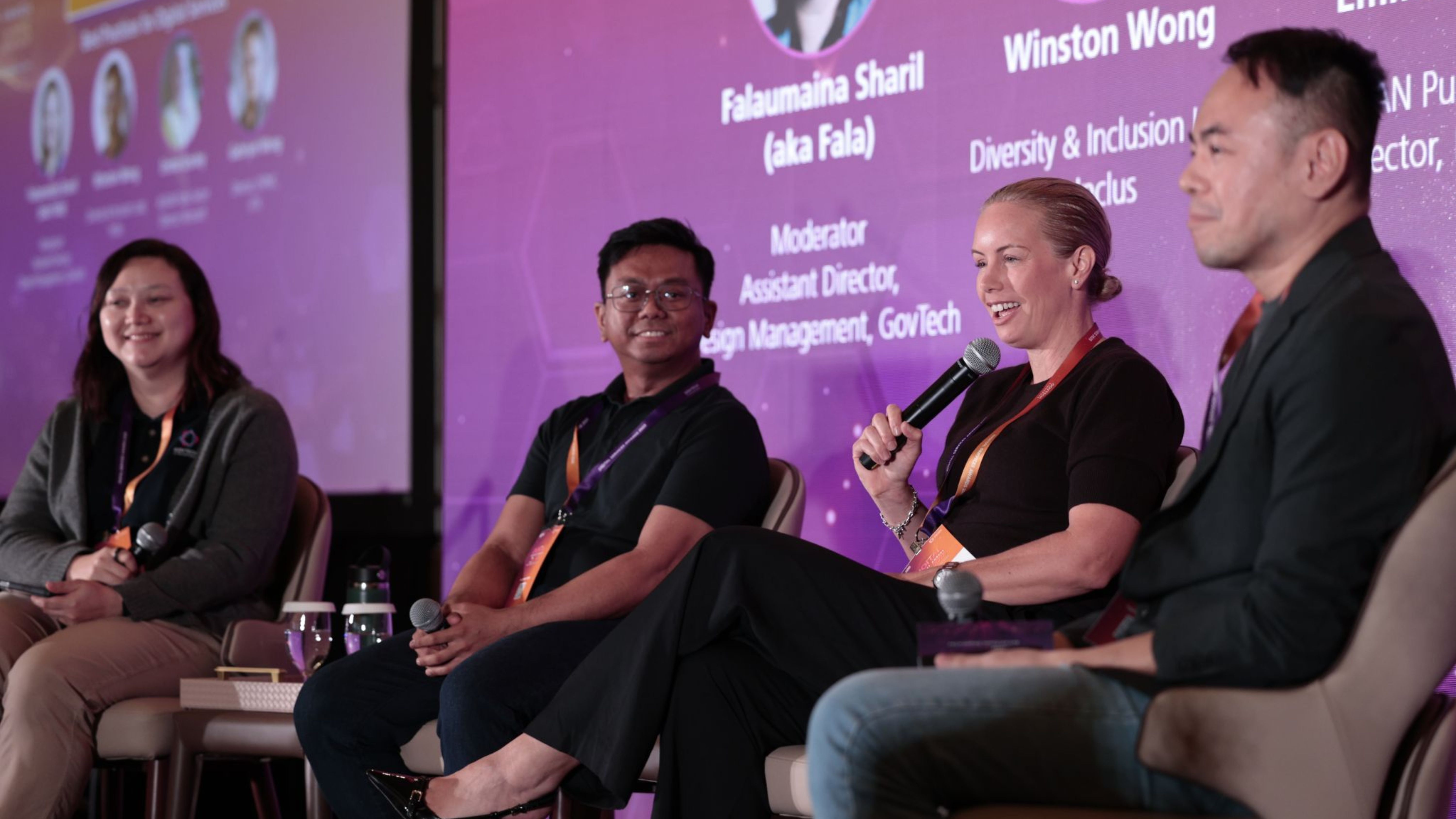
(From left to right) GovTech Singapore's Assistant Director of Design Management, Falaumaina Sharil; Inclus’ Diversity & Inclusion Lead, Winston Wong; Microsoft’s ASEAN Public Sector Director, Emma Gooley and HTX’s Director of Digital Service Programme Manager Centre, Gabriyel Wong. Image: GovTech Singapore
Forget fancy interfaces. Keep it simple and focused.
This was the core insight shared by speakers at the Best Practices for Digital Services panel at GovTech Singapore’s Digital Services Awards (DSA) 2025 event on November 21.
HTX’s Director of Digital Service Programme Manager Centre, Gabriyel Wong, emphasised the importance of “design by experience,” which is for agencies to think about how users interact with their services.
“Purpose and care are sometimes difficult to exhibit through digital services. So, it’s going the extra mile to think about the user’s end-to-end experience,” he explained.
Inclus’ Diversity & Inclusion Lead, Winston Wong, who is a person with disability (PWD) himself, as well as Microsoft’s ASEAN Public Sector Director, Emma Gooley, also highlighted that there is no need to “supercharge” and add on features to make a digital service like a superapp.
Gooley explained how frequent, unnecessary changes could confuse users and leave them lagging.
Instead of feature bloats, prioritise developing stable and usable services. Services then become simple and functionally clear for users, making them automatically more accessible and inclusive for everyone.
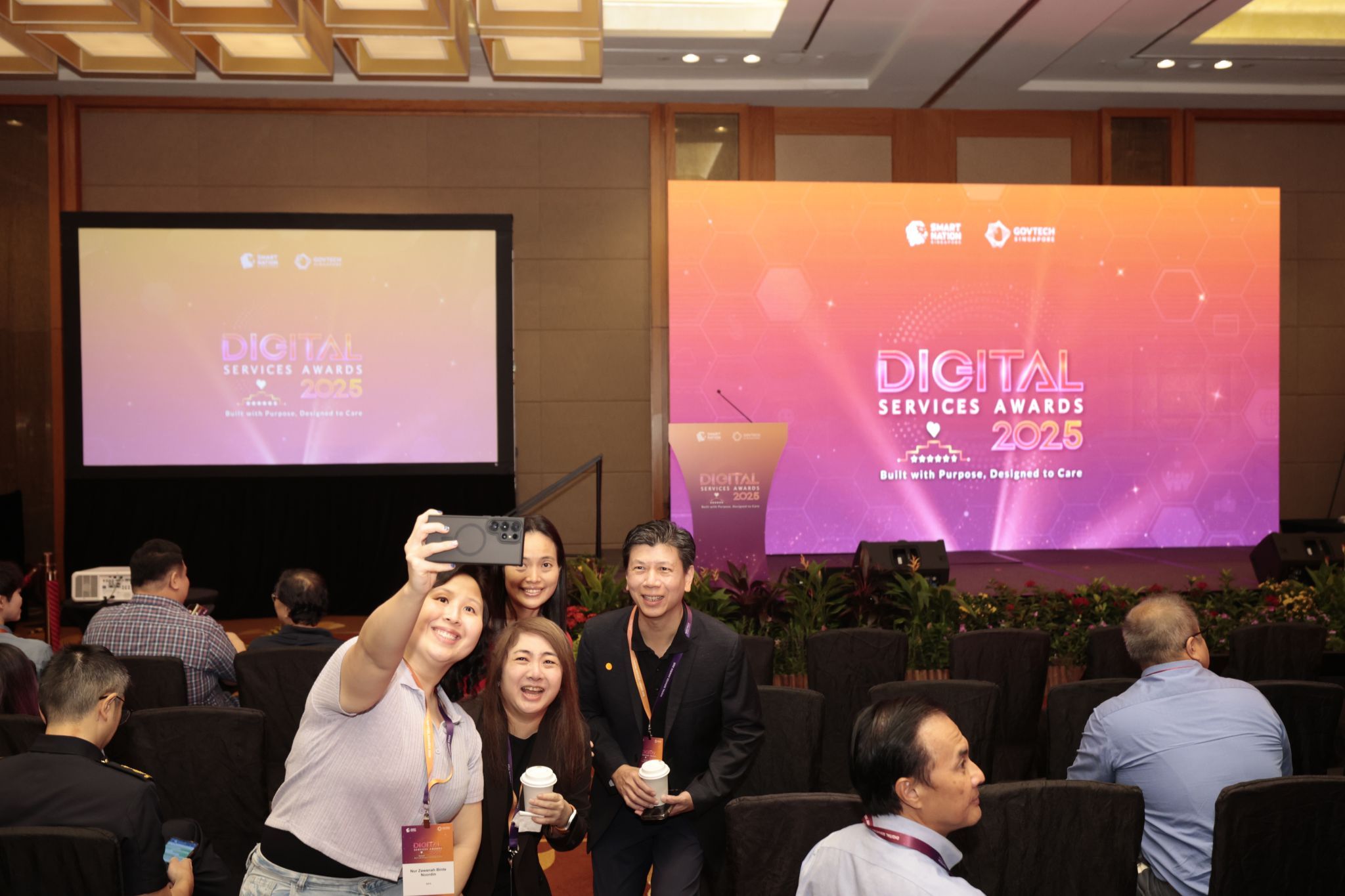
GovTech’s DSA event, which is in its fifth edition, recognises the agencies across both public and private sectors across 11 categories for delivering impactful digital services to the public.
Eating your own dogfood
“If you care about usability, you should at least have a taste of what you’ve designed,” said HTX’s Wong, explaining the concept of “dogfooding”
Addressing a question on best practices to adopt amidst limited resources, Wong explained that internal testing is key for catching immediate flaws, usability issues, and pain points, allowing teams to resolve them before the service is released to the public.
While internal testing is a necessary first step, testing with actual users remains key to getting real-world feedback on digital services.
Microsoft’s Gooley highlighted that digital services shouldn’t be treated as static projects, but constantly being iterated and refined to be
able to anticipate future needs.
She reflected how digital services have evolved over time from being a means to simply find information, to now being expected to deliver deeper and more personalised engagements over time.
Instead of only delivering what users expect, service designers today must also proactively ask “what’s the future needs of the users?”, she explained.
Wong shared how adopting the “five whys” technique when engaging with users could help designers move past surface-level symptoms to uncover deeper issues in user behavior.
Engaging in the process of asking “why” and being curious helps his team uncover what exactly they could do to improve the service for their users, he explained.
Gooley also shared the potential to tap into infused artificial intelligence (AI) to improve user experience.
Infused AI refers to integrating AI capabilities directly into applications and business processes to improve them.
“AI can move beyond just chat bots and answering queries to connect your users to other websites and prepopulating fields. There’re so much to underpinning a service and user engagement," she explained.
Accessibility beyond a checkbox
“Accessibility is not just about breaking down barriers for us [PWDs], it's about opening a door for us to access something,” Inclus’ Wong said, highlighting accessibility as an opportunity to onboard more users on the service.
Both Microsoft’s Gooley and HTX’s Wong pointed out the importance of adopting a “shift left” approach to both accessibility and security, advocating for these concepts to be embedded in the processes rather than treated as later-stage compliance checks.
Rather than relying on dedicated advocacy, accessibility needs to be forged into a habit and built into the team’s DNA, said Wong.
When accessibility is built into defined processes and disciplined workflows, it becomes a much easier and more effective way to achieve inclusion, he explained.
Gooley highlighted the need to “think beyond what’s maybe perceived as abilities or disabilities,” broadening the definition of inclusion to cover generational gaps, digital literacy and linguistic diversity.
Acknowledging the challenge to ensure that government services are inclusive to everyone, Gooley shared that designers could begin to design with a few groups of audiences in mind without overcomplicating the service.
Then, continue to iterate by working with different consultants and user groups to expand the service and ensure that no one is left behind.
Keeping the culture of improvement and openness
Speaking to GovInsider in a separate media stop, Ng Choon Hwee, a contributor to GovTech’s Singpass Accessibility Testing since 2021, highlighted the need for agencies to “make it easier [for PWDs] to find the place to provide feedback and the feedback results in the app becoming more accessible.”
Ng is also a member of Tech Kaki, a community of 6,000+ citizens who participate in focus groups, user testing sessions, surveys, and more to offer feedback on digital government services.
“You have the website and the app itself. But where do you want people to provide feedback? It’s sometimes quite hidden, and I think [the place to provide] feedback should be made more prominent,” he shared.
According to GovTech’s official release, Ng’s feedback, including reporting bugs, unlabeled buttons and usability issues, have led to crucial fixes to the Singpass app like the face verification.
His insights have made Singpass more inclusive for over 1,800 visually impaired users annually.
Concluding the panel, Inclus’ Wong underlined how accessible and inclusive design isn’t just a moral or legal requirement, but a matter of universal interest.
Using the example of the natural ageing process, he made a call for the current generation of designers to build inclusive digital services for their future selves.
“As you grow older, you would wish that certain things at that time are accessible to you.”