
What it takes to design tech for high-touch needs
Liau Wen Rui, AfterLifeSG’s product manager at GovTech Singapore, argues that when digital products are designed with sensitivity, they can fundamentally shift user behavior to embrace a digital space for high-touch remembrance of the deceased.
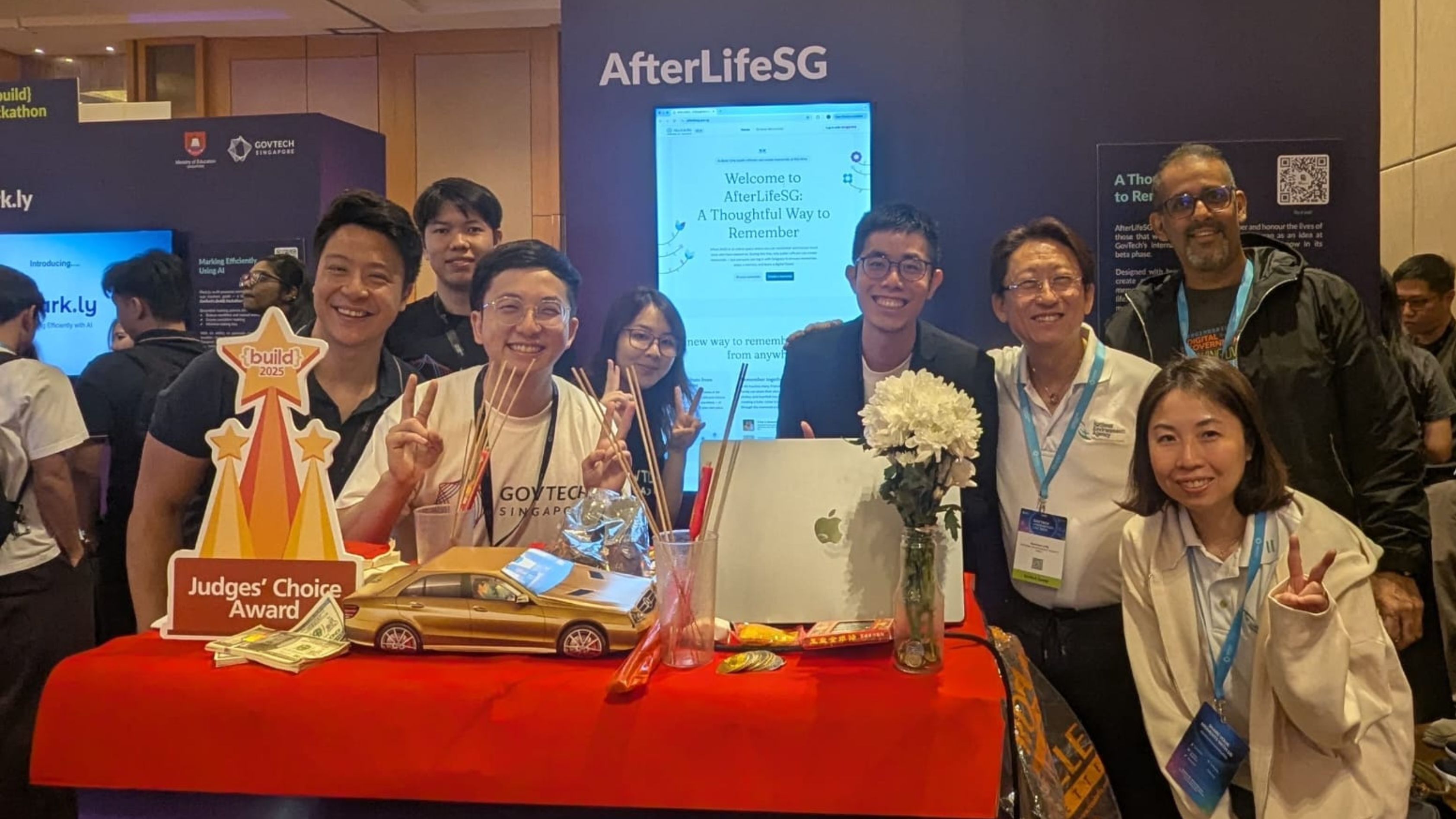
(from left to right) GovTech Singapore's Software Engineer Tsang Bao Xian; GovTech's Systems Engineer Justin Ng; GovTech's UX Designer Arthur Lee; GovTech's Software Engineer Ellie Yee; GovTech's Senior Product Manager Liau Wen Rui; National Environment Agency (NEA)'s Head of Memorial Facilities Planning Division Brandon Low; NEA's Assistant Director of Memorial Facilities Planning Division Decline See; and GovTech's Senior Digital Business Analyst Talib Hameed. Image: Liau Wen Rui
A government-designed digital product is seldom celebrated for its emotional resonance, yet GovTech Singapore’s digital memorial platform, AfterLifeSG, is achieving just that.
With a customer satisfaction score of 4.32 out of five, which GovTech Singapore’s Senior Product Manager, Liau Wen Rui, highlights is a higher than usual score, AfterLifeSG is proving that sensitive and meticulous design can succeed in the high-touch domain of grief and memory.
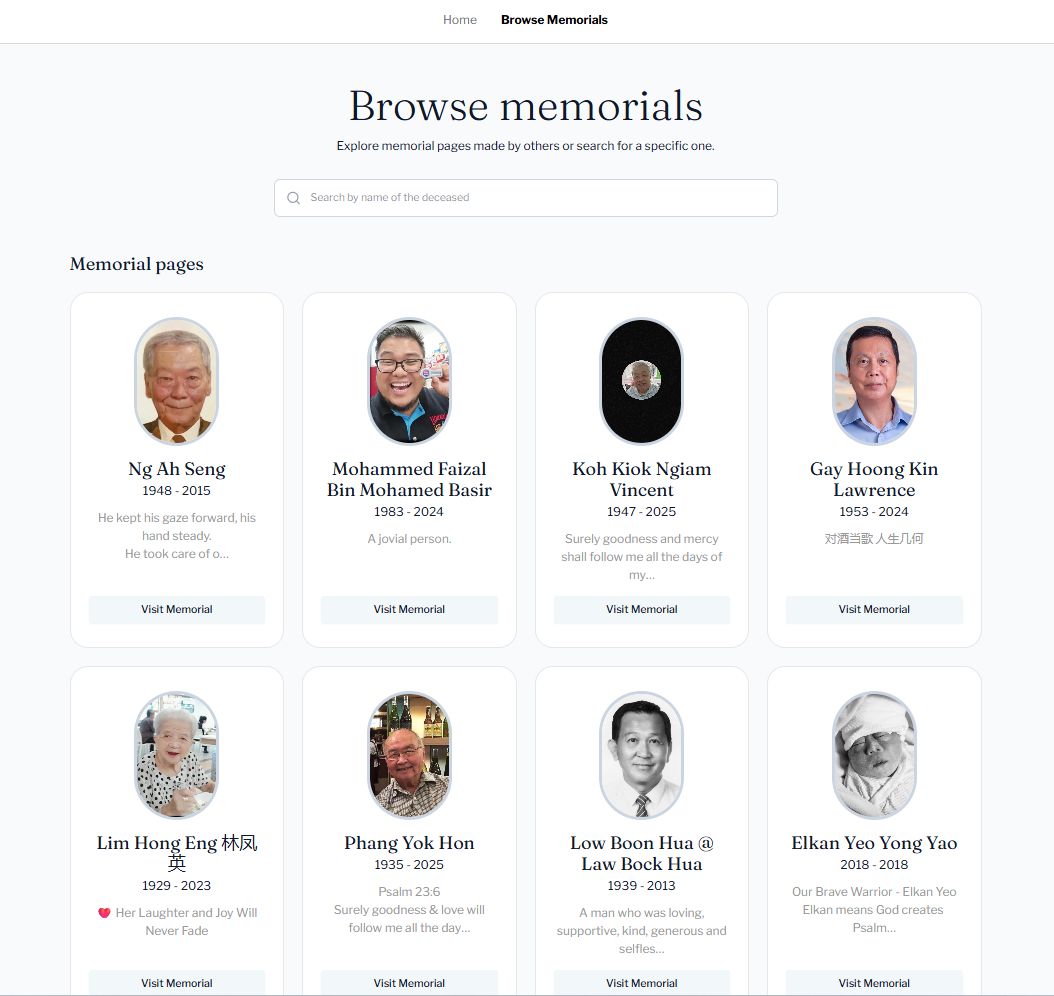
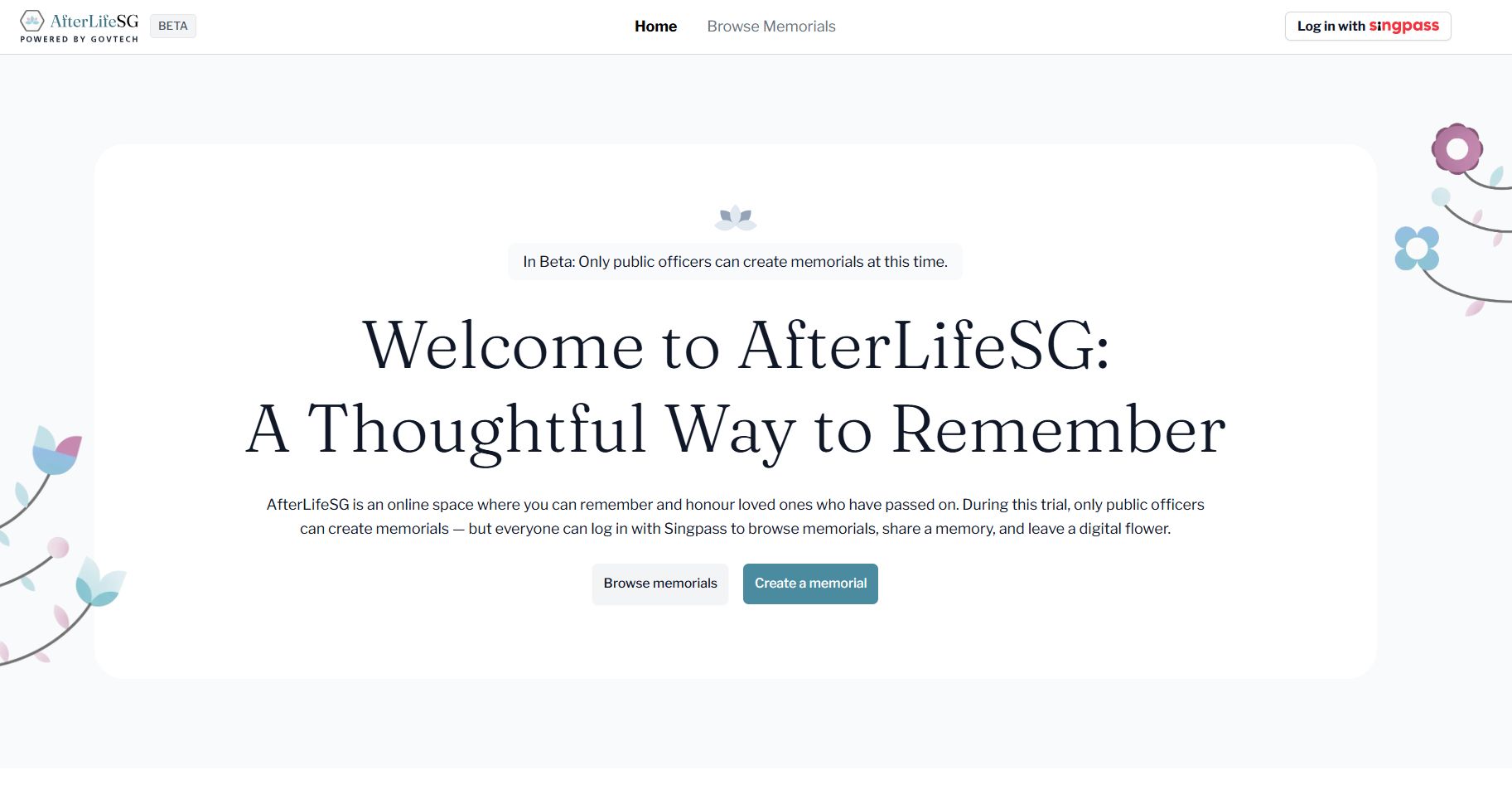
AfterLifeSG is a digital platform that allows users to create online memorials for their deceased loved ones.
The platform was Liau’s passion project, brewing underneath the surface, and born out of GovTech's {build} hackathon when the chance came.
He leads a five-person team who are working in part-time capacity on top of their day jobs.
The platform was rolled out in September to public officers across the whole of Singapore government (WOG), in which the process from ideation to prototype launch took just three months.
As of November, it hosts more than 80 digital memorials, over 220 memories users have posted about their loved ones, and more than 250 digital flowers.
Thirty of the memorials are public, while 50 of them are privatised.
"I do think that we can shift behaviors of how people are actually remembering the deceased,” says Liau to GovInsider. For that to happen, user research is key to finding out if people are open to using a digital product for remembrance, he adds.
“People are open to a digital remembrance platform,” he observes, but the biggest factor is its execution.
Surprising receptivity of elderly users
The team’s user research validated the demand for a digital memorial platform, and reinforced the team’s belief that the platform should be executed in a respectful and accessible way for everyone to preserve their life story.
The most surprising result that emerged from the research was that the elderly were the most receptive to the idea of a digital remembrance product like AfterLifeSG.
“A lot of them are thinking about what remembrance will look like for them. I think the topic of talking about death and memory isn’t as taboo as what people expect,” he explains.
He adds that many older persons today have single children and express the desire to not burden their children with the complexities of physical burial.
In Singapore, the burial period for physical burials is strictly limited to 15 years due to land scarcity.
Liau recalls a touching interaction of an older person, when upon seeing the AfterLifeSG platform, commented that only famous people can build a digital presence.
“What AfterLifeSG tries to do is make sure that everyone gets their story captured,” he shares.
The platform is currently still being piloted, and the team is assessing the options to expand this to a wider audience beyond the WOG.
To subscribe to the GovInsider bulletin, click here.
Deliberate, user-centric execution
The different elements of the AfterLifeSG platform, including its earthy tones, font choices, the secure use of Singpass authentication to leave comments or flowers, were “very deliberate design decisions that we made to make sure that it serves the user’s needs,” says Liau.
To ensure that the digital platform aligns with established social and legal norms, the GovTech team also partnered with the National Environment Agency (NEA) to leverage the latter's domain expertise.
When addressing privacy concerns, such as setting up a memorial without the deceased's explicit consent, the team took reference from existing processes for niches and burials, where decisions are managed by the next-of-kin.
Other intentional design choices include using the term “flowers” on the platform, instead of “offerings” which tend to be more religiously loaded.
The tech team was also given hands-on experience of operational considerations at the physical remembrance sites like cemeteries and columbariums, allowing them to apply these considerations to a digital platform.
To address the cultural sensitivities of this product, the team also engaged six different religious groups over 20 user interviews, which is considered a high level of engagement for a pilot project.
Success factors
Clear scope, agile teams, and supportive organisation were the three success factors that stood out.
GovTech’s Software Engineer, Ellie Yee, who is part of Liau’s team, shares with GovInsider that she was initially unsure of positioning a digital product in an emotionally sensitive space.
“I think the storytelling aspect of it was very strong, which was something I didn’t feel about other projects. There are also a very clear problem and solution, which got me wondering why more people aren’t exploring this,” she says.
Liau highlights that the team will continue to embrace an agile and collaborative methodology moving forward.
Aside from launching fast and iterating along the way, he notes that having a cross-functional team of user experience designers, engineers, communications and more was also key.
He shares that the most fulfilling aspect of working on the product was to be able to rally different functions together on the same mission and leverage each other’s strengths.
You don’t need to be a technical person to contribute meaningfully to a product, he says, adding that aspects like legal compliance, operations and research are just as vital to the product's success.
The core challenge for civil servants who are naturally busy with their day jobs is “carving out extra time” to work on side projects like AfterLifeSG, Liau says.
While GovTech provides an open environment and support for innovative projects, Liau is driven by the “flow” and personal discipline when it comes to implementing these projects.
Flow refers to a mental state where one is fully immersed and focused on an activity, leading to efficiency and enjoyment of work.
“I'm driven by the challenges and problems that drive me into flow. So, for example, AfterLifeSG drove me into a flow state. And you can see, that's how we can get the number of outputs we have in this period,” he says.