
What makes a government platform click for youths?
Singapore’s National Youth Council (NYC) pointed out that user feedback, rapid iteration and a ‘fail fast, learn fast’ ethos were key lessons in building its youth civic action engagement platform.
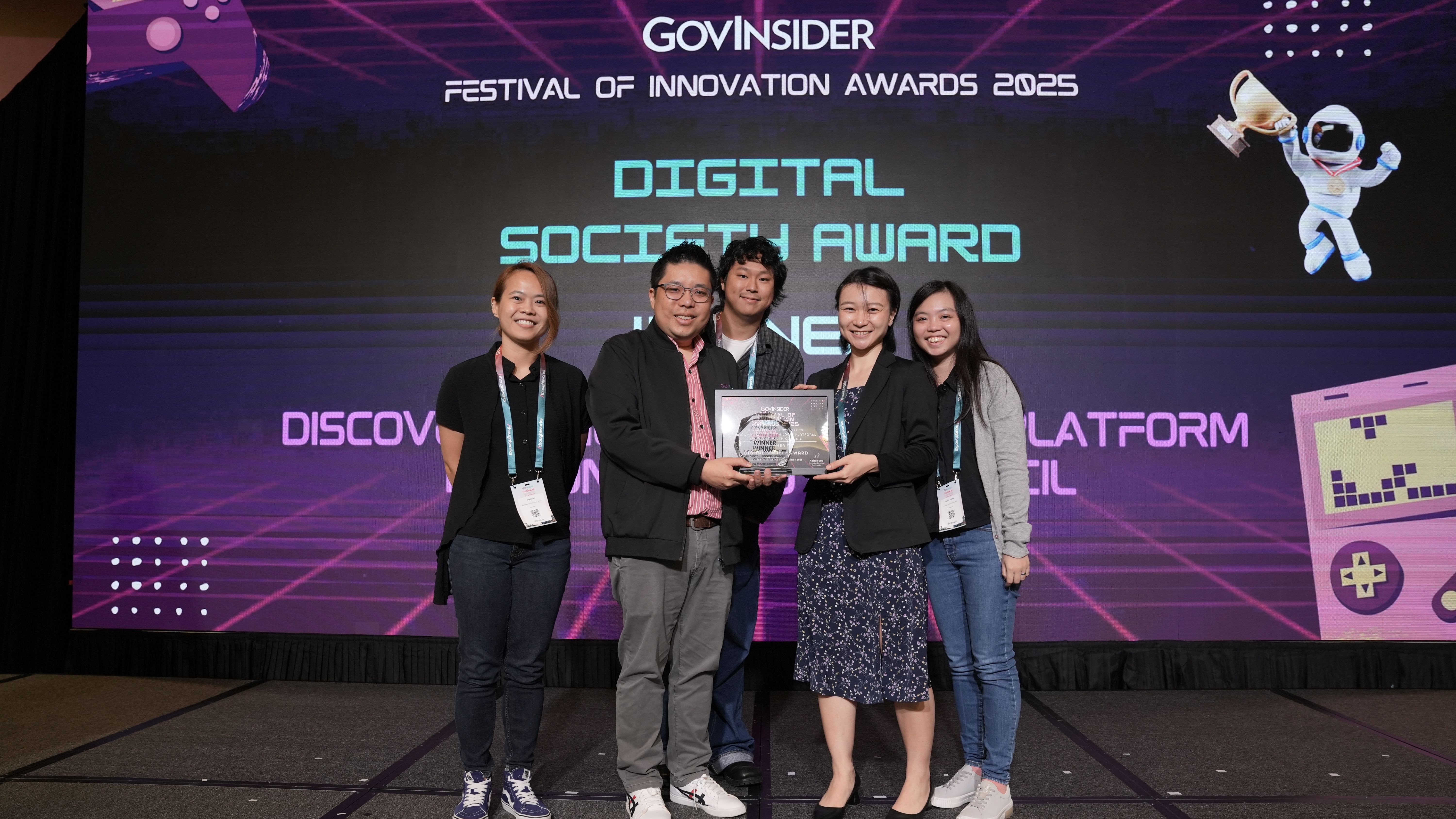
Singapore's National Youth Council (NYC) clinched the Digital Society Award at GovInsider's Festival of Innovation (FOI) 2025, which celebrates digital initiatives that improve services and have a significant societal impact.
A single platform that connects and delivers a variety of services to youths in Singapore was the goal that the National Youth Council (NYC) envisions for the future.
This strategy fits into the life event approach adopted by the Singapore government, known as LifeSG, to make it easier for citizens to access services they need at different points of their lives.
As the first step towards a single platform, the government agency has launched two micro-platforms, Discover On My Way (DOMW) for career exploration and Discover Civic Action (DCA) for civic engagement.
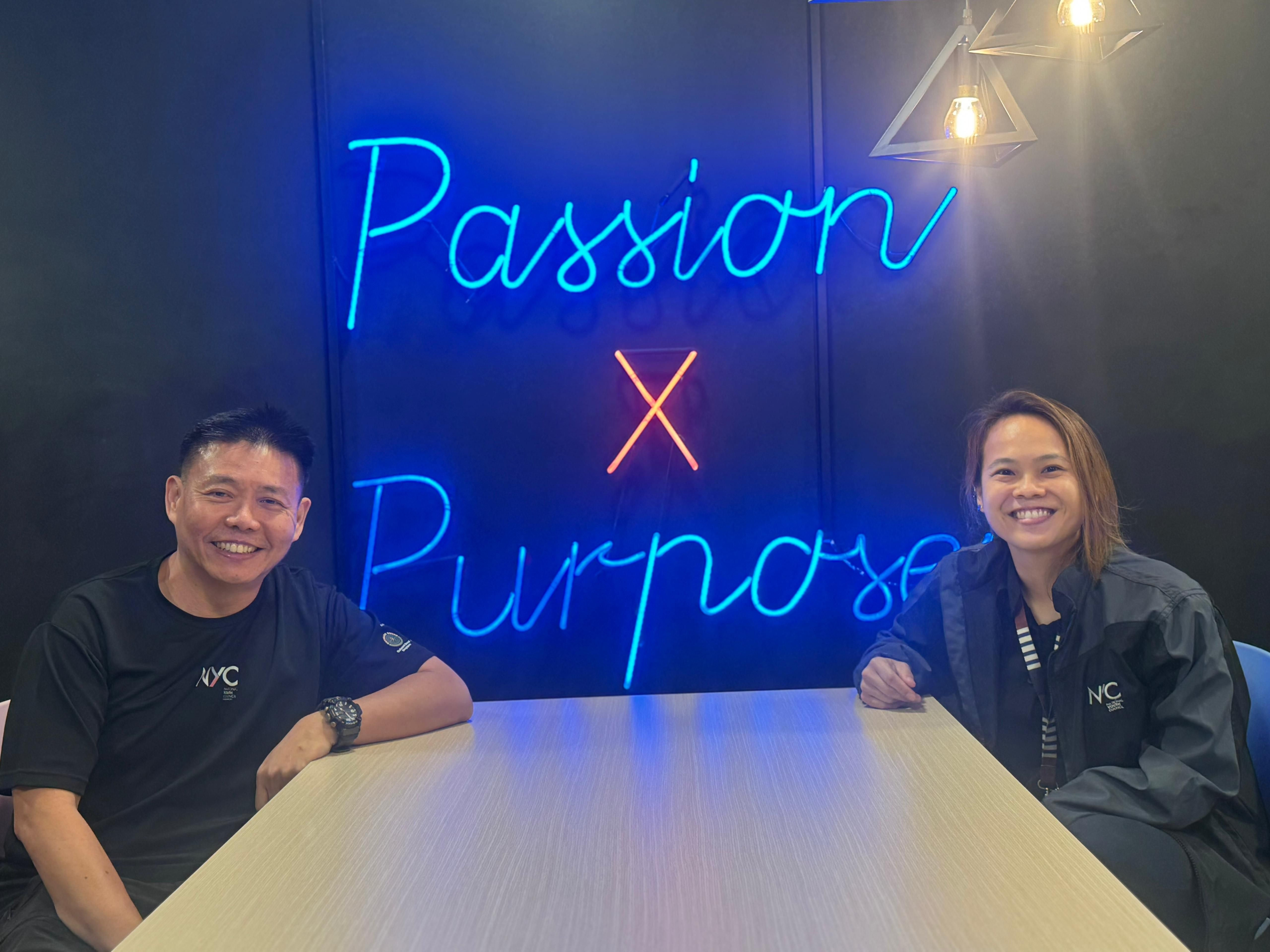
Speaking to GovInsider, NYC’s Assistant Chief Executive, Ong Kah Kuang, and Senior Manager (Transformation), Grace Lim, say the end goal is for Discover to be a one-stop shop for users aged 15 to 35 to access information and programmes that achieve their aspirations and support their needs across their life stages.
The agency launched its second platform, DCA, 10 months (December 2024) after it launched DOMW in February 2024.
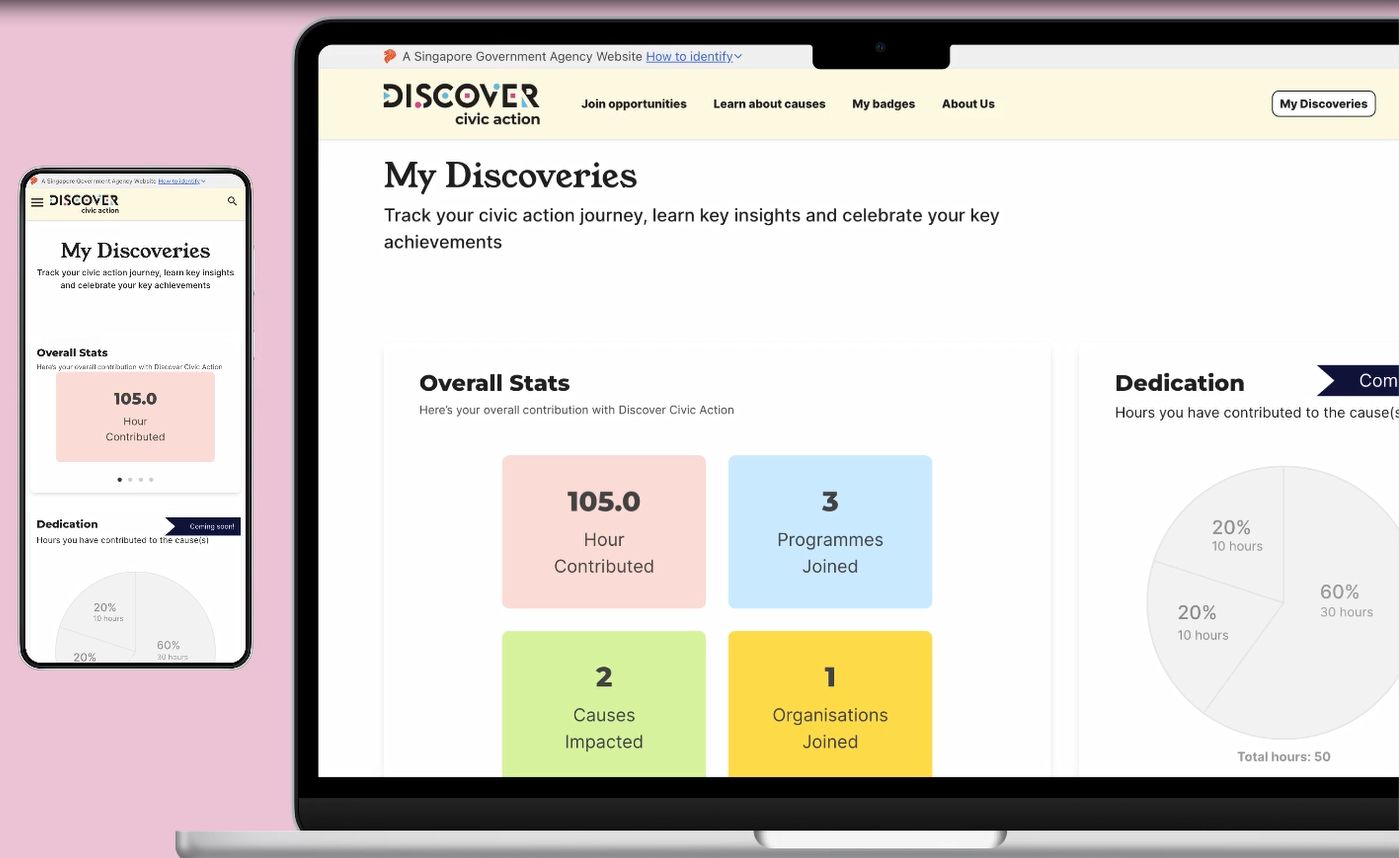
The DCA platform simplifies the process for Singaporean youths to find and join volunteering activities, as well as partnering organisations to create events.
Within just two months since its launch, DCA registered 24,000 unique users.
This achievement earned NYC the Digital Society Award at GovInsider's Festival of Innovation (FOI) 2025, which celebrates digital initiatives that improve services and have a significant societal impact.
The team’s effort with the DOMW platform was also recognised as one of the top three finalists for the most user-centric website at the Singapore’s Digital Services Awards hosted by GovTech Singapore.
Ong highlights that an agile approach, user feedback, holistic stakeholder inclusion and a multidisciplinary product team have been key to developing digital products that appeal to both youth users and its partners.
To subscribe to the GovInsider bulletin, click here.
Shifting from waterfall to agile approach
Government agencies, including NYC, are increasingly moving away from the traditional waterfall project management approach and adopting more agile methodologies, Ong notes.
Given the rapid pace of technological change, agencies are more receptive than before to adopt a more flexible and responsive approach to building digital products, he explains.
This contrasts with a waterfall approach, which is more rigid and focuses on completing each phase of a project in order.
During the product development, the team spent most of the time doing the initial user research and later feedback from evaluating and validating the minimal viable products (MVPs).
They analysed data from over 2,000 youth surveys and nearly 50,000 participation records, says Lim.
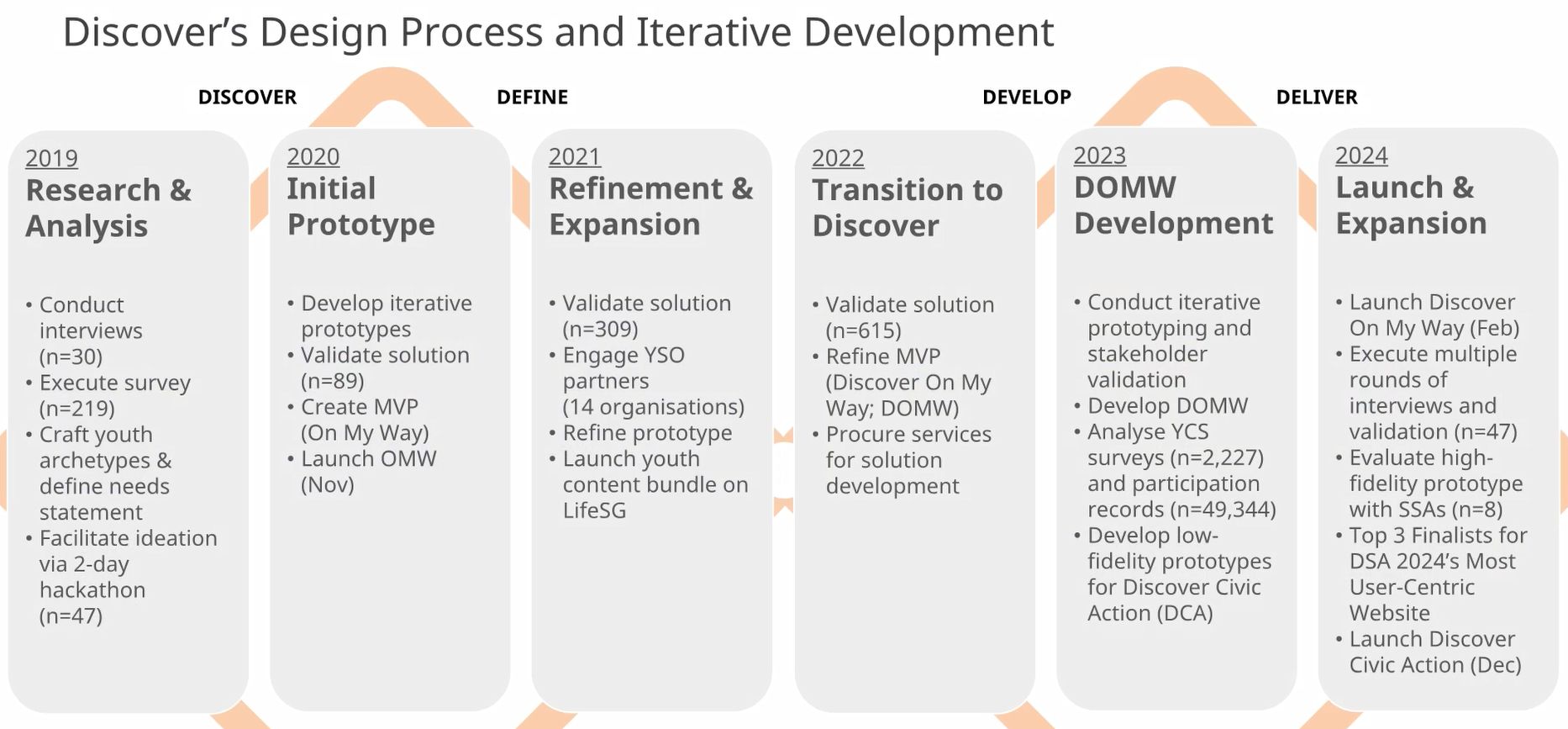
“We dared to prioritise rapid iteration and user feedback, refining early prototypes through testing and validation with over 50 participants before finalising the high-fidelity prototype,” she adds.
She highlights that adopting a “fail fast, learn fast” ethos has allowed the team to create a platform that serves the needs of young people.
Address both user needs and user behavior
When it comes down to user engagement, Ong emphasises the need to address both what users need and how they behave or use the product.
Simply knowing the need is not enough to build a successful product, he says, highlighting that the product must be designed in a way that aligns with how the user prefers to interact with it.
User research should also extend beyond members of the public to include partners and internal stakeholders, ensuring that the platform is also usable and beneficial for them.
On My Way (OMW) was initially an MVP launched in 2020, which was primarily informational.
The team later recognised the need to build an ecosystem that supports everyone involved: NYC, youths and its partners.
OMW was refined over the next few years to include a user’s dashboard and personalised recommendation engine, which led to the launch of DOMW in 2024.
The team intends for Discover platform to serve as a marketplace to onboard and connect the three stakeholders, says Lim.
She shares some of the innovative features designed to make the subsequent DCA platform more user-friendly for youths and partners alike.
For users, the clustering function allows them to easily find specific types of volunteering opportunities, while a personalised dashboard provides a summary of their activities and service hours, generates transcripts, and issues badges for LinkedIn.
For partners, the platform streamlines administration through features like customisable email templates, automated communications and flexible attendance-taking modules.
Integrating MyInfo, the government’s digital ID authentication service, into the platform has also simplified the process for everyone.
Users can register for programmes using their Singpass details, while partners can access youth profiles and focus on creating better programmes instead of on repetitive paperwork.
“Our mindset is that we are always in a beta mode. We are always striving to improve; if there are features or enhancements that add value, we will try to work that into the product backlog,” Lim says.
Importance of multidisciplinary and insourcing
A composite team, comprising members with different skillsets from other departments, has been helpful to look at different aspects of the project, says Ong.
He explains that the NYC’s Transformation Office, which both Lim and him are a part of, plays a crucial role in getting the business and technology teams to work together.
Picking up lessons from developing the previous platform DOMW, the team also decided to bring the user design work fully in-house.
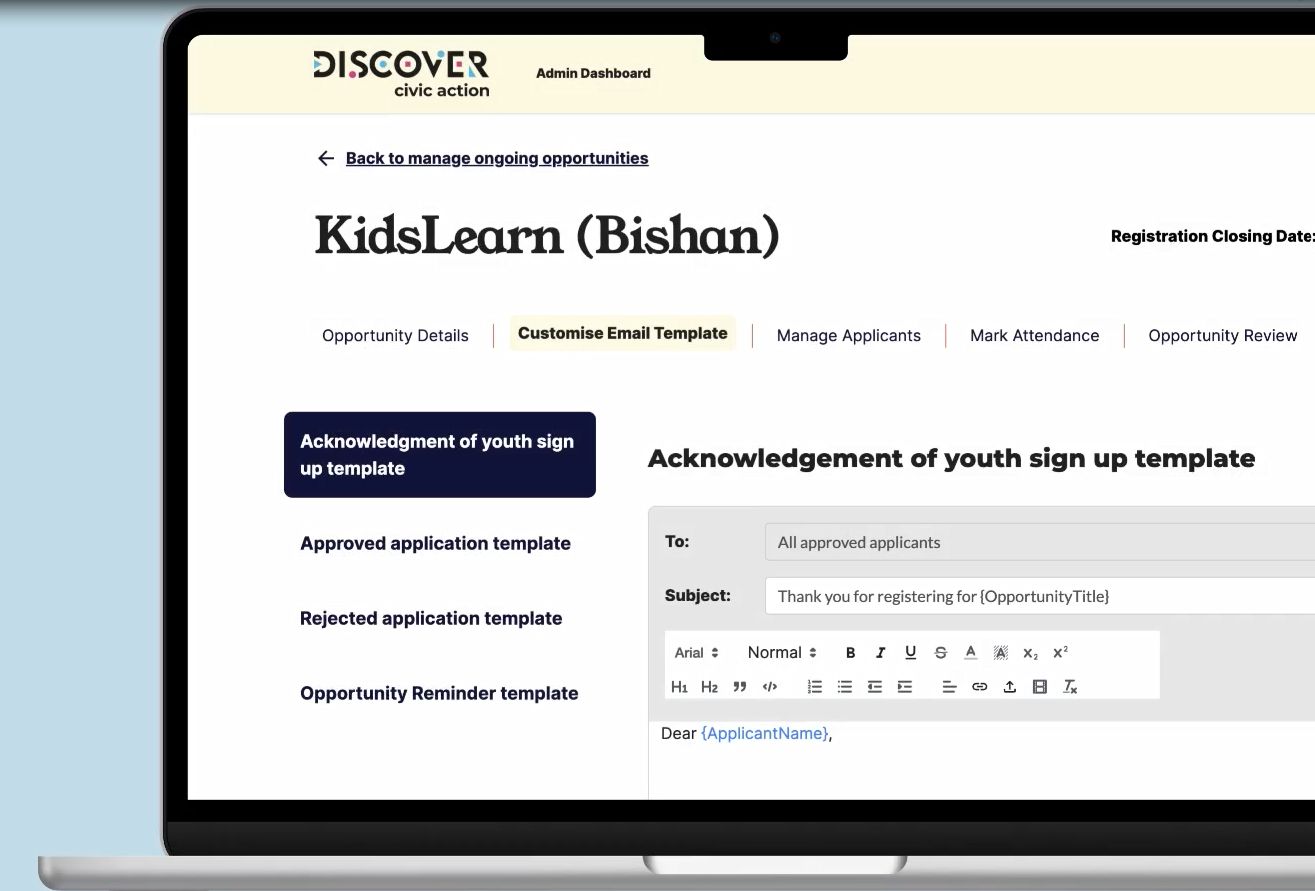
By doing the design work internally, the team can run it concurrently with other parts of the project, allowing the overall development process to move much faster and more effectively, says Lim.
A key takeaway for the team while developing the platform has been the importance of mapping the user's journey.
Lim explains that an initial idea for a feature seemed promising until they mapped the entire user journey from start to finish. By doing this as a team, they were able to "poke holes" in the process, identify weaknesses and improve the design to make it more user-friendly.
“We shouldn’t aim for perfection from the beginning, and it must be an iterative process to improve the system,” says Ong, underlining that there is no need to include every feature in one big launch.
Prioritise the essential features needed for a product to launch, then add new features later, he notes.
Read more: