When does proactive service cross into presumption?
In practice, this is knowing when proactive help ends, handing over to a human at the right moment, and letting users keep their choice, says Singapore public sector leaders at GovInsider's first GovCX Day.
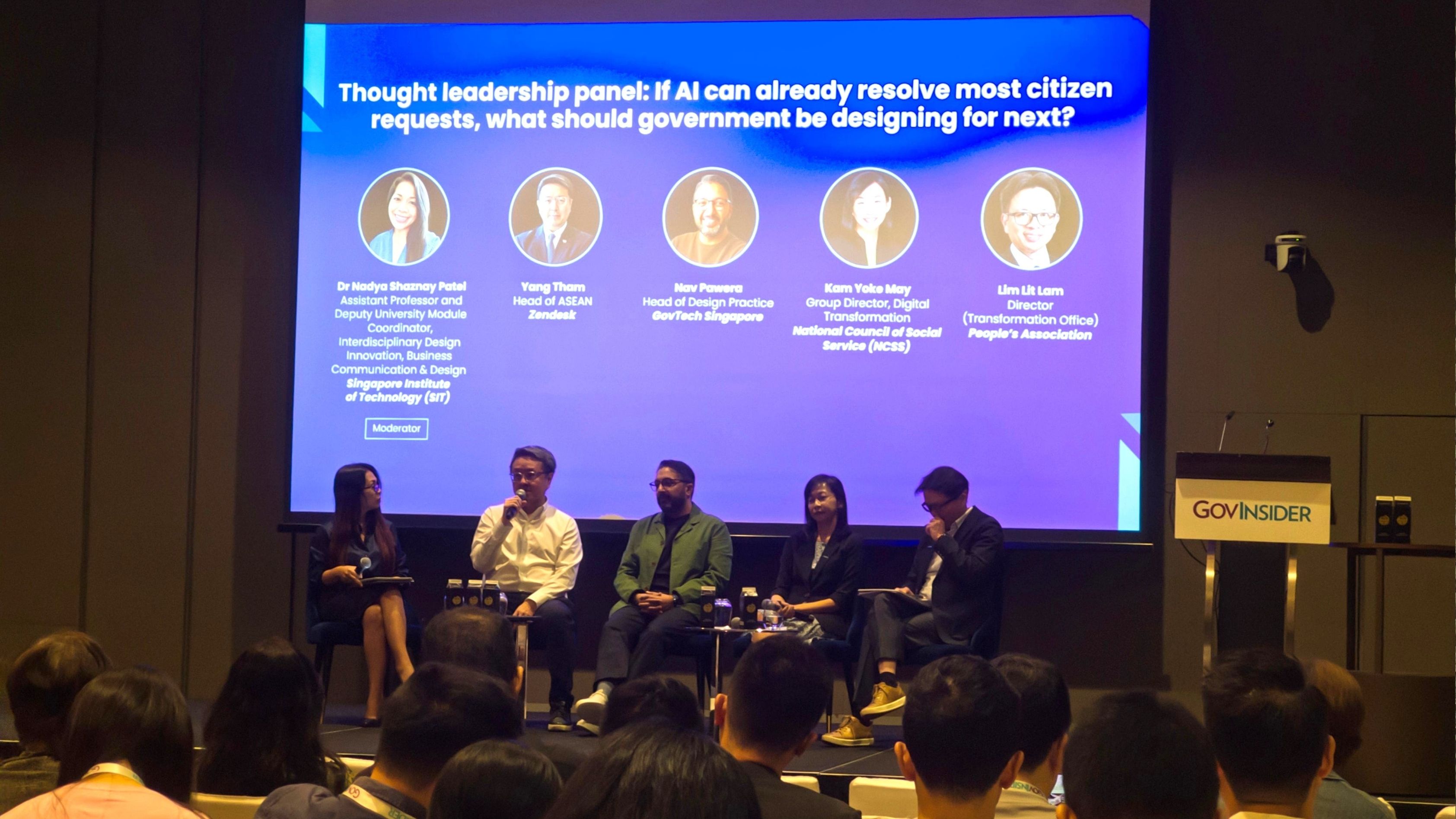
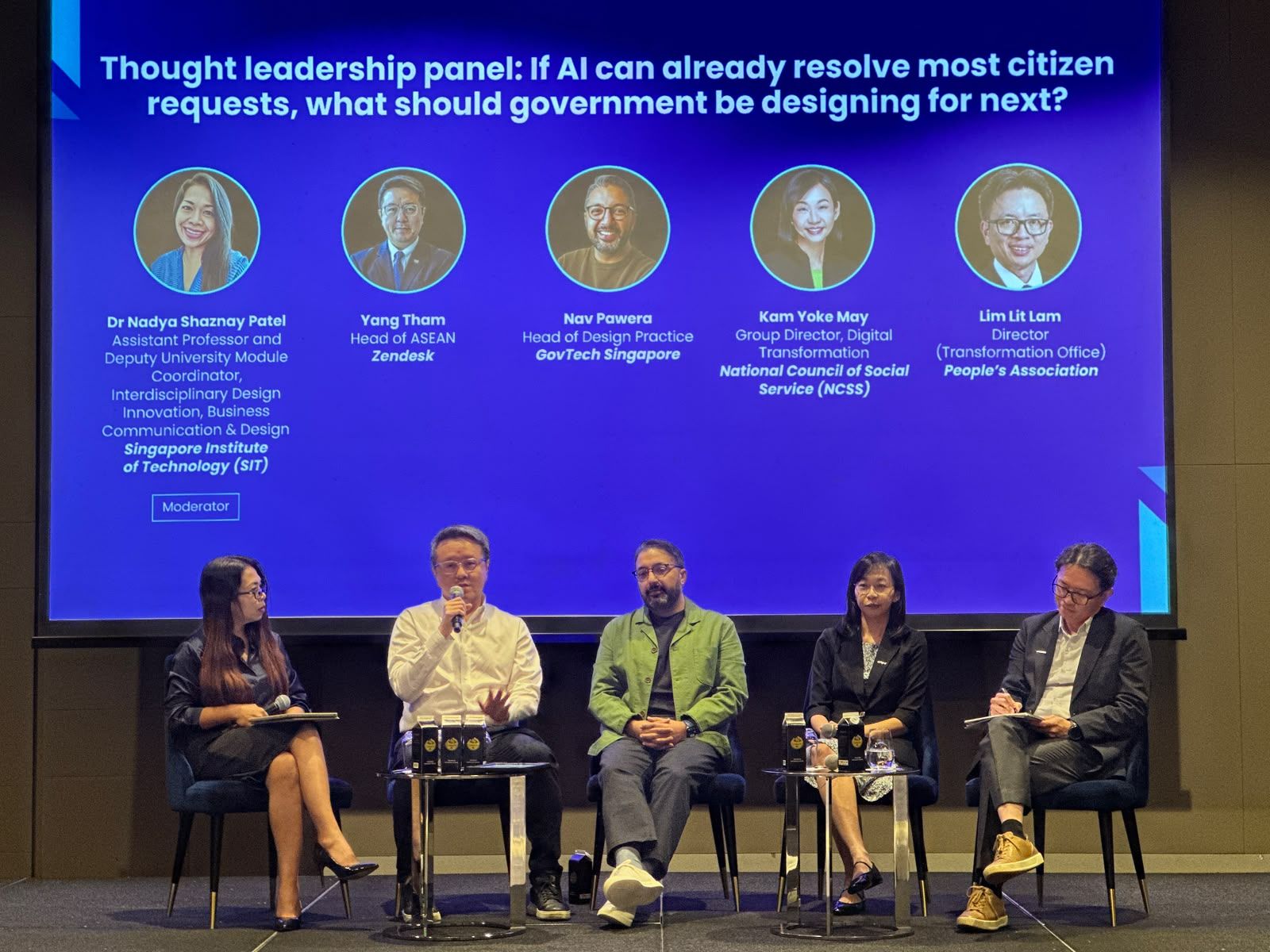
(From left to right) Singapore Institute of Technology (SIT)’s Dr Nadya Shaznay Patel; Zendesk's Yang Tham; GovTech Singapore's Nav Pawera; National Council of Social Service (NCSS)'s Kam Yoke May; People's Association's Lim Lit Lam. Image: GovInsider
The help that arrives before you even ask for it feels like care and attentiveness. But it can also feel like you're being watched.
Using data from across agencies, coupled with artificial intelligence (AI) and analytics, have made it possible for governments to offer help before its citizens ask – whether it's to spot a struggling family or when a patient is about to leave the hospital.
But the same instinct to care may also come across as presumptuous.
That tension between anticipatory and empathetic services surfaced at GovInsider’s first GovCX Day on October 27 in Singapore.
While AI can help address the most part about anticipating needs, speakers from GovTech Singapore, National Council of Social Services (NCSS), the People's Association (PA) and Zendesk were just as clear about the risks around anticipatory services.
That is when predictive data ends up labelling the citizen that services are meant to help, and when pre-empting too much feels like surveillance.
Where proactive help ends
A more proactive system of care, instead of simply creating a reactive safety net, could have a significant positive impact on both public service and citizen's lives.
NCSS' Group Director for Digital Transformation, Kam Yoke May, shared how this impact plays out in her sector.
Harm rarely comes out of the blue.
She said that warning signs tend to build up before a crisis, and reaching someone at the right moment, such as when a teenager ages out of foster care, can stop them falling through the cracks.
But Kam also spelt out the stakes behind such anticipatory services.
As prediction needs large amounts of data – from sensitive financial, health and housing records – pulled across agencies, this can be invasive for people who are already vulnerable.
This is especially so when you must give up their privacy to get support.
"The same low-income family is also constantly flagged as high needs, which creates unnecessary trauma and stigma for these households and individuals," she adds, highlighting systemic labelling that is perpetuated by technology.
It also starts to become "dangerous if the power shifts away from the individual [officer] to some algorithm or a system," she notes.
The panel moderator, Singapore Institute of Technology (SIT)’s Assistant Professor Dr Nadya Shaznay Patel, Deputy University Module Coordinator, Interdisciplinary Design Innovation, Business Communication & Design also warned that well-intentioned services can make citizens back away.
She imagined a citizen's reaction being "You’re being too presumptuous. You know so much about me. I’m not going to use your service," which would defeat the purpose of public service.
This is as much a service take-up issue as much as a privacy one.
A chatbot’s best feature is knowing when to hand over
Some of us might remember the times when it feels as if the chatbot is gatekeeping us from a real person.
GovTech's Head of Design Practice, Nav Pawera, noted that the fix to a problem like this is making the AI-powered chatbot smart enough to say, "Let me just put you closer to a human, because you sound like you really need to talk to someone."
Zendesk's Head of ASEAN, Yang Tham, also acknowledged that while AI could resolve a bulk of simple requests, the challenge with chatbots is that citizens still have to ask several times before getting linked up with an officer.
A better design of chatbots, hence, picks up signals from the first or second question and routes the person to the right officer, he noted.
PA's Director of Transformation Office, Lim Lit Lam, highlighted PA's role as the "last mile touchpoint in the community."
Beyond simply getting transactions done, the point is also to build connections and the community.
The human face reassures residents that the agency is not presuming too much, he explained, and lets them keep their dignity and respect.
“It takes a human to connect with another human and hold that safe space," as SIT’s Dr Patel puts it simply.
Prioritise choice over prediction
GovTech's Pawera illustrated how empathy by design looks like in practice through the Green Man+, an initiative introduced by the Land Transport Authority (LTA) that gives elderly pedestrians and persons with disabilities extra time to cross the road.
Singapore could have slowed every pedestrian crossing, he said, but that would put pressure on those who need more time, with everyone else waiting.
Instead, seniors and people with disabilities tap a card for a longer crossing.
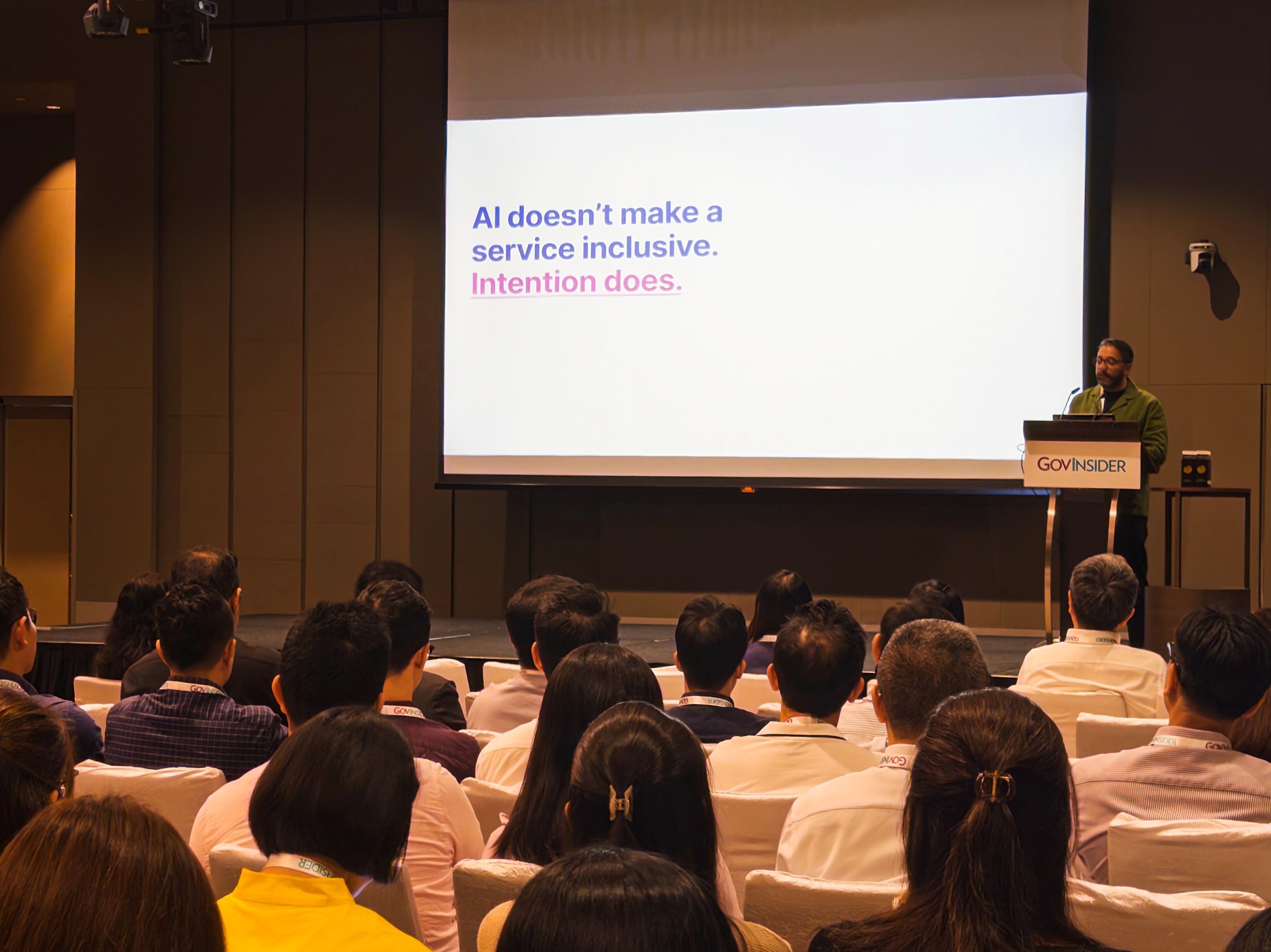
"What we did was give [these users] the ability to change the service, modify the service as and when they need," he explained in his opening keynote.
Inclusive design is meeting the users in their reality, he noted, adding that it's a continuous process instead of a one-time checklist.
An audience member also asked why a card is needed at all if cameras could simply detect who needs more time.
While Pawera agreed that tapping isn’t easy for everyone, such as for someone in a wheelchair, this solution, which is more than a decade old, needs to be continuously improved.
SIT's Dr Patel imagined how she would respond with the alternative suggested by the audience member.
When she is told by the traffic light post, "Auntie, tap your card," she would respond to it by saying that she can actually walk to the other side in time without needing the extra time.
With AI, an agency today can put a working version of a product in front of people in days and test it earlier with far more people, Pawera noted.
But does moving faster translate to better? "If we spend the time saved learning with seniors, people with disabilities, and the people we usually miss, then faster can be better.
"AI doesn’t make a service inclusive; intention does," said Pawera.