
Why do governments keep forgetting who you are?
Digital identity has transformed public services at home. But crossing a border often means starting over.
-1786059336729.jpg)
Because digital identity does not fail when it reaches another computer system. It fails when it reaches another legal system. Image: Kitsoft
Not long ago, proving your identity usually meant carrying a folder full of documents.
Today, in many countries, it takes only a few taps on a smartphone.
We can sign documents, access government services, register businesses or renew licences without ever standing in line. Digital identity has quietly become one of the biggest success stories of digital government.
Yet something curious happens the moment we cross a border.
The same person who can instantly prove who they are at home may suddenly be asked to verify a university diploma, certify their marital status or wait week, while institutions exchange documents that another government has already issued and verified.
The information exists and technology exists. So why does the experience still feel as though the digital world ends at the border?
The answer is less about technology than most people think. It is about trust.
The digital identity paradox
Digital government has made remarkable progress inside national borders. People’s lives, however, rarely stay within them.
Over the past decade, governments have invested billions in digital transformation, with digital identity as the foundation for hundreds of online public services.
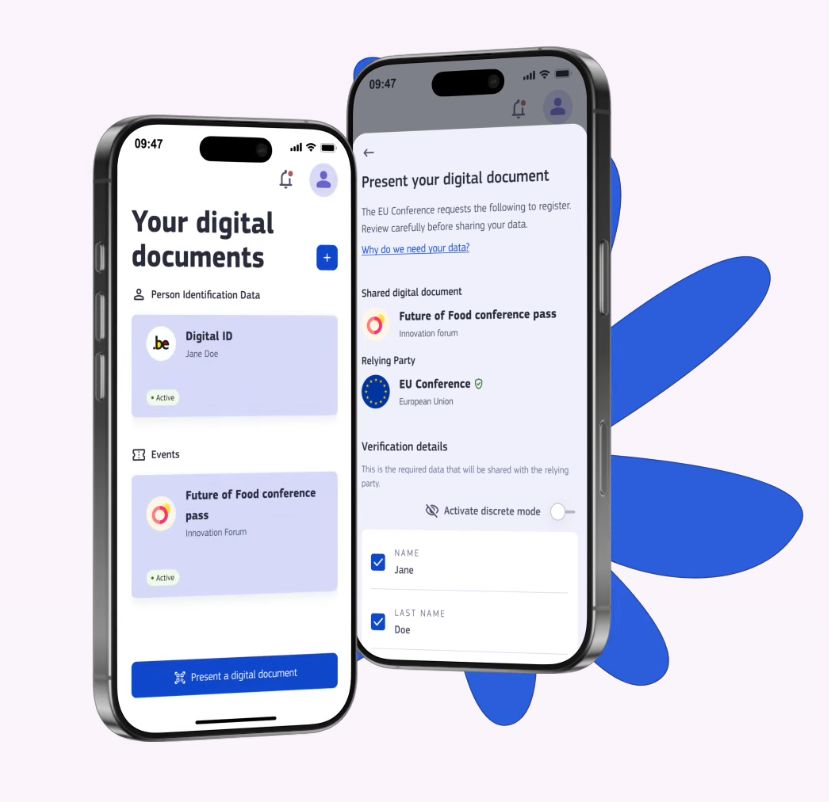
Europe is now taking the next step through the European Digital Identity Wallet, an initiative designed to allow citizens to use trusted digital credentials across all EU member states.
According to the European Commission’s Digital Decade 2026 report, only 21 per cent of procedures required under the Single Digital Gateway Regulation were fully available online for both national and cross-border users.
This highlights how much work remains before people can access public services seamlessly across Europe.
Digital identity is one part of that challenge: in practice, an identity trusted in one country often still cannot be used effortlessly in another.
For citizens, this is more than an inconvenience. It shapes some of life’s most important decisions.
During a recent conversation on the Code the State podcast, Yuliia Kravchenko, GovStack Lead for Digital Wallet, legal expert in digital governance and interoperability, and researcher at TalTech, shared a story about friends who travelled to another country simply because getting married there involved less bureaucracy.
The problem was never marriage itself. It was convincing one government to accept documents that another government had already issued.
She also recalled a more personal example. Having lived in several countries, she found herself collecting official confirmations from each of them to prove that no legal proceedings had ever been opened against her.
The information already existed. Every institution simply wanted to verify it independently.
These stories are remarkably ordinary. Anyone who has studied abroad, relocated for work or applied for residency in another country has probably experienced something similar.
Identity is more than a document
One of the most interesting observations from our discussion was that people often misunderstand what digital identity actually is.
It is often seen simply as the passport, ID card, or digital wallet used to prove who someone is.
As Kravchenko put it: “People often think about the credential itself. But the most important part of digital identity is the attributes behind it.
Making those trusted attributes available across borders is a far more complex challenge than digitising an identity document.
It requires countries not only to exchange information securely but also to recognise and rely on information issued by one another.
That is where the conversation about digital identity changes. It stops being primarily about mobile apps or digital wallets. It becomes a question of governance, law and, ultimately, trust.
Trust cannot be downloaded
If the technology already exists, why is progress so slow?
Because digital identity does not fail when it reaches another computer system. It fails when it reaches another legal system.
During our conversation, Oleksandr Iefremov, CEO of Kitsoft, creators of the low-code platform Liquio, pointed to a challenge Europe is only beginning to confront.
Hundreds of thousands of Ukrainians who left the country after Russia’s full-scale invasion are gradually becoming long-term residents across Europe. Many will soon be eligible to apply for citizenship in the countries where they have rebuilt their lives.
That creates a new challenge for governments. Every application requires identities to be verified, qualifications recognised and official records checked across borders. Existing procedures were never designed for that kind of scale.
“The only way to solve it is to build bridges between registries,” Iefremov said. “Otherwise, processing these applications could take years.”
That observation extends far beyond Ukraine.
Labour mobility is increasing. Students move between countries. Businesses hire internationally. Families increasingly span several jurisdictions. Governments are no longer serving citizens whose lives begin and end within one country.
Public services need to reflect that reality.
Much of the conversation about digital identity still focuses on technology: digital wallets, authentication methods, biometrics or cybersecurity. These discussions matter, but they often overlook a more fundamental question.
How does one government become confident enough to rely on information issued by another?
That confidence cannot be created through software alone. It depends on shared legal frameworks, common standards, trusted certification, political cooperation and institutions that are willing to recognise each other’s systems.
That confidence cannot be created through software alone. It depends on shared legal frameworks, common standards, trusted certification, political cooperation and institutions that are willing to recognise each other’s systems.
Technology makes cross-border trust possible, but governance makes it real.
As Kravchenko explained during our conversation, building that trust requires an entire ecosystem of trusted issuers, trusted verifiers, common standards and certification processes that every participating country can rely on.
That also explains why progress is often slower than many would like. The challenge is creating a framework that allows countries to trust credentials issued beyond their own borders.
Governments do not really forget who we are. More often, they simply have no trusted way to recognise what another government already knows.
Closing that gap may become one of the defining public sector challenges of the next decade.
The article was originally published on Kitsoft Insights here, and edited.
----------------------
The author is the International Program Lead at the Ukrainian govtech company, Kitsoft, and host of the Code the State GovTech podcast.