
Why imperfect data shouldn't stall public sector AI innovation
By NEC
Even when data is fragmented, NEC promotes an explainable, white-box AI approach, where reasoning behind the outputs can be communicated to leaders thus maintaining accountability.
-1781003830855.jpg)
Across ASEAN, AI adoption in the public sector is already taking shape through practical use cases rather than abstract experimentation. Image: Canva
A recent McKinsey study has found that Southeast Asia dominates artificial intelligence (AI) adoption globally, piloting and scaling more AI projects than United States and Asia Pacific (excluding China and India).
The study highlights trusted data flows as a key driver in unlocking the region’s AI potential.
For the public sector in the region, the stakes of getting AI adoption right are even higher as governments are entrusted with delivering essential services responsibly while safeguarding citizens’ data.
Across ASEAN, AI adoption in the public sector is already taking shape through practical use cases rather than abstract experimentation.
Gartner, a leading global research and advisory firm, has pointed to emerging applications such as AI‑assisted citizen‑facing services, case processing, and maritime and transport operations.
This happens alongside the use of digital innovation labs and controlled “data sandbox” environments that allow agencies to test AI (including with synthetic data), while protecting sensitive information.
These examples highlight that public sector digital systems in ASEAN already operate at national scale, supporting identity, mobility, safety, and regulatory functions for millions of citizens.
Instead of waiting for perfect data before adopting AI, NEC encourages agencies to begin with clearly defined business objectives and use cases.
Regardless of whether it is a private company or a government agency, any organisation attempting to begin implementing AI remain stuck in “pilot mode” if they require perfect conditions before deploying AI, says NEC.
The organisation frames the risk of waiting for perfect data as delayed value creation and learning for these agencies.
In this context, technology partners working with governments need to understand public‑sector operations deeply, including regulatory, safety, and service‑delivery realities.
Drawing on its long‑standing work with governments across ASEAN, NEC has supported public sector initiatives.
These initiatives range from disaster prevention systems to citizen services, including the protection of over 100 million biometric identities across the region, providing experience in operating trusted digital systems at scale.
“The key consideration is whether available data is sufficient to take informed decisions, not to just achieve statistical perfection,” says a spokesperson from NEC.
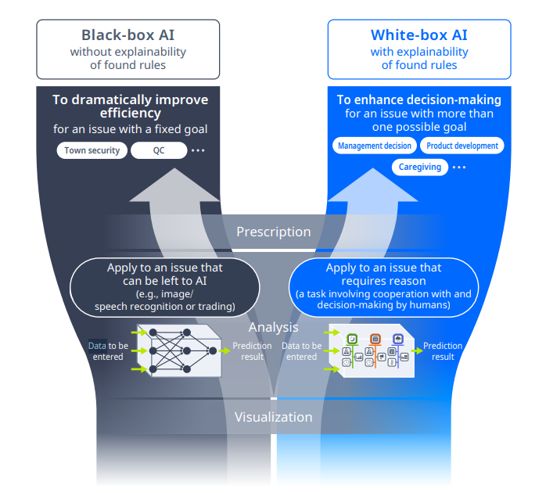
NEC’s AI Guide Book emphasises the value of human judgment and governance in developing AI systems and reassures that these systems can still operate with incomplete or evolving data.
Where AI in public sector is heading
Industry forecasts indicate continued growth in public sector AI investment, reflecting a broader shift toward using digital technologies and foundational infrastructure that supports productivity, service continuity, and economic resilience.
Rather than deploying AI as standalone tools, the emerging direction is toward embedding AI within trusted, secure platforms that integrate data, operations, and governance.
This evolution is increasingly seen as critical to enabling long‑term economic and social outcomes, particularly as governments balance innovation with accountability and public trust.
How can agencies move forward?
Start with the problem, not the data.
Instead of attempting broad system transformation, public agencies can start by identifying high-impact, operationally meaningful decisions.
“In practice, this means agreeing upfront what decisions AI will support, how humans retain accountability, and what evidence, specifically data and reasoning, must be available to justify outcomes,” the NEC spokesperson shares.
Following the initial pilots, the next step of moving to operational deployment is for these leaders to look into embedding AI into their workflows.
“As AI adoption expands, organisations often struggle when they cannot explain why an AI produced a result, especially if decisions affect people,” says the spokesperson.
This is why NEC promotes an explainable AI approach, also known as white-box AI, where the reasoning behind the outputs can be communicated to leaders.
Even when data is fragmented, this ensures that accountability can be maintained.
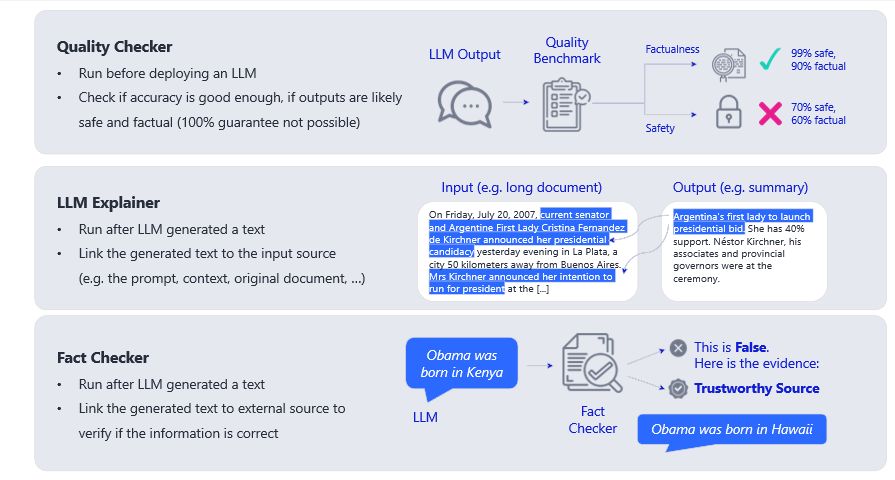
Practical approaches to achieve explainable AI
NEC has developed three functions, namely the Quality Checker, LLM Explainer, and Fact Checker, to support the explainability, traceability, and transparency that are increasingly required in the public sector.
These functions received recognition at the Newsweek AI Impact APAC & EMA Awards, which spotlight organisations for their innovative use of AI to solve everyday challenges.
With rolling out emerging technologies like agentic AI, NEC adopts a Client Zero approach where it serves as the first client to provide real-world experience as a reference for their public sector customers.
To further improve trust in outputs, enable proactive action and faster decision-making, NEC also uses management dashboards to visualise performance data, as well as incorporate forecasts on top of current performance of AI systems.
NEC highlights the key lessons for organisation that include embedding AI into daily workflows, maintaining human accountability, and ensuring transparency throughout the AI life cycle, which are also relevant for public sector leaders.
NEC is creating what’s ahead in the public sector
Moving forward, the imperative for public sector organisations is to move beyond isolated pilots toward scalable, trusted AI infrastructure that can support national‑level services and long‑term societal outcomes.
This shift is already underway across the region. A joint survey by the Singapore Economic Development Board (EDB) and McKinsey found that more organisations in Southeast Asia are moving from experimentation toward full AI deployment, reflecting growing confidence in AI’s role as part of core digital infrastructure rather than standalone trials.
When applied intelligently and thoughtfully, AI could help augment decision‑making across areas such as identity, mobility, safety, and citizen services, while preserving accountability and public trust.
For NEC, this journey is about aligning innovation with governance, transparency, and real operational needs, an exciting time to partner with the public sector in creating what’s ahead.