Wu Zengxin, Assistant Lead Engineer, Software Engrg & Enterprise Tooling, Synapxe, Singapore
By Sol Gonzalez
Meet the young public sector officials in the inaugural Young & Official Report 2026.
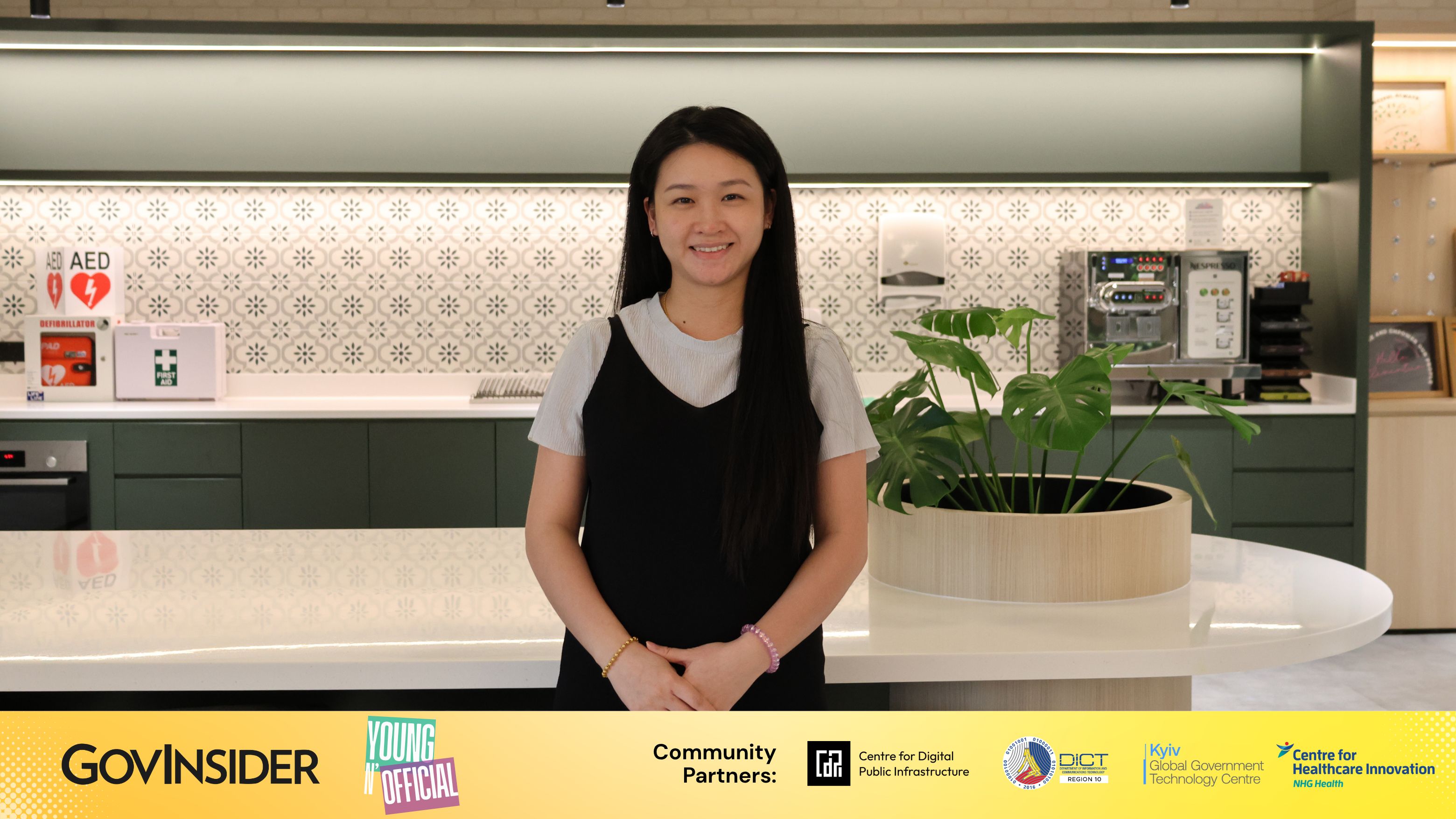
Wu Zengxin, Assistant Lead Engineer, Software Engineering & Enterprise Tooling-Software Engineering (SEET), Synapxe.
1) What does public service mean to you? Can you share more about your role in the public sector?
For me, the 'spirit of service' is what turns a standard career into a true calling. In my role with the Software Engineering & Enterprise Tooling (SEET) team at Synapxe, this mindset keeps me focused on how my everyday work impacts our community.
We design the standardised, reusable software components that empower developers and clinicians to build critical HealthTech applications much faster. Ultimately, every tool we create ensures that our public healthcare system can deliver better, more reliable digital services for everyone in Singapore.
2) Tell us about a project you championed. What impact did it have on the community?
I am part of the team that develops Singapore’s national healthcare application, HealthHub, which centralises e-services like appointment booking, medication orders, and payments. By streamlining and simplifying the patient’s journey, the platform reduces waiting time and travel constraints, particularly for users in remote or high-traffic areas.
Additionally, we help to ensure that HealthHub optimises clinical operations by improving data flow between healthcare providers, enabling faster care decisions and more predictable clinical decisions.
3) As a young professional, how has your unique background or perspective allowed you to identify a solution that others in your organisations might have overlooked?
Driven by my generation’s perspective and my own experience caring for ageing parents, it has helped me to champion inclusive design that addresses overlooked, real-world problems that others may have missed.
I focus and advocate on small practical details and real use-cases. This includes low-bandwidth modes, larger fonts, simple and plain language, and being accessible to older adults and busy families. By embedding these critical features into design and testing, it helps to enable a digital solution is genuinely usable and serves patients, older generations and caregivers.
We want to ensure that we are always able to bring these types of scenarios into design and testing so that the product can serve not just tech-savvy users but to ensure that no one is left behind.
4) What is your personal strategy for maintaining your creative energy when faced with bureaucracy?
I keep my creative energy alive by focusing on two main strategies.
First, I always anchor my code back to the community it serves. When I am deep in paperwork or waiting on approvals for a software component, I focus on the bigger picture. I remind myself that these building blocks are what make public healthcare applications reliable, secure, and fast to deploy. Knowing that the infrastructure I build directly enables better digital services for everyday citizens keeps the work from feeling sterile and turns it back into a meaningful mission.
Second, I treat the constraints as a design challenge. As a young engineer, finding a creative, elegant technical solution that meets strict government standards is a massive win. I use that challenge to push my problem-solving skills, treating regulatory boundaries as design parameters rather than roadblocks.
At the end of the day, it isn't just about writing code, it’s about having the patience and resilience to build robust tools that our entire community can safely depend on.
5) If you had just one area to invest in to accelerate transformation in the public sector (regulation, technology, talent, etc.), which one would you choose and why?
If I had to choose just one area, I’d go with talent.
Technology gives us the tools and regulation set the boundaries, but at the end of the day, it's people who make things happen. Investing in people is what really changes how an organisation operates.
When you have a forward thinking workforce, they are the ones who will question outdated routines, push for automated workflows, and figure out creative ways to clear regulatory roadblocks.
Real transformation takes empathy. You need people who look at problems with fresh eyes and a genuine desire to help. They are the ones who will make sure the digital services we build are actually easy, secure, and helpful for everyday citizens.
Ultimately, you can buy tech and change rules, but talent is the real engine behind any meaningful change for the community.
6) What is your greatest ambition as you grow in your public service career?
My greatest ambition is to design and build health systems that are reliable, inclusive, scalable, and people-centric healthcare systems that earn the trust of clinicians, patients, and caregivers alike. To ensure these digital platforms provide lasting values throughout the years, I champion ethical design, strict data stewardship, and the active mentorship of next-generation engineers.
Ultimately, my mission is to help build digital health solutions to reduce disparities, enhance system responsiveness, and empower every citizen with simple tools to manage their health with dignity.
7) What is a “universal value” that connects everyone in your department – from interns to directors – and how do you use that to drive collaboration?
No matter our rank or daily tasks, we all know that the software building blocks we design ultimately support essential services that everyday citizens rely on. That shared sense of purpose drives collaboration in two major ways.
First, it opens the door for any voice to be heard. Because we are all focused on delivering the best outcome for the community, a great technical idea from an intern is valued just as highly as a strategy from a director. We collaborate based on what solves the problem best, not who has the higher title.
Second, it helps us navigate roadblocks together. When we hit technical challenges or tight deadlines, we don't work in silos. We sync up across different seniority levels because everyone understands that a delay in our tooling affects the broader rollout of community solutions.
Believing that our work truly matters creates a culture of mutual respect, making it easy to align, communicate, and build together.
8) What is the best piece of advice you’ve got for the next generation of public servants?
The best advice I’ve received is to keep the community at the centre of your work. It is easy to focus purely on technical execution and daily milestones. When that happens, remember that every line of code you write or tool you design eventually impacts an everyday citizen.
Use your fresh perspective to find elegant ways to build solutions within those boundaries that work better for the public. Focus on building robust tools that your neighbours can safely rely on changes your mindset. It stops feeling like a standard job and becomes a meaningful mission.
9) What is a myth you wish to debunk about young public servants?
The biggest myth is that young public servants only care about quick wins and flashier innovation.
People often assume we are focused purely on the newest trends rather than long-term stability. We deeply value the robust foundation that has already been built because we know our community relies on these systems every single day. Our goal isn't to change things for the sake of it, but to add value.
We love using our fresh perspective to introduce automated steps and build reliable tools that complement existing systems, proving that modern engineering and deep responsibility go hand in hand.
10) Write a letter to your future self in 2035.
Dear 2035 Me, I hope you have stayed curious, kind, and patient. More than anything, I hope the systems we helped build are serving people well, and that our code and design choices have stood for the test of time.
Have you continued to mentor the next generation of engineers while keeping deep user empathy at the core of your work? I hope you managed to balance bold ambition with true humility, protecting privacy and fairness in every single project. Never forget the families we originally set out to help; did our work make their daily lives genuinely easier? Keep learning, always celebrate the small, everyday wins.
If paths have shifted along the way, find the lessons in those changes and use them to improve and grow. Most importantly, stay healthy, visit your parents often, and honour the incredible team that carried this work forward with you.
With quiet pride,
You.