US and European mayors commit to shared infrastructure to drive people-centred cities
By Hanna Kum
The GovTech Manifesto and action plan focus on shared solutions for societal challenges, aligning demand through open standards, and building capabilities across governance levels.
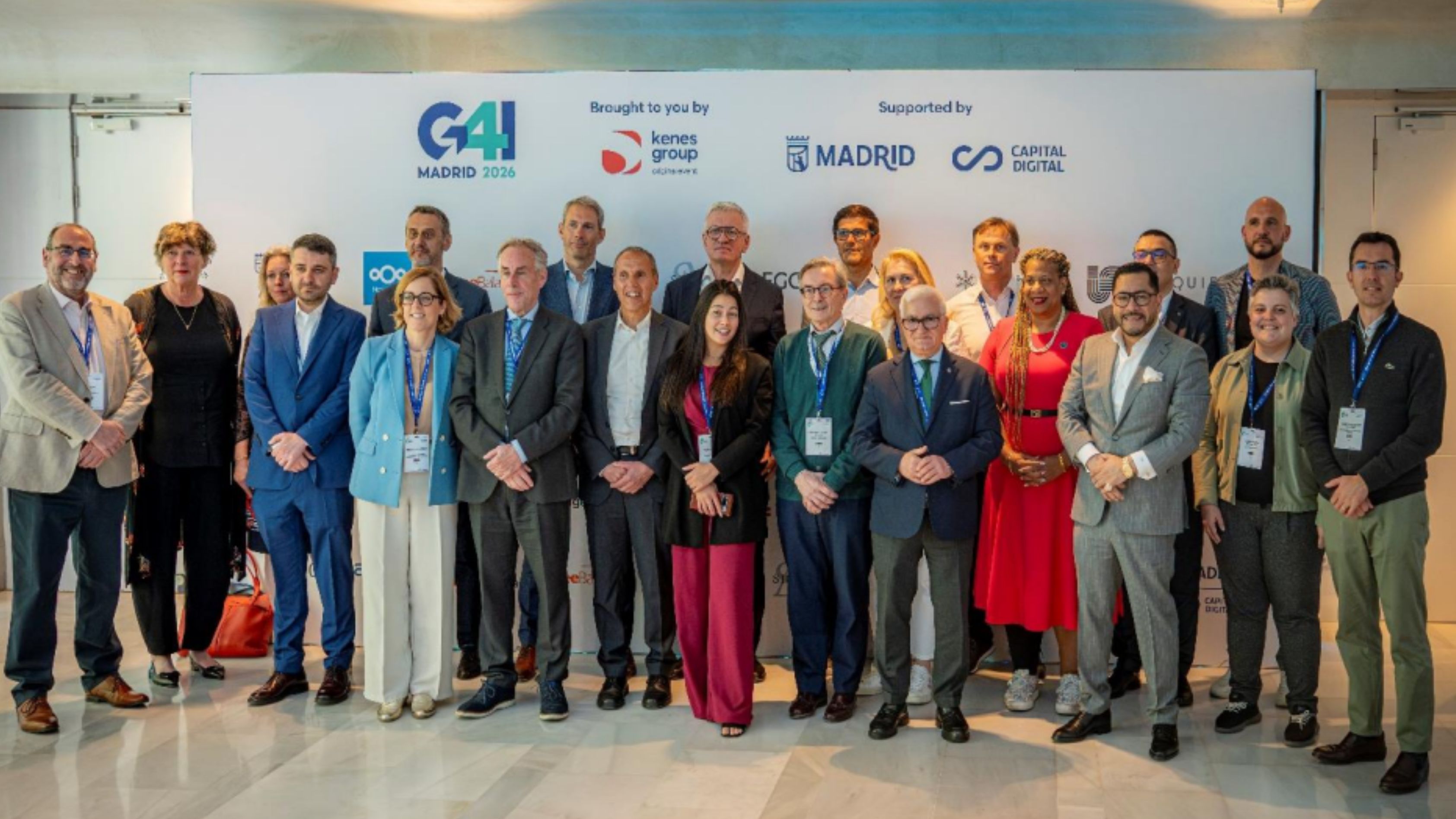
Photo of the first Mayors' Leadership Forum at the Govtech 4 Impact World Congress 2026. Image: Mayors Event Press Release.
A coalition of European and US government leaders has committed to a shared vision to use government technology to address societal challenges of citizens and communities.
This culminated in the GovTech Manifesto and action plan announced at the first Mayors Leadership Forum, organised as part of the GovTech 4 Impact World Congress 2026 held in Madrid, Spain, from May 5 – 7.
Participating mayors come from Bristol, UK; Mount Vernon, New York, USA; Düsseldorf, Germany; Poznań, Poland; Kranj, Slovenia; and more.
The mayors would work on shared solutions for societal challenges, align demand through open standards, and build capabilities across governance levels.
The goal is to unlock public purchasing power and shared investments to drive economic growth, climate-positive outcomes and meaningful value for citizens.
The forum’s Chair, Rian van Dam, Mayor of Hollands Kroon, the Netherlands, emphasised the importance for cities and regions to “step up” in putting people, nature and democratic values at the centre of decision-making.
According to the official release, the manifesto would anchor a structured action plan, with milestones to be rolled out over the coming year.
Early progress will be reported at the next edition of the forum.
A shared solution
Rather than being limited by “individual mandates”, van Dam said, the forum brought together government leaders to enhance the impact it could make.
Vito Episcopo, Deputy Mayor of Granada, Spain, agreed that instead of more pilots, Europe needed shared infrastructure to scale innovation.
Cities and institutions would thus be connected through this common platform.
Beyond knowledge sharing, the platform enables mayors to pool together resources to drive change.
These shared resources included instruments, procurement frameworks, funding mechanisms, as well as innovation ecosystems such as European Digital Innovation Hubs and regulatory sandboxes.
A citizen-centred manifesto
As societal challenges grow in both scale and complexity, the coalition aimed to leverage emerging technologies to support the changing needs in society.
“Smart cities must always serve people first and must be trusted—using technology not for its own sake, but to help us live better,” said Matjaž Rakovec, Mayor of the City of Kranj in Slovenia.
The macro-level shifts like government investment and economic growth were meant to be translated into tangible benefits for citizens.
Tony Dyer, Leader of Bristol, UK, noted that the manifesto outlines the principles for leveraging tech to deliver core services that are both people-centred and resource-efficient, with improved quality of life as the end goal.
A universally applicable model
Cities and continents of all sizes share a common challenge to use tech to make government more efficient, responsive and impactful, shared Shawyn Patterson-Howard, Mayor of Mount Vernon, New York, USA.
“This requires reducing bureaucracy, accelerating innovation, and strengthening cross-sector partnerships to improve the quality of life for our residents,” she continued.
While the forum started in Europe, it expressed a hope that this model of collaboration would be able to scale globally, inviting other cities, regions and institutions to be co-shapers of a new GovTech ecosystem.