
Helping build better HealthTech with insider knowledge
By Amit Roy Choudhury
Synapxe’s Assistant Director, Lim Wee Kiong, believes that it is possible to build an even better public healthcare system by understanding how the process works and tweaking it accordingly.

Synapxe’s Lim Wee Kiong shares that in an ageing society, the rise of chronic diseases is inevitable, and artificial intelligence (AI) can play an integral role in augmenting clinicians’ capabilities and help in improving treatment and prevention. Image: Canva.
In healthcare, navigating large public hospitals, even those with very well-integrated systems, can often be challenging for patients as well as caregivers.
As both a patient and caregiver, Synapxe’s Assistant Director of Data Analytics & AI-Engineering & Ops, Lim Wee Kiong, hopes to contribute to the ongoing improvement of Singapore’s public healthcare IT systems.
As Singapore's national HealthTech agency, Synapxe is responsible for developing and maintaining the technology solutions for the public healthcare system.
Speaking to GovInsider, Lim shares: “My parents and I are diabetics, and we frequently go for check-ups together”.
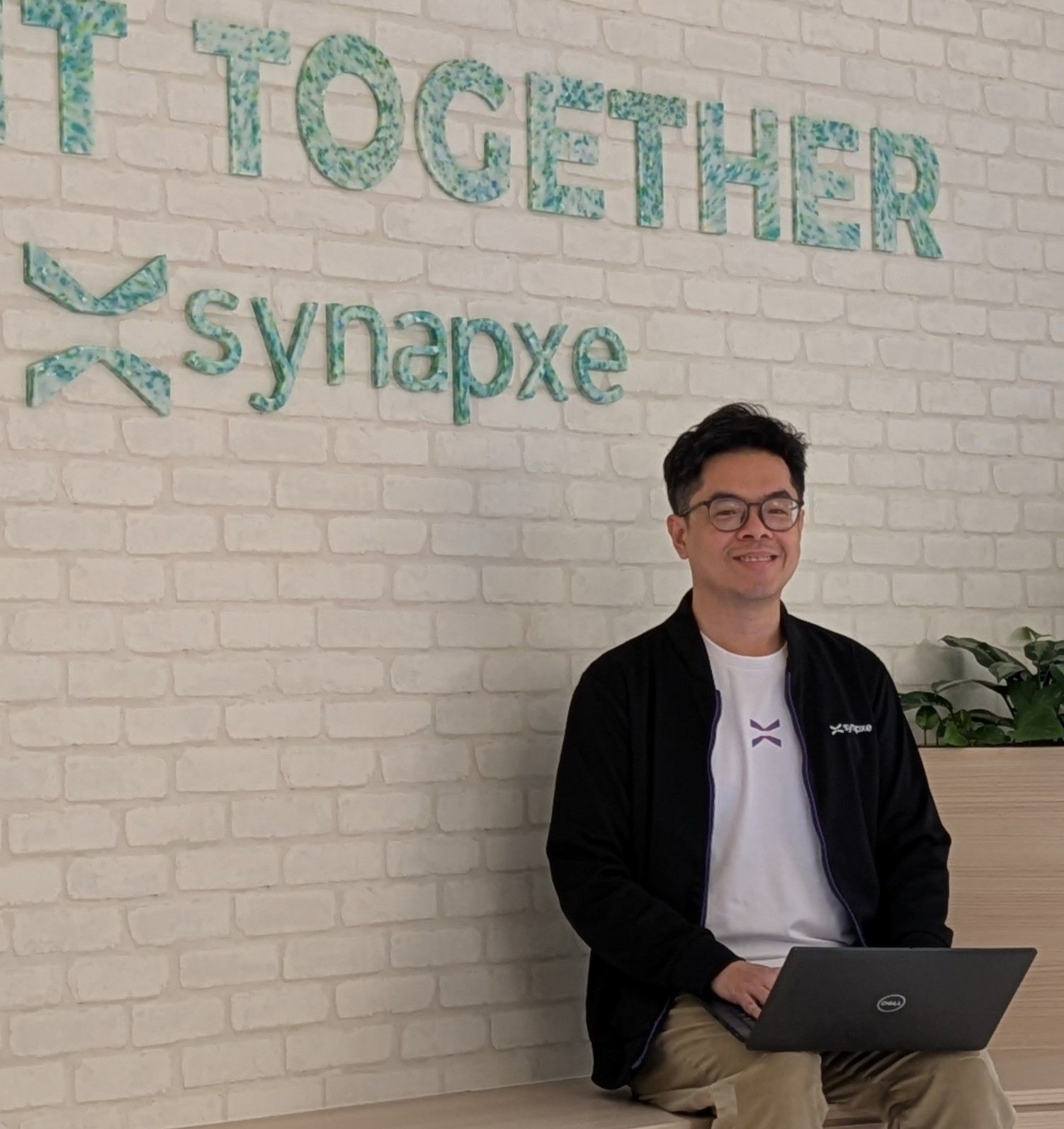
“My mother’s battle with Stage 4 cancer, which advanced from a diagnosis made 10 years ago, has allowed me to witness the utilisation of IT systems across various healthcare settings, including emergency care, ICU, and recuperative care,” he adds.
This has given Lim a firsthand experience and insight into a patient’s journey within the public healthcare system, right from booking an appointment to lab tests and finally a doctor consultation.
He recalls that his multiple visits to the hospital helped him to appreciate how well-integrated IT systems can have a positive impact on healthcare.
“As a patient myself, with elderly parents, I recognise the potential benefits of integrated IT systems for our ageing population.”
“This realisation fuelled my motivation to pursue a career in this field, where I can contribute positively to Singapore’s healthcare system,” says Lim.
Switch from defence to healthcare
After spending 14 years working in the defence industry, in the Defence Science and Technology Agency (DSTA), Lim made the switch to the healthcare industry in December 2021.
His work focuses on bringing artificial intelligence (AI) models into practice and working closely with healthcare professionals on the ground to ensure that these models work in real-life settings.
Lim views himself as a bridge between the tech and its implementation, ensuring that data and solutions are effectively utilised to aid healthcare professionals in their daily work.
“In an ageing society, the rise of chronic diseases is inevitable, and in this case, AI plays an integral role in augmenting clinicians’ capabilities by enhancing accuracy and speed of diagnosis, improving treatment or prevention, or increasing productivity”, he shares.
This, in turn, assists our healthcare professionals in making the final judgment on the most appropriate care pathway and medical intervention required.”
We are amidst the AI evolution, and as it rapidly evolves, we must continuously experiment, test and innovate to keep updated with the latest AI technologies,” says Lim.
Word of caution
Lim cautions that while AI offers exciting promise and opportunities to transform the healthcare system, “we are also cognisant of the challenges it poses in ensuring a reliable and secure system while maintaining efficient clinical workflows”.
He adds that Synapxe takes security and governance very seriously.
“We uphold a responsible framework that prioritises patient privacy and data protection, recognising the sensitivity of healthcare data [and] by adhering to responsible use of data, we build trust between patients and healthcare providers,” says Lim.
Synapxe aligns its data security strategies with established frameworks by the Singapore government and relevant industry standards.
To subscribe to the GovInsider bulletin, click here.
“Through collaboration and staying updated on emerging threats and best practices, we [Synapxe] can adapt our security measures in line with the latest developments in data protection,” he says.
AI-enabled imaging platform
Lim shares that one of the notable projects he and his team have developed with public healthcare and technology partners is Singapore’s first medical imaging platform, AimSG.
The platform aims to accelerate the adoption of AI in radiology and other medical imaging disciplines, Lim says.
Highlighting its importance, Lim adds that AI can help to quickly triage urgent cases for “immediate attention by doctors, or it can serve as an additional layer of check, such as a peer reviewer to ensure accuracy”.
AimSG enables the hot swapping of AI models, allowing public healthcare institutions to easily update or replace models, thereby reducing costs and enhancing operational efficiency.
Augmenting medical imaging workflows with AI can lead to improvement in clinical outcomes and productivity, he adds.
“[At Synapxe] we aim to support our public healthcare colleagues with technology to help them transform care experiences and outcomes.”
Strong core team
Thanks to a strong core team, Lim says that Synapxe has “successfully delivered multiple concurrent projects within a complex healthcare environment with a tight timeline”.
The organisation aims to elevate the user experience by designing intuitive user interfaces “that are simple and user-friendly”, Lim says.
We are constantly improving our products with new tools and features to achieve this. We also conduct the necessary training and education on how to use tech properly, he adds.
Moving from defence to healthcare, Lim shares that he has acquired many practical skills, such as project and people management skills.
“The technical skills that I gained also enable me to move from a project manager to a data scientist, effectively pivoting my career to the field of AI,” he says.
On what differs between the sectors, he notes the difference in the typical length of project timelines as well as how different types of data are managed.
However, he adds that “the commitment to rigorous testing of the technology to ensure the safe and responsible use of AI and data integrity remains the same”.
Seeing tangible impact
Lim shares that working in healthcare, he clearly sees the tangible impact of his work for the public, from the seamless experience of booking appointments to the “accessibility of AI-enabled X-rays and MRI scans my mother underwent.
“This impact is what motivates me to use my skill sets to continuously improve healthcare delivery for everyone in Singapore, including my parents and family,” he adds.
After 14 years in defence technology, this transition into HealthTech is both personally and professionally fulfilling for me, says Lim.