The hitchhiker's guide to public sector CX
Public sector customer experience doesn't have to begin with a big overhaul, with Singapore speakers at GovInsider's GovCX Day sharing practical tips that officers can take to make services work better.
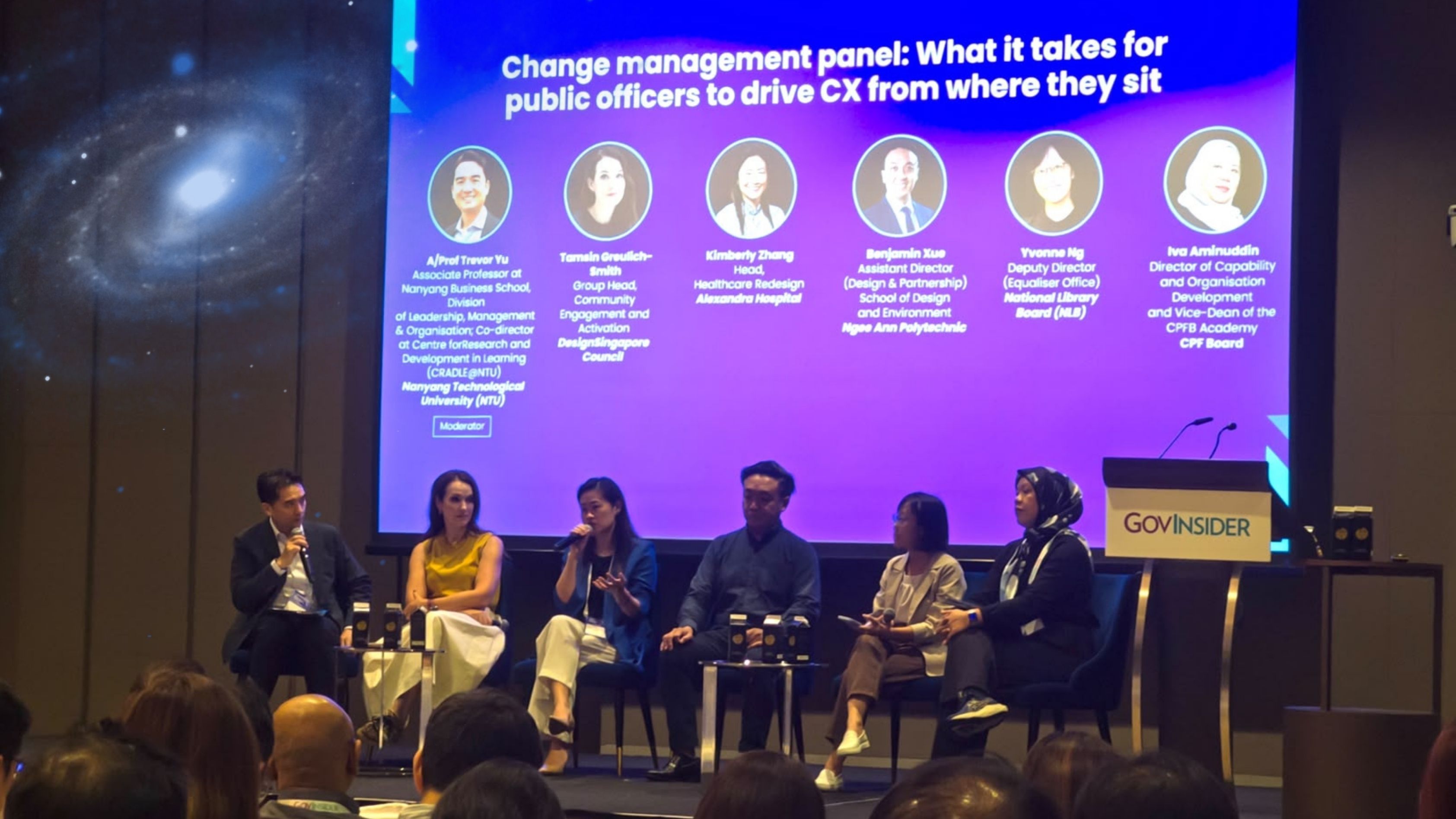
Left to right: Nanyang Technological University (NTU)'s Prof Trevor Yu (Moderator), DesignSingapore Council's Tamsin Greulich-Smith, Alexandra Hospital's Kimberly Zhang, Ngee Ann Polytechnic's Benjamin Xue, National Library Board (NLB)'s Yvonne Ng, CPF Board's Iva Aminuddin. Image: GovInsider
In the book The Hitchhiker's Guide to the Galaxy, Arthur Dent is an everyday man who never set out to be a space hero, but is thrust into interstellar travel and has to navigate a chaotic cosmos.
Citizens and public officers, like Dent, often find themselves navigating bureaucratic chaos that can feel as absurd.
Just as travellers relying on the Guide's advice, GovInsider shares practical lessons that public officers can take to improve public sector customer experience (CX).
The lessons draw on speakers from Singapore’s public sector at our inaugural GovCX Day on October 27.
1. Map the journey, walk it as the user
While officers see their own team, project or stage in an entire process, citizens live the whole journey.
So, the advice is to walk it end-to-end from the user's side.
DesignSingapore Council (DSG)'s Group Head of Community Engagement and Activation, Tamsin Greulich-Smith, whose council has trained around 9,000 public officers to co-design with the public, got the audience to consider the phenomenon of elderly jaywalkers.
The first instinct may be to punish jaywalkers. But imagine being 80, carrying heavy bags while facing a long walk to the crossing, then waiting in the heat before lugging the bags home.
At CPF Board (CPFB), Iva Aminuddin, who heads Capability and Organisation Development, said that the agency's designers work with both CPFB's internal (customer service executives) and external customers (citizens) to test service prototypes within their new centres.
Involving the people who deliver and use a service can help teams spot friction early and build staff ownership of the experience.
2. Explain the purpose behind a requirement
While a requirement may be necessary, the way it's explained can shape how people use it.
Alexandra Hospital (AH)'s Head of Healthcare Redesign, Kimberly Zhang, spoke about how most patients do understand that hospitals are busy and they may need to queue.
But staff can still explain the situation kindly rather than using a standard, impersonal message.
Could better CX leads to better compliance?
DSG's Greulich-Smith described a team enforcing casino rules that require some visitors to hand over financial documents to stop them falling into debt.
Her team experienced being pulled aside by the casino's staff to check their financial documents, which can be an embarrassing experience and potentially creates resistance to cooperate with the staff.
While the rule stayed, the team moved to a more proactive and preventative approach to getting these documents from the visitors.
“Behaviour is communication," as she says. So, when people resist, there is a reason.
3. Give users a meaningful role, not just a chance to attend
Look for meaningful ways to involve users in testing, shaping, or even leading parts of a service.
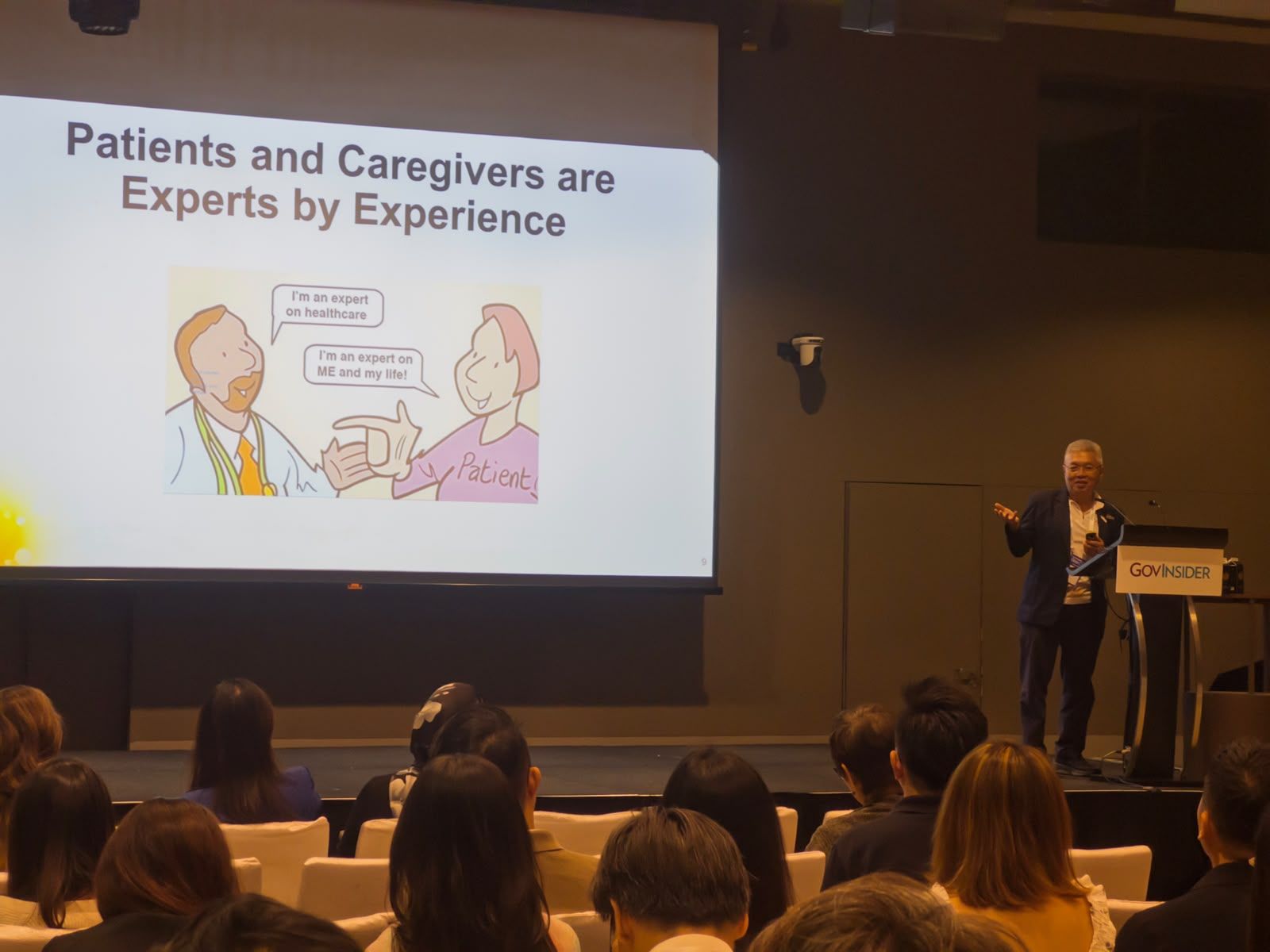
Instead of only adapting library programmes so people with disabilities could attend, the library invited them to lead, creating a ripple effect of inspiring others in the same community.
National Library & Archives Board (NLB)'s Deputy Director (Equaliser Office), Yvonne Ng, shared a story of one person with autism who led a programme using her talents, inspiring a classmate in the audience, who was also autistic and hosted a programme of his own.
Patient advocate, Chew Kim Soon, and SingHealth's head of patient experience, Chang Sook Mei, highlighted patients and caregivers as experts in lived experience.
Patients have helped shape the transition messages and make recommendations to the workgroup as Singapore consolidated three public healthcare apps into HealthHub.
In establishing Singapore General Hospital (SGH)’s new emergency department, SingHealth also invited patients to test scenarios with junior doctors in a safe setting.
4. Rewrite one confusing message in plain, human language
Write for the person reading – not the organisation you're from – and start just with one message.
As with the hospital queues' example, even when the requirement or wait can’t change, a clear and empathetic message can make people feel respected and less confusing as they follow the process.
5. Test an improvement with the people affected
Testing and piloting need not be formal – or/and rolled out in a big bang.
Patient advocate, Chew, shares how the emergency department teams were able to implement a fix within hours after getting feedback from patient advocates around long queues via WhatsApp.
NLB's Ng also shares a volunteer's question around how NLB's longstanding reading programme, kidsREAD, of over 20 years old helps children who have difficulty with learning and reading.
NLB responded by piloting changes with volunteers and community partners for two years, planning to roll out an enhanced curriculum to thousands of children in 2028.
6. Make space for staff to raise risks and ideas
Frontline staff often spot the problem first, so make it easy and safe to speak up.
Instead of letting technology set the roadmap, AH's Zhang shared that her team asked healthcare staff to bring their problem statements.
For example, emergency department staff have raised that two in three walk-in patients did not need hospital-level care, which is something they wouldn't know without asking frontliners themselves.
Staff with ideas can be left to own the failure if it goes wrong, so leadership's role goes beyond role modelling.
DSG's Greulich-Smith highlighted the need to address the performance appraisal component to recognise staff's efforts around "stepping out of the comfort zone and trying something new."
"I think we need empathy for our ground staff and not just assume they're being naughty when they're not doing it," she said.
At CPFB, a deputy CEO chairs an Employee Experience Council every two months to tackle the frictions staff raise alongside their heads of departments, Aminuddin said.
7. Make a small success visible, and be a cheerleader for others
Change spreads through colleagues who are already doing it, so back them. And people accept change when they can see it working nearby.
Culture is not driven by simply writing down the organisation's values and mission statement, with CPFB's Aminuddin defining organisations as "living systems" developed through others, although some keener than others.
Ngee Ann Polytechnic's Assistant Director (Design & Partnership), School of Design & Environment, Benjamin Xue, shared how celebrating small wins and naming champions were key to enabling peers to see how easy the change can follow.
Aminuddin highlighted the importance of storytelling in public service, as they let staff connect to their "why" which often goes back to care for the citizens.
Aminuddin and DSG's Greulich-Smith drew community building lessons from pop culture.
How does a K-pop band or Taylor Swift get that level of engagement from its fans, and what can public sector organisations learn from it?
That is the "cult" in culture, Greulich-Smith joked. "Create that opportunity to resonate and participate, and you’re halfway there."
In public service, maybe your colleagues are the Ford Prefects, the best friend and saviour of Dent, who know the terrain and can show others how to get by together.
Also read: When does proactive service cross into presumption? November 11, 2026