Muattar Djabborova, Deputy Head, Research Department of Radio Communications, Broadcasting and Television, Unicon.uz, Uzbekistan
Oleh James Yau
Meet the Women in GovTech 2025.
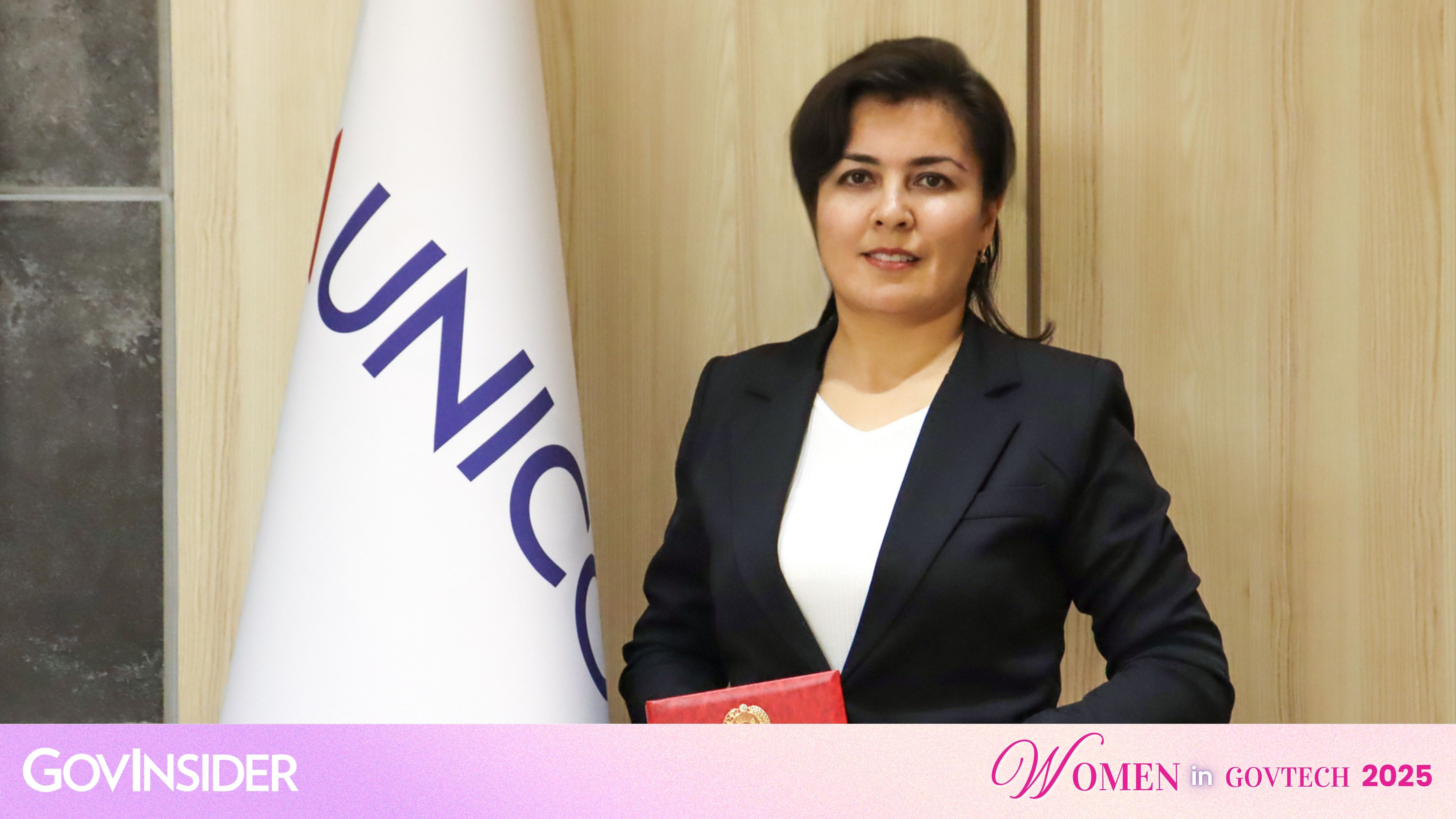
Muattar Djabborova, Deputy Head, Research Department of Radio Communications, Broadcasting and Television, Unicon.uz, shares about her journey. Image: Muattar Djabborova
1) How do you use your role to ensure that technology and policy are truly inclusive?
In my role, I focus on bridging the gap between technology development and policy frameworks to ensure inclusivity at every stage. I believe that inclusivity starts with understanding – listening to diverse stakeholders, from engineers and policymakers to end-users.
I strive to make technical solutions adaptable to different social, cultural, and economic contexts. This means advocating for open standards, transparent regulatory practices, and accessibility in communication technologies so that innovation benefits not just a few, but entire communities.
2) What’s a moment in your career when you saw firsthand how technology or a new policy changed a citizen’s life for the better?
One of the most meaningful moments in my career was witnessing how our work on the Technical Regulation on electromagnetic compatibility of technical devices and the development of several state standards enhanced the reliability of telecommunication and broadcasting systems.
These initiatives established uniform technical requirements, improved service quality, and reduced interference across communication networks. Seeing complex scientific principles translated into real improvements in citizens’ daily access to stable radio, television, and mobile services was deeply rewarding.
It reaffirmed my belief that sound technical policy can have a lasting social impact.
3) What was the most impactful project you worked on this year, and how did you measure its success in building trust and serving the needs of the public?
This year, I had the opportunity to contribute to two major research projects that I consider highly impactful.
The first was the creation of an experimental single-frequency network (SFN) zone for digital television broadcasting in a densely populated area of Uzbekistan. Through extensive field testing, we evaluated signal stability, synchronization accuracy, and coverage efficiency.
The results provided a solid technical foundation for enhancing the reliability of national broadcasting services and improved spectrum efficiency - outcomes that directly enhance the quality of public broadcasting services.
The second project, Research on the use of low- and medium-earth orbit satellite communication systems in Uzbekistan, focused on analysing the services and data transmission capabilities offered by NGSO satellite constellations.
Across its four stages, we studied network organisation for remote and mobile environments, developed mechanisms for spectrum monitoring, and formulated technical requirements aligned with national regulatory standards.
Although this work is ongoing, it has already helped build institutional understanding and public trust in the potential of next-generation satellite communication systems to expand digital connectivity across the country.
In both cases, success was measured not only by technical outcomes, but by their contribution to public benefit – ensuring that communication technologies remain reliable, accessible, and aligned with national development priorities.
4) What was one unexpected lesson you learned this year about designing for real people? This can be about a specific project or a broader lesson about your work.
One unexpected lesson I learned this year is how critical it is to align technical standards and research outcomes with the everyday realities of the people who rely on these systems.
While working on both the digital broadcasting project and the NGSO (LEO and MEO) satellite communication research, I realised that even the most rigorously designed networks must account for local conditions – such as urban density, environmental interference, and the availability of compatible user devices.
Designing “for real people” is not just about engineering performance, it requires anticipating how technologies are used in practice and ensuring that regulatory frameworks and technical requirements truly enable accessible, reliable services for all.
5) We hear a lot about AI. What's a practical example of how AI can be used to make government services more inclusive and trustworthy?
AI can make government services more inclusive and trustworthy by ensuring reliable communication for everyone. In broadcasting and telecommunications, it can optimise network coverage in remote areas and detect potential interference before it disrupts service.
This helps all citizens access emergency alerts, public information, and digital services safely, building confidence in the reliability of government infrastructure.
To subscribe to the GovInsider bulletin, click here.
6) How are you preparing for the next wave of change in the public sector? What new skill, approach, or technology are you most excited to explore in the coming year?
To prepare for the next wave of change in the public sector, I am focusing on the practical implementation of satellite communication technologies to expand connectivity in remote areas of Uzbekistan, in line with Resolution of the President of the Republic of Uzbekistan № RP-313 of 21.10.2025.
Over the coming year, I am particularly excited to explore advanced LEO and MEO satellite systems and their network organisation for public services, including strategies for spectrum management and reliable data transmission.
7) What advice do you have for public sector innovators who want to build a career focused on serving all citizens?
My advice is to stay curious and always connect your work to real people. Focus on understanding how technology affects citizens’ daily lives, not just systems and devices. Always remember that the true measure of innovation is how it improves everyday experiences for everyone.
8) Who inspires you to build a more inclusive and trustworthy public sector?
I am inspired by the people who make technology truly work for everyone – engineers, regulators, and scientists who turn complex systems into reliable, inclusive services.
9) If you had an unlimited budget, what would your dream project be?
Today, technology allows instant connections, but I dream of a world where remote communication feels truly alive: where you can see, hear, and even feel as if you were with someone in person.
10) Outside tech, what excites you the most?
Outside of technology, what excites me most is observing the world and its people – the small, everyday moments that show kindness, creativity, and resilience.
I love seeing nature in all its beauty, the changing seasons, and the simple connections between people that make life meaningful. These experiences inspire me, remind me why my work matters, and give me energy to keep building solutions that serve everyone.