
Age is more than just a number but not a gauge of capability
By Hanna Kum
At CHI INNOVATE 2026, healthcare practitioners discussed the relevance of age in the healthcare sector.
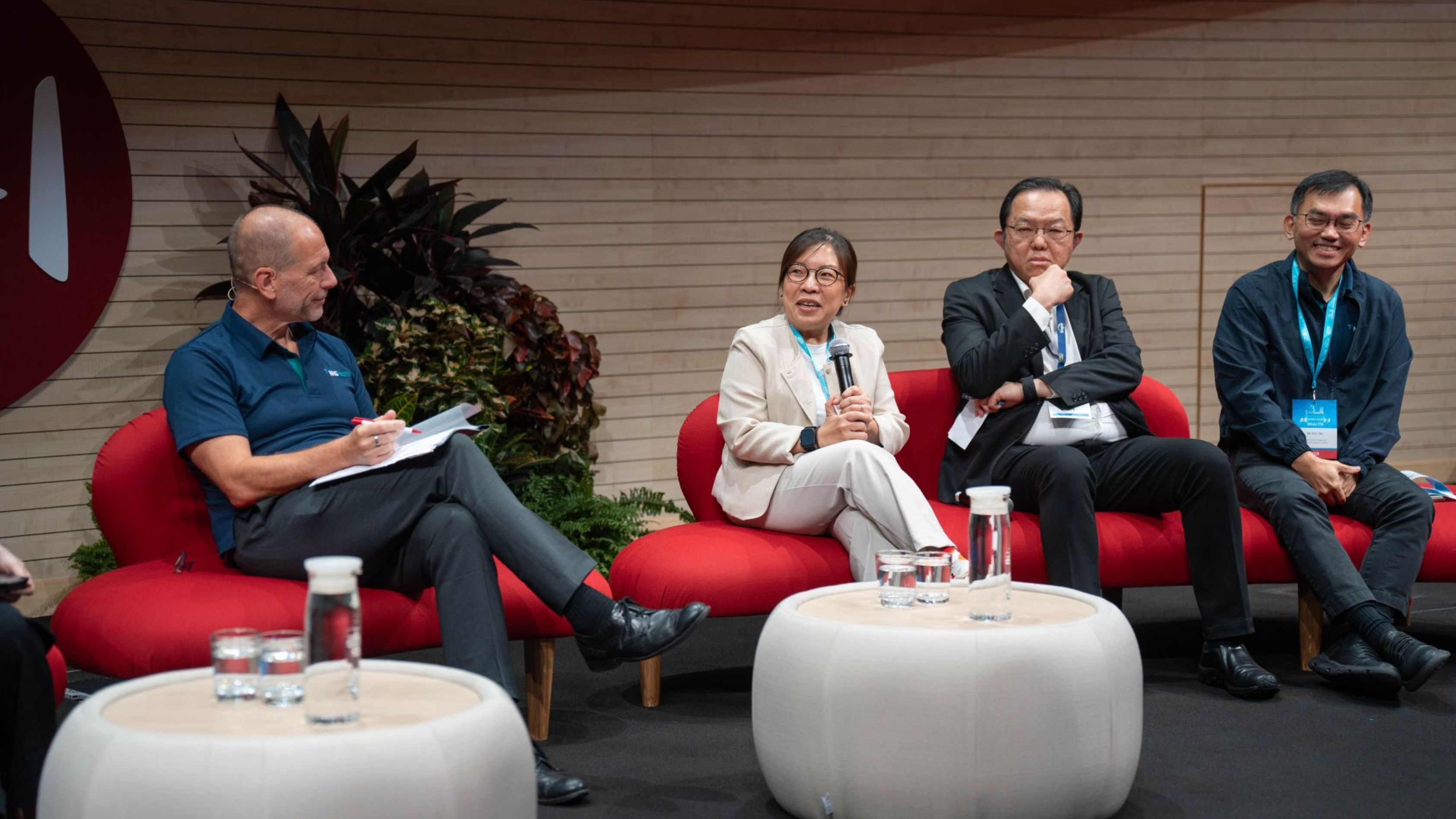
Picture of the panel session "Age Ain’t Nothing But A Number" at CHI INNOVATE 2026. Image: Centre for Healthcare Innovation
In the healthcare sector, age was often given a disproportionate weightage when discussing job roles and responsibilities.
Despite this, speaking at a panel discussion, healthcare professionals argued that age was merely one of many labels people carried into their workplace, alongside other labels that indicated their experiences, skills, backgrounds and perspectives.
Emphasising on this point, during the panel session Age Ain’t Nothing But A Number on July 3 during CHI INNOVATE 2026, they noted that age should be considered along with other attributes such as capability, expertise and talent.
Alexandra Hospital’s CEO, Margaret Lee said age was a label that “we are focused on in this particular [session], but every day we carry different types of labels, and these labels help the world go round in the workplace”.
These could be anything — the languages one speaks, prior experiences, work titles, or even educational background and specialisations.
The labels were not arbitrary or meaningless and as Lee shared, a better awareness of employees’ capabilities did allow organisations to mobilise and allocate resources more effectively.
The National Health Group (NHG)’s Population Health Chief Human Resource Officer, Eric Tan, noted that in assessing workers, age was just the tip of the iceberg; what lay below the surface was equally important when determining whether or not a person was hired for a particular role.
“We do receive comments from recruiting managers that say, ‘I want someone who is in their early 30s only or early 40s’. Then, of course, my HR team will have to help to educate them,” he said.
The panellists shared anecdotes about their encounters with people from various age groups, bringing a wide range of perspectives on how age can indicate many different things, but also how it had sometimes been overemphasised, as if it were the only thing that mattered.
Teaming up to make things work
Ministry of Health Holdings (MOHH)’ Health Officer, Loh Pei Yi, shared about her experience in the hospital during a medical school posting.
Upon taking on the responsibility of comprehensive geriatric assessments (CGA) that involved talking over the phone to a patient’s caregiver for hours, Loh began seeking alternatives to cut down on the time spent doing this task.
Eventually, in partnership with Ajentik, a Singapore-based artificial intelligence (AI) company that was seeking to do something healthcare-related, Loh created Elderwise, an app that automated CGA, saving time and improving accuracy.
“In this case, maybe the freshness, the inexperience of myself could have been used as an asset simply because I had the energy and the time to invest myself into something like this,” Loh shared.
For Loh, her fresh perspective to the problem helped to find a solution while her more senior colleagues resigned themselves to status quo.
Sharing a different perspective, Centre for Healthcare Innovation (CHI)’s consultant, David Dhevarajulu, noted that a patient with elevated blood sugar levels who would not change his lifestyle despite being repeated urged to do so by his primary care doctor, was referred to Tan Tock Seng Hospital (TTSH).
The endocrinologist at TTSH happened to be in the same age bracket as the patient and was able to connect and successfully convince him to change his lifestyle.
Evidently, being a people-centred industry, healthcare was also about relating to the patient to not only provide an accurate diagnosis but also to provide an individualised treatment plan that works.
The two stories pointed to how it was not “who is better”, or “who did the job better”. Rather, it was about who could bring their own unique perspectives and abilities to come to the best possible solution.
Labels do not define a person
“When we see someone at the workplace, do we think about this person in their job role, or do we see a human being first?”, Alexandra Hospital’s Lee asked.
She noted that labels, while helpful to allocate manpower and resources more efficiently, should not take over the employee’s identity as a person first.
Thailand’s Mahidol University’s Vice President for Information Technology and Digital Transformation, Cherdchai Nopmaneejumruslers, said efforts had to be made to understand each generation’s workers, instead of just sticking an age label on them.
“Understand the identities of individual generations, respecting the differences, and then using capabilities between all the generations helped to define the future,” he said.
NHG’s Tan gave the example of a senior whom he had taught how to use the computer at age 65, noting that age was not an insurmountable barrier to cross if one had the desire and motivation to do so.
“He was very passionate about converting his qigong audio tapes into a CD… in two months' time he was so good [at using the computer] that he could actually reply to emails,” Tan shared.
Support and encourage both old and young
Moderating the session, CHI’s Assistant Director of the Learning & Organisation Development Office, Vanessa Lim, asked: “How should we encourage the younger generation to stay bold, do transformation, and make improvements when they prioritise holding boundaries and self-interest above all?”
Alexandra Hospital’s Lee said there was a need to understand what kinds of boundaries and self-interest was being referred to — because in general, people want to see themselves grow in some way.
“I think that is exactly what we need to be able to suss out of them as supervisors, as seniors, in order for us to guide them along the pathway,” she concluded.