
Amirul Muqmin, Lecturer, Quantity Surveying, Politeknik Sultan Abdul Halim Mu’adzam Shah, Malaysia
By Sol Gonzalez
Meet the young public sector officials in the inaugural Young & Official Report 2026.
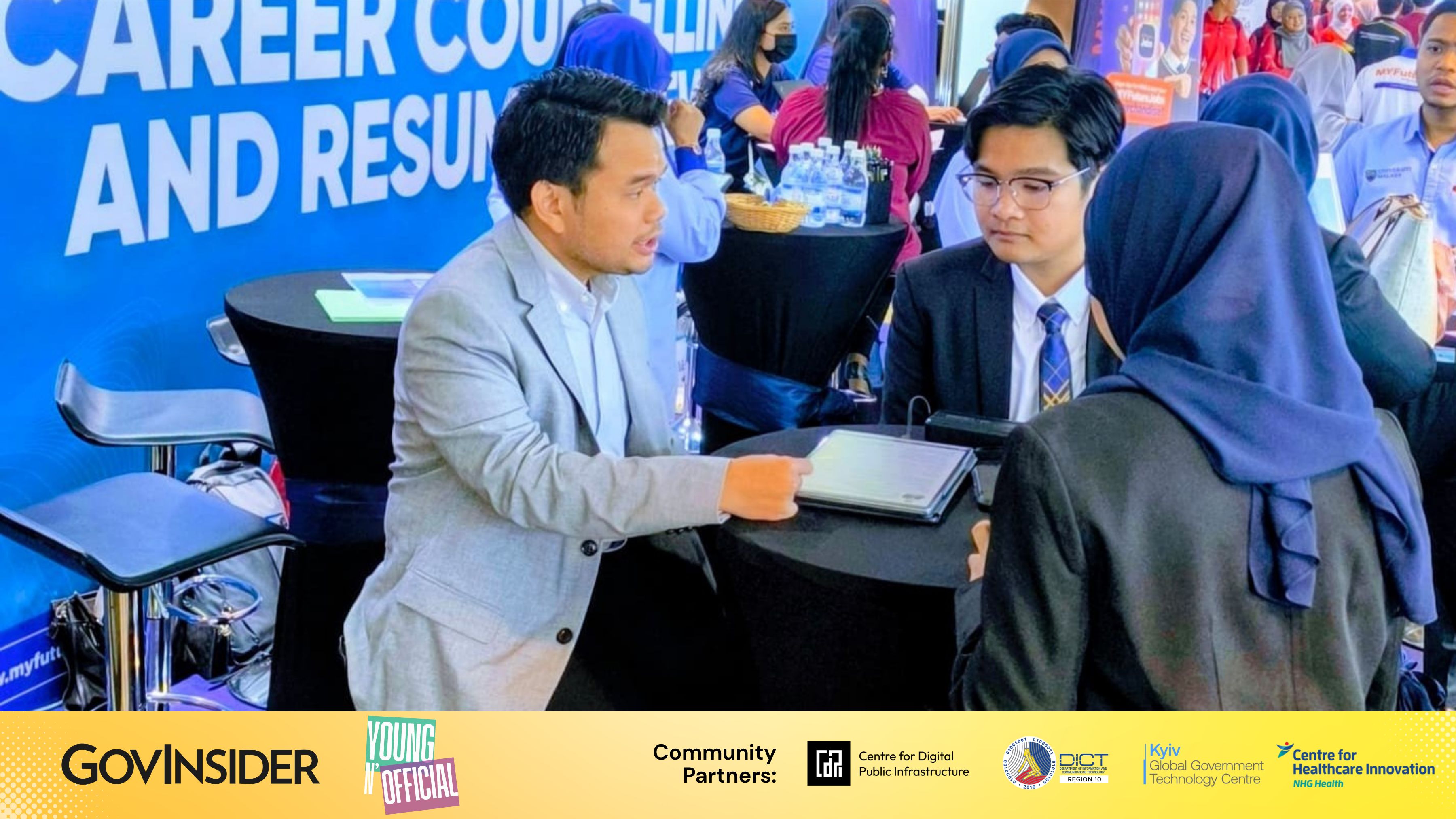
Amirul Muqmin, Lecturer, Quantity Surveying, Politeknik Sultan Abdul Halim Mu’adzam Shah, Malaysia. Image: Amirul Muqmin.
1) What does public service mean to you? Can you share more about your role in the public sector?
Public service, to me, is about shaping people and systems in a way that creates long-term impact. It is not just about delivering services, but about building capacity especially among the younger generation.
As a lecturer in Quantity Surveying, my role goes beyond teaching technical knowledge. I see myself as a bridge between industry and education, preparing students with real-world skills, critical thinking, and professional values. My responsibility is to ensure that graduates are not only employable, but also capable of contributing meaningfully to the construction industry and society.
2) Tell us about a project you championed. What impact did it have on the community?
One initiative I championed was developing simple digital tools and learning applications to help students better understand Quantity Surveying terminology and concepts.
Many students struggle with technical jargon, which can slow down their learning process. By creating accessible, interactive tools, I was able to simplify complex terms into more digestible formats. This improved student engagement, confidence, and overall academic performance.
The broader impact is that students become more prepared when entering the workforce, reducing the gap between academic learning and industry expectations.
3) As a young professional, how has your unique background or perspective allowed you to identify a solution that others in your organisations might have overlooked?
My journey is slightly unconventional. I started in a medical-related field before transitioning into Quantity Surveying, and I’ve also had exposure working overseas. This mix of experiences shaped how I approach problems.
From the medical field, I learned structured thinking and attention to detail. From international exposure, I gained adaptability and openness to different systems and practices.
Because of this, I tend to approach education differently focusing on clarity, user experience, and practical application. For example, simplifying technical learning through apps came from observing how other industries communicate complex information effectively.
4) What is your personal strategy for maintaining your creative energy when faced with bureaucracy?
I focus on what I can control. In any public sector environment, processes are necessary, but they can sometimes slow things down. Instead of resisting the system, I work within it by finding small spaces where innovation is still possible whether in teaching methods, student engagement, or research. I also stay connected to industry practices and real-world challenges. This helps me keep my ideas grounded and relevant, which naturally sustains my motivation and creativity.
5) If you had just one area to invest in to accelerate transformation in the public sector (regulation, technology, talent, etc.), which one would you choose and why?
I would choose talent and mindset development. Technology and regulations can change quickly, but without the right mindset, transformation will always be limited. Investing in people especially in developing adaptability, openness to ideas, and willingness to collaborate creates a foundation for sustainable change. When individuals feel empowered to share ideas and experiment, innovation becomes part of the culture rather than a one-time initiative.
6) What is your greatest ambition as you grow in your public service career?
My ambition is to develop future leaders in the construction industry. I want my students to go beyond being technically competent. I want them to become decision-makers, innovators, and professionals who can influence the direction of the industry.
In the long term, I hope to contribute to improving the quality of education-industry alignment, ensuring that graduates are not only job-ready, but also capable of driving progress within their organisations and communities.
7) What is a “universal value” that connects everyone in your department – from interns to directors – and how do you use that to drive collaboration?
A universal value I see is responsibility. Whether at junior or senior levels, everyone shares the responsibility of contributing to student development and institutional goals.
I use this value to encourage collaboration by aligning everyone towards a shared outcome student success.
When people understand that their roles, no matter how small, contribute to a larger purpose, it becomes easier to work together and support each other.
8) What is the best piece of advice you’ve got for the next generation of public servants?
Stay adaptable and keep learning beyond your job scope. The public sector is evolving, and those who succeed are not just those who follow processes, but those who understand why things are done and how they can be improved.
Also, don’t underestimate small contributions. Even simple ideas, when implemented consistently, can create meaningful impact over time.
9) What is a myth you wish to debunk about young public servants?
A common myth is that young public servants lack experience and therefore cannot contribute significantly. In reality, young professionals bring fresh perspectives, digital awareness, and a willingness to challenge existing approaches.
When given the right platform and support, they can be strong drivers of innovation. The key is not age, but mindset and opportunity.
10) Write a letter to your future self in 2035.
Dear future Amirul,
I hope you are still driven by the same purpose to educate, guide, and make a difference in people’s lives.
By now, I hope you have contributed to shaping not just graduates, but leaders who are making an impact in the industry. Remember why you started not for recognition, but to create value where it matters most.
If things have become more complex, don’t lose your simplicity in thinking. If responsibilities have grown, don’t forget the importance of connection with students, colleagues, and the community.
Keep learning, stay humble, and continue adapting. Success is not just about where you are, but how many people you’ve helped along the way.
If you’ve stayed true to that, then you’ve done well.
Amirul (2026)