
Angela Lim, IT Director, Institute of Mental Health (IMH); Cluster Lead, NHG Health Group Chief Information Office (CIO), Singapore
Meet the Women in GovTech 2025.
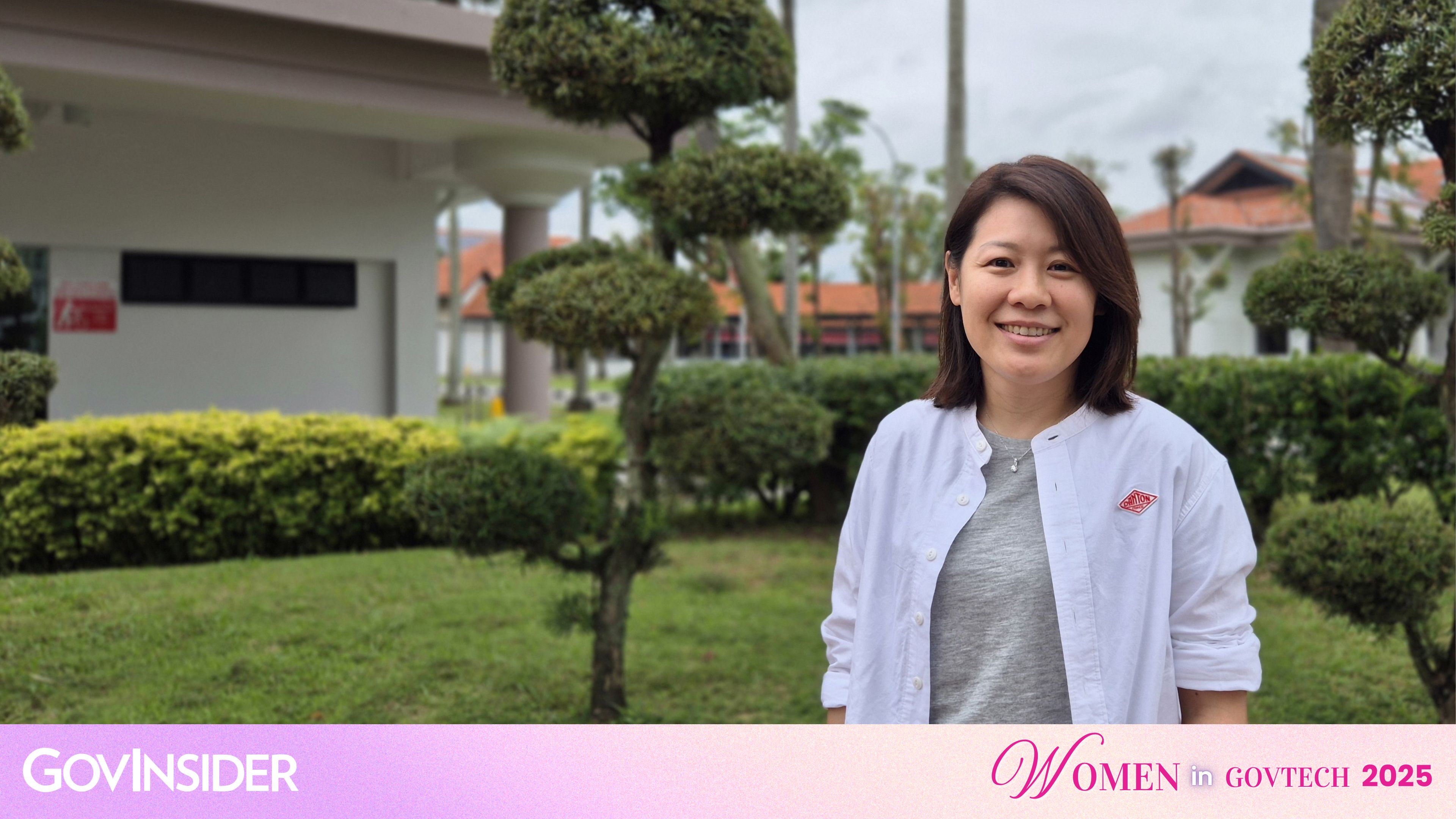
Angela Lim, IT Director for the Institute of Mental Health (IMH) and Cluster Lead in the NHG Health Group Chief Information Office (CIO), Singapore, shares her life's journey. Image: NHG Health.
1) How do you use your role to ensure that technology and policy are truly inclusive?
Inclusivity starts with responsibility.
My dual role as IT Director for the Institute of Mental Health (IMH) and Cluster Lead in the NHG Health Group Chief Information Office (CIO) provides me with a unique vantage point to influence how technology is designed, funded, and scaled across various systems, such as information technology (IT), finance, medical devices, and digital innovation across NHG Health’s public healthcare institutions.
This means designing digital solutions that work for patients, clinicians, and various care settings.
As IMH’s IT Director, I partner closely with stakeholders to ensure that our digital solutions are not just theoretical but embedded in daily workflows.
We focus on simple, human-centred tools that automate routine tasks and free up time for frontline staff. This way, inclusion is not an abstract concept and is experienced in the day-to-day delivery of care.
In my cluster role, I oversee IT funding across institutions. By harmonising cost models and ensuring transparent decision-making, we create a level playing field where hospitals of different sizes, budgets, and patient profiles can access the same high-quality digital services.
This approach ensures that technology and policy do not widen gaps but instead bridge them, making digital transformation equitable and sustainable.
2) What’s a moment in your career when you saw firsthand how technology or a new policy changed a citizen’s life for the better?
At the Institute of Mental Health (IMH), we focus on digital tools that automate and augment clerical and administrative tasks traditionally handled manually.
These were not glamorous innovations but simple, thoughtful automations designed to ease the burden on frontline staff.
During one of my ground walks, a nurse shared a comment that struck a chord:
“For the first time in months, I could sit with my patient a little longer.”
It reminded me that inclusive technology isn’t about shiny features or complex systems. It is about giving time back to the people who provide care for others.
3) What was the most impactful project you worked on this year, and how did you measure its success in building trust and serving the public?
As part of my leadership role in the NHG Innovation Office, we launched the Robotic Process Automation (RPA) Centre of Excellence to grow a Community of Practice within NHG Health.
This initiative empowers staff to become citizen developers, enabling them to create automation solutions that address real operational pain points.
To date, we have built a community of over 120 citizen developers and delivered automation projects that collectively saved over 5000 man-hours in 2024 and over 7000 man-hours in 2025.
These hours are reinvested into patient care, reducing administrative burden and freeing up time for meaningful human interaction.
4) What was one unexpected lesson you learned about designing for real people?
Technology is only as good as its adoption.
If the ground cannot use it easily, it is not truly inclusive, regardless of how advanced it is.
To ensure the technology works, we need to listen deeply and continuously; it matters far more than designing quickly. Empathy is not a one-time exercise; it’s an ongoing commitment to co-create solutions that fit real lives, not ideal workflows.
Frontline work in healthcare is intense, fast-paced, and emotionally demanding, and we faced it even more so in IMH.
Well-intentioned digital tools can unintentionally add friction if they are not designed with empathy.
Real inclusion means understanding the lived realities of healthcare teams: shift patterns, cognitive load, emotional fatigue, and competing priorities.
5) What’s a practical example of how AI can make government services more inclusive and trustworthy?
As the Prime Minister highlighted at the National Day Rally 2025, artificial intelligence (AI) must be deployed responsibly, with safeguards to ensure fairness, transparency, and accountability.
When applied thoughtfully, AI can strengthen trust in public services by making them more efficient, equitable, and human-centred.
This ensures technology serves people and not the other way around.
In healthcare, AI could be a powerful equaliser.
One practical example is using AI for triaging administrative tasks such as summarising clinical notes, auto-filling frequently used forms, or routing requests to the right departments.
This does not replace clinical judgment; it enhances it.
By removing repetitive work, AI allows care teams to focus on what matters: patient conversations, decision-making, and relationship-based care.
In mental health, especially, trust is built through time and presence, not paperwork.
6) How are you preparing for the next wave of public sector transformation? What new skill or technology are you excited about?
I’m preparing by focusing on digital sustainability to avoid the proliferation of small, fragmented systems whenever new technologies emerge. Instead, we build solutions that are affordable, scalable, and resilient for the long term, while remaining prudent with IT spending.
The skill I’m most excited about is AI literacy: equipping healthcare staff to understand, question, and safely adopt automation and AI tools.
This is essential for trust and responsible innovation.
Bringing these together, lightweight automation combined with safe, explainable AI represents a practical and inclusive approach to transformation.
To subscribe to the GovInsider bulletin, click here.
These tools make work meaningfully easier for operational staff without requiring massive system overhauls.
They enhance human capacity rather than replace it hence ensuring technology serves people, not the other way around.
7) What advice do you have for public sector innovators who want to build a career focused on serving all citizens?
Start with humility. You cannot design for citizens if you do not understand their realities. Listen deeply before you build.
Value operational excellence as much as innovation. Trust is earned through reliability, not novelty. A system that works every time matters more than one that dazzles once.
8) Who inspires you to build a more inclusive and trustworthy public sector?
My inspiration comes from the healthcare frontliners I meet every day for example, colleagues from nursing, allied health, operations, and support workers.
They work tirelessly in environments filled with emotional and physical demands yet remain deeply committed to serving patients. It reminds me, “Tech should never add burden; it should enable care.”
9) If you had an unlimited budget, what would your dream project be?
My dream project would be to build a unified digital assistant for every healthcare worker, powered by safe AI, seamlessly integrated with clinical systems, and accessible via mobile devices.
This would give clinicians and staff the one thing they value most: more time with patients.
10) Outside tech, what excites you the most?
What excites me most is understanding how people think, collaborate, and grow.
Whether it’s mentoring colleagues, supporting team development, or learning from frontline staff, I’m energised by environments where people learn together.
Technology evolves quickly, but what truly inspires me is the human capacity to adapt, innovate, and thrive.
That resilience, coupled with relationships, is what will enable transformation to be meaningful.