
APAC’s shared power grid vision key to regional energy transition
By James Yau
At the biennial Conference of the Electric Power Supply Industry (CEPSI) in Singapore participants shared how power grids could be improved to enable a more sustainable energy future as the global energy transition accelerates.
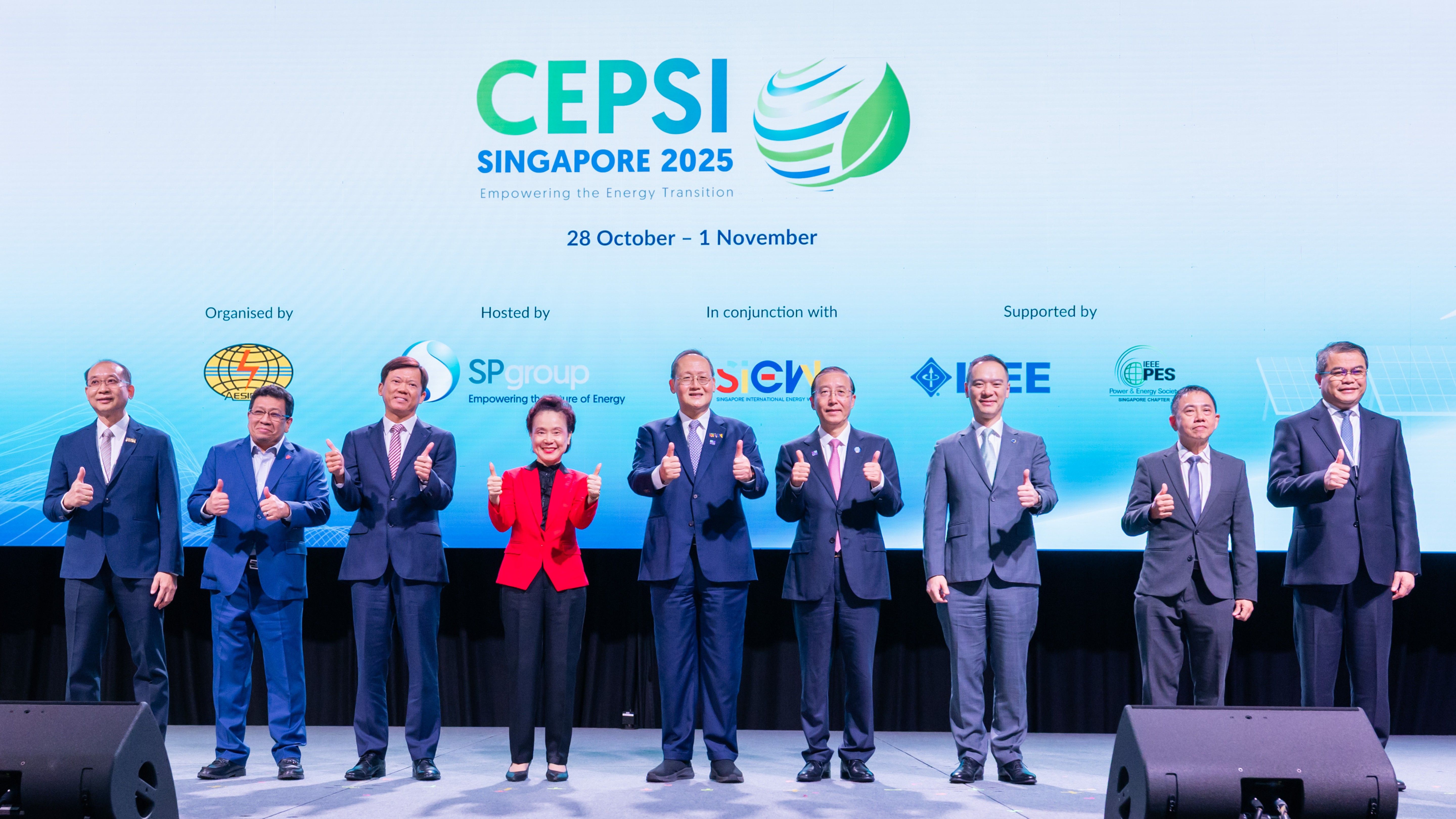
From left: Mr Arin Temeyakui, Director, Power Plant Engineering Division, EGAT (Thailand); Datuk Ir. Megat Jalaluddin Bin Megat Hassan, President & CEO, TNB; Mr Stanley Huang, President of AESIEAP and Group CEO of SP Group; Ms Leong Wai Leng, Chairman, SP Group; Dr Tan See Leng, Minister for Manpower and Minister-in-charge of Energy and Science & Technology in the Ministry of Trade and Industry; Mr Xin Bao’an, President of CEC, Chairman of GEIDCO, and Immediate Past President of AESIEAP; Mr Joseph Law, Managing Director, CLP Power Hong Kong, Vice President AESIEAP; Mr Jimmy Khoo, CEO, SP PowerGrid; Mr Ronnie L. Aperocho, EVP and COO, MERALCO. Image: CEPSI
Asia Pacific (APAC)’s energy demand is set to remain as one of the world’s largest over the next 25 years, with the region projected to consume about half of global demand in 2050.
Within that, Southeast Asia's energy appetite is expected to grow dramatically, accounting for one-quarter of global demand within the next 10 years.
The surge in energy demand, primarily driven by artificial intelligence (AI), data centres, cooling needs and electric vehicles (EVs), poses serious challenges for the global energy transition.
The role of APAC stands at the epicentre of the global energy transition, highlighted SP Group’s Chief Executive Officer Stanley Huang in his welcome remarks at the Conference of the Electric Power Supply Industry (CEPSI) event in Singapore.
CEPSI was hosted by SP Group from October 29 to November 1, as part of the Singapore International Energy Week (SIEW) 2025.
A clear and actionable strategy, cross-border regulatory alignment and broad social consensus are key elements to empowering the energy transition, said Huang.
“To meet rising energy demands and changing energy mix with the integration of renewables, the grid must evolve and be transformed to unlock new possibilities,” he explained.
Huang was also the President of the Association of the Electricity Supply Industry of East Asia and Western Pacific (AESIEAP).
Singapore’s Minister for Manpower and Minister-in-charge of Energy and Science & Technology, Dr Tan See Leng, who officiated the event, laid out Singapore’s three key priorities to future-proof its energy grid.
These were interconnectivity, resilience, and flexibility.
To support these goals, Minister Tan had earlier announced the Virtual Power Plant (VPP) platform during SIEW 2025.
Developed by SP Group, the VPP was a digital platform enabling Singapore’s energy transition.
It does so by allowing the coordinated aggregation of distributed energy resources (DERs), such as battery energy storage systems (BESS), and electric vehicle chargers.
By aggregating these DERs across diverse sites, the platform functions like a single generator, supplying energy and ancillary services to the electricity grid.
The CEPSI’s conference also explored a range of topics from collective transition strategies to grid modernisation priorities under the theme of ‘Empowering the Energy Transition’.
To subscribe to the GovInsider bulletin, click here.
The grid’s role in net zero emissions
The plenary panel on Getting to Net Zero: The Grid as an Enabler of a Sustainable Future explored strategies to modernise and expand grid infrastructure sustainably, reliably and cost-effectively.
For Indonesia state-owned electric power distributor PT PLN (Persero), the challenge was getting renewable energy to its majour pouplation centres.
PT PLN's Director of Transmission and System Planning, Edwin Nugraha Putra, explained that Indonesia's energy demands were heavily concentrated on Java Island, home to over half of the nation's 270 million residents, while the primary source of renewable energy was located in the neighbouring island of Sumatra.
Given the potential US$1 billion (S$1.3 billion) capital expenditure required for grid developments, Putra looked towards regional collaboration as the way forward to achieve greater grid connectivity between the regions.
On the other end of the spectrum, the challenge for a small yet densely populated region like Hong Kong meant that the Hongkong Electric Company Limited was focusing efforts on air pollutants.
This was because Hong Kong’s hilly terrain coupled with space constraints limited its renewables to rooftop solar panels, said the company’s Managing Director Francis C. Y. Cheng.
Cheng explained that the company has been successful in reducing the concentrations of sulphur dioxide and respirable particulates by over 90 per cent over the past twenty years.
There was now an increasing focus on decarbonisation, which aligned to Hong Kong’s aim to reduce half of its carbon emissions by 2035 and carbon neutrality before 2050, said Cheng.
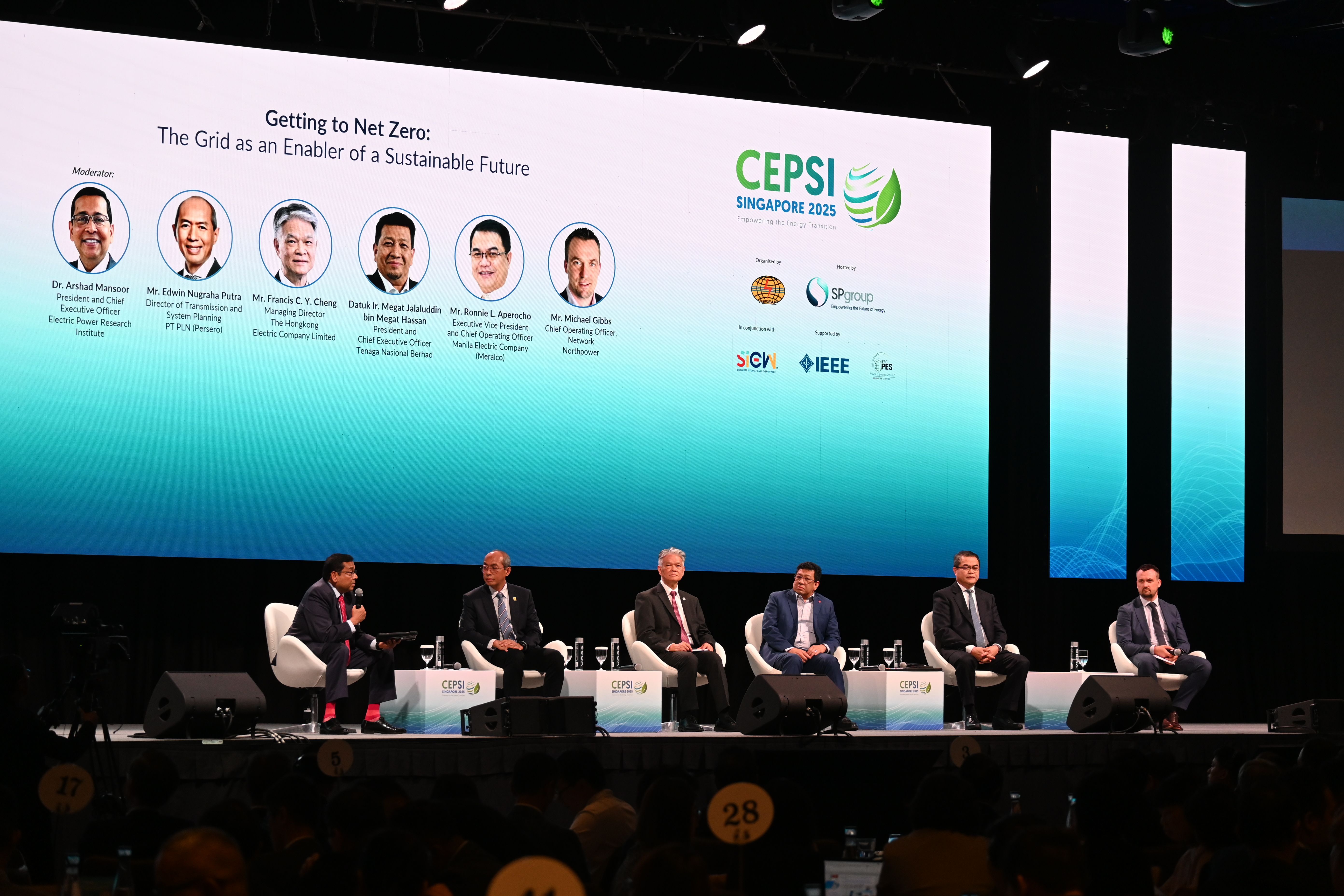
Acknowledging the challenges and contexts raised, moderator Arshad Mansoor, President and Chief Executive Officer of the Electric Power Research Institute (EPRI), encouraged panellists to rely on the unwavering strength of human knowledge to solve the difficult issues.
While power today was creating knowledge in the shape of data centres and AI, the very element that birthed the oldest forms of power in fire, was human knowledge.
He urged the panellists and delegates to think and act differently as they set goals to meet energy demands of the future.
Accelerating goals for 2050
Speakers at the panel titled From Ambition to Action: Transition Strategies towards a Low-carbon Economy discussed the intersections of policy, technology, and delivery in translating climate ambitions into tangible outcomes at scale across the region.
Kickstarting the discussion, moderator Zhen-Hui Eng, Director of Power Markets, APAC, Baringa Partners, highlighted the role of the ASEAN power grid (APG).
APG is a major initiative established in 1996 to connect the electricity networks of the 10 members countries of ASEAN, enabling cross-border power trading to achieve fully integrated grid operations by 2045.
The collective vision was to ensure a reliable energy supply, maximise the use of renewables, and support affordable electricity for more than 680 million people living in the region.
ASEAN Centre for Energy’s Executive Director, Dato' Ir. Ts. Abdul Razib Dawood said that accelerating the APG agenda was at the forefront of recent discussions.
He was referring to the Enhanced Memorandum of Understanding (MoU) on APG that was endorsed by ASEAN Ministers at the recent Forty-Third ASEAN Ministers on Energy Meeting in Malaysia.
The MoU focused on standardising rules and regulations for cross-border electricity trade.
The immediate working plan for multilateral stakeholders involves addressing policy, financing, and implementation to move the initiative from planning to real-world projects.

National Transmission Corporation (TransCo)’s President & CEO, Fortunato C. Leynes, P.E.E shared insights into the Philippines' energy experience and its role in the APG.
Since the market liberalisation in 2001, TransCo has managed the power transmission system that connects generators and distributors nationwide within a competitive, private industry.
Leynes specifically noted the effective collaboration between various service providers, including the National Grid Corporation of the Philippines and the Independent Electricity Market Operator of the Philippines, as an example of successful public-private partnership.
Technical cooperation, standards alignment, and policy alignment would be key for future connections, he added.
As the momentum towards a low-carbon economy builds, the discussions across CEPSI underscored the role of cross-border collaboration and learning across APAC.