
ASEAN’s digital economy framework to cement regional integration
ASEAN Economic Community’s Deputy Secretary-General, Satvinder Singh, said the Digital Economy Framework Agreement (DEFA) would propel the grouping’s digital economy, which is likely to reach US$2 trillion by 2030.
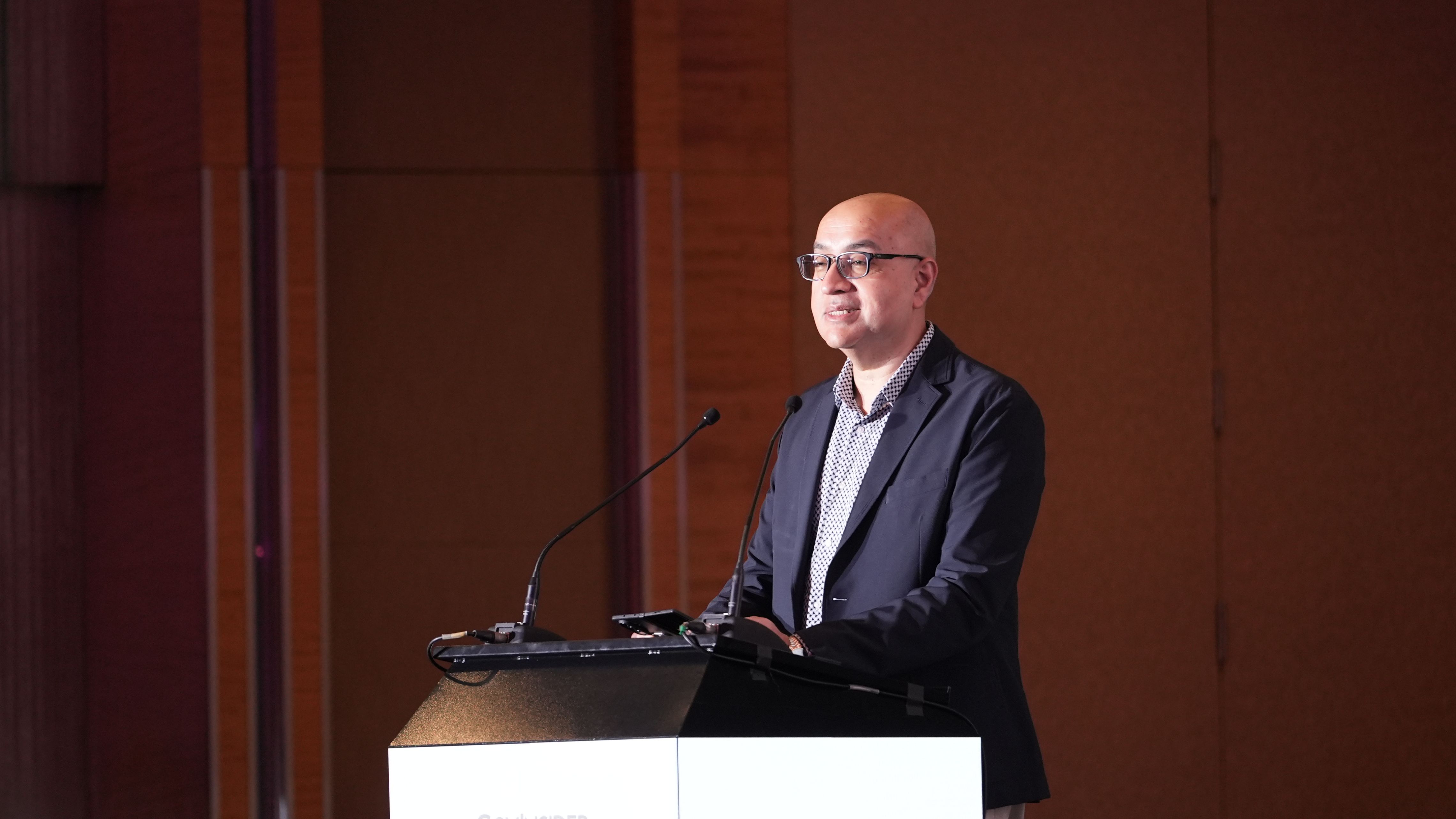
ASEAN Economic Community’s Deputy Secretary-General, Satvinder Singh noted that the Asean Digital Economy Framework Agreement (DEFA) would set common standards for digital trade, e-commerce, and data, thus reducing fragmentation, lowering transaction costs, and creating a seamless, interoperable digital market across ASEAN’s diverse member states. Image: GovInsider.
The Asean Digital Economy Framework Agreement (DEFA), expected to come into force this month, would be the world’s first regional digital economy governance framework.
According to ASEAN Economic Community’s Deputy Secretary-General, Satvinder Singh, DEFA was the “core vehicle for deepening ASEAN’s digital integration and moving the region from ad hoc initiatives to a unified, rules-based digital market”.
Speaking during different sessions at GovInsider’s Festival of Innovation 2026, Singh pointed out that there were very few multilateral and legally binding digital agreements globally, “even the European Union does not yet have an equivalent”.
Getting DEFA to its position today has been a long and complicated negotiation process that has “entered the final stretch” with agreement set to emerge this month, Singh said.
According to him, all 10 original ASEAN member states “are actively at the table” with the 11th and newest member, Timor-Leste, expected to join DEFA “when ready”.
ASEAN secretariat’s internal calculation estimated that DEFA’s implementation would accelerate the region’s digital economy growth to an estimated US$2 trillion (S$2.56 trillion) by 2030.
Singh noted that this would be achieved by setting common standards for digital trade, e-commerce, and data, thus reducing fragmentation, lowering transaction costs, and creating a seamless, interoperable digital market across ASEAN’s diverse member states.
The streamlining of digital regulations across ASEAN would make the region more attractive for foreign and domestic investment in digital technologies.
Overcoming initial scepticism
The ASEAN official noted that there was initial scepticism about the accord among the “less developed” members, who saw DEFA as “something that would primarily benefit more advanced digital economies like Singapore and Malaysia”.
“The ASEAN negotiating team responded by ‘showing the money’, demonstrating that, on a per capita basis, the largest relative gains would accrue to the less developed members, including Indonesia, Cambodia, Laos and Myanmar”, Singh said.
Once ministers and leaders saw these numbers, resistance receded, and no country turned back, he added, noting that “this evidence-based approach helped reframe DEFA from a perceived threat into a shared opportunity”.
He noted that DEFA was not just an inward-facing blueprint, but an agreement intended to shape ASEAN’s position in the global digital economy.
Consolidating ASEAN position on global stage
He noted that “part of the outcomes of DEFA” would include a consolidated ASEAN stance on issues like the debate over the moratorium on customs duties on electronic transmissions.
This would give the region a clearer and more powerful collective voice in global digital trade governance, he said.
“DEFA is both a regional integration mechanism and a geostrategic tool,” Singh added.
The agreement fits into ASEAN’s broader strategy for managing an “era of permanent disruption,” he said.
“Faced with overlapping economic, geopolitical and technological shocks, the region is moving away from crisis-by-crisis management towards long-term structural planning,” Singh noted.
He added that DEFA sat alongside initiatives such as the ASEAN Community Vision 2045 “as a pillar of an approach, providing a stable, predictable framework for businesses and governments operating in the digital space”.
“Rather than treating digital policy as an add-on, the agreement embeds it at the heart of ASEAN’s economic resilience strategy,” he added.
World’s fifth-largest economy
Highlighting the region’s importance in a world battling turbulence, Singh noted that with 11 member countries and a population of roughly 700 million, Asean was already the “world’s fifth-largest economy and was expected to become the fourth largest by 2030”.
He added that despite trade tensions, higher tariffs, and a challenging investment climate, the ASEAN 6 (the major economies of the grouping) recorded stronger‑than‑expected GDP growth of around 4.9 per cent and trade expansion of over eight per cent, outpacing global trends.
Singh noted that the group was focused on driving digital transformation, human capital development, and innovation ecosystems as the core pillars of ASEAN’s next phase of integration.
He added that every policy, blueprint, and agreement, whether it was within ASEAN’s 11 member states or with global partners, had to pass a simple test: Does it improve the life of an ASEAN citizen?
Building a strong public sector
Singh said one of the Secretariat’s priorities was to prioritise strong public sector capability and leadership as “execution was as important as policy design”.
“In the face of external shocks (from geopolitical tensions to energy price spikes and supply chain disruptions), our focus has been on maintaining and strengthening ASEAN’s economic resilience, including trade, investment flows, and especially tourism, which was a major generator of jobs and GDP,” Singh said.
In this context, Singh noted that artificial intelligence (AI) was “a strategic tool for ASEAN to turn external shocks and uncertainty into opportunity”, rather than simply reacting with concern.
He noted that given tourism’s importance to the region, generating more than a third of jobs and a significant share of GDP, ASEAN must “be clever” and “use AI and be smarter” to stay “front and centre of relevance.”
Singh also noted that AI was the key to transforming the region’s public sector and the future of work in government.
Under the ASEAN five‑year workplan for a future‑ready public service, one priority was to embed “foresight and AI‑driven workforce planning” into institutions across the grouping, he said.
AI has been positioned as part of the core capability set, including digital, cybersecurity and data governance, that public servants must master to deliver more citizen‑centric outcomes, Singh said.
Watch the full video of Satvinder Singh's speech here.