
Assem Bolatzhan, Advisor to the Deputy Prime Minister-Minister of AI and Digital Development of the Republic of Kazakhstan
By James Yau
Meet the Women in GovTech 2025.
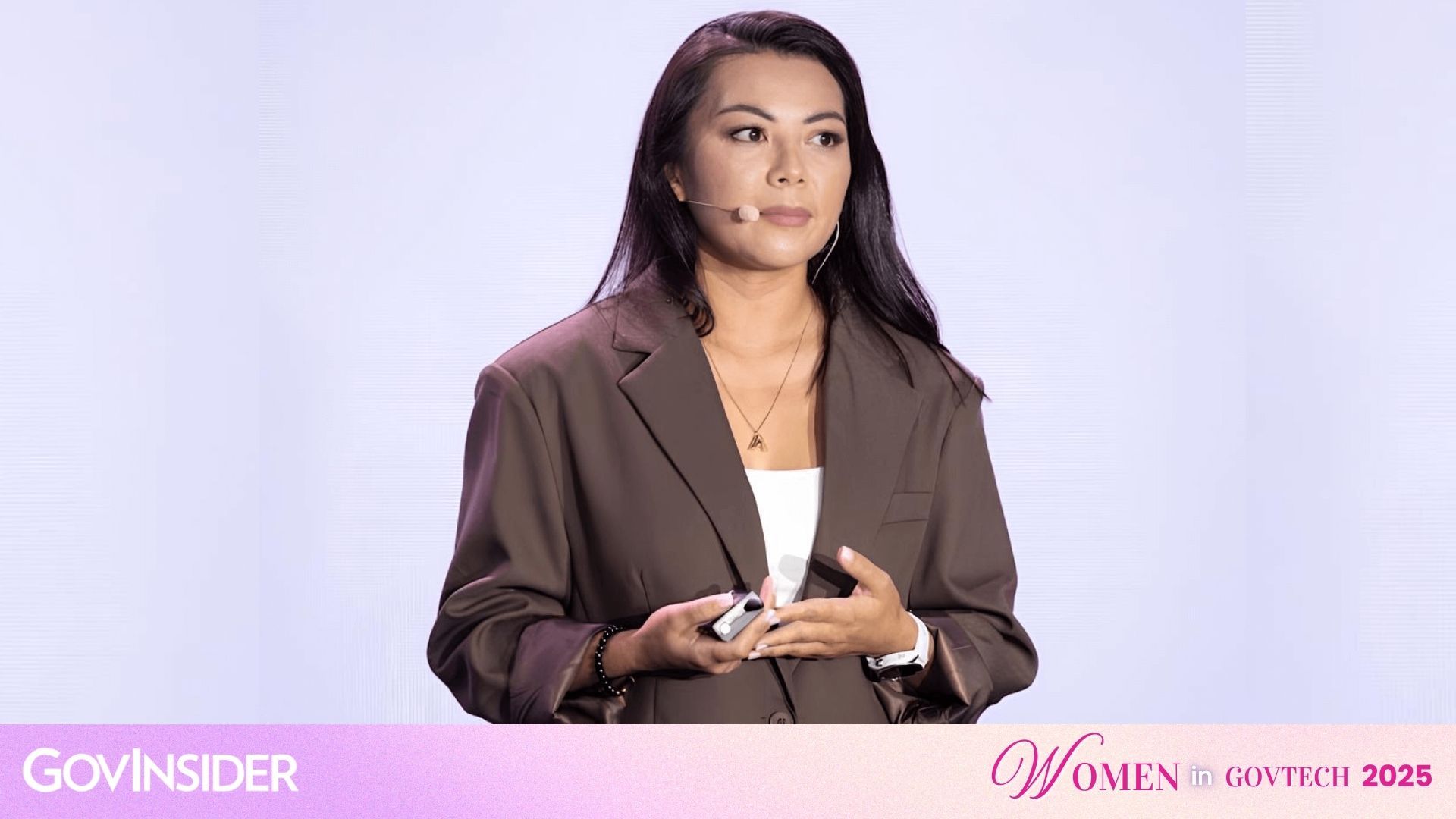
Assem Bolatzhan, Advisor to the Deputy Prime Minister-Minister of AI and Digital Development of the Republic of Kazakhstan, shares about her journey. Image: Assem Bolatzhan
1) How do you use your role to ensure that technology and policy are truly inclusive?
As the Head of Women in Tech and an advisor to the Deputy Prime Minister-Minister of Artificial Intelligence and Digital Development, I view my role as creating conditions where technology becomes a unifying force across all sectors.
One of my priorities has been expanding access for women and girls in tech. We built the largest open Women in Tech community in Kazakhstan with no membership fees or barriers.
Any girl can join, learn, find support, and receive opportunities. For me, inclusivity is not a concept but a daily effort to remove entry barriers and make the digital economy accessible to everyone.
2) What’s a moment in your career when you saw firsthand how technology or a new policy changed a citizen’s life for the better?
One of the most powerful examples was the introduction of digital ID and biometric e-signatures. These innovations made electronic signatures far easier and more intuitive for citizens, unlocking broad access to digital public services.
This project significantly increased trust in digital systems and accelerated adoption. It showed me how a single technological improvement can meaningfully change everyday life for millions.
3) What was the most impactful project you worked on this year, and how did you measure its success in building trust and serving the needs of the public?
One of the key projects in my career was the “Stop Credit” service, launched while I was at the First Credit Bureau. It became widely used and empowered citizens to protect their personal data and reduce fraud.
If we speak about this year’s flagship initiative, it is the creation of the Women in Tech platform as a large-scale community and ecosystem. It helps girls find a professional environment, learn, grow, and build their careers.
We measured success through engagement, community activity, women’s professional outcomes, and the broader impact on empowerment.
4) What was one unexpected lesson you learned this year about designing for real people? This can be about a specific project or a broader lesson about your work.
The most unexpected lesson was realising how much people want digital services, yet how low digital responsibility can still be. We build services that are secure and simple, but users must also protect their own credentials and not share passwords or e-signatures.
This creates a dual reality: if society wants digital transformation, citizens must share responsibility for their own digital safety.
Otherwise, we remain stuck between digital expectations and analog habits. It is a joint responsibility between the state and the user.
5) We hear a lot about AI. What's a practical example of how AI can be used to make government services more inclusive and trustworthy?
AI can significantly enhance public services. For example:
• In social policy, AI can analyse data from the national family digital map and provide more targeted support by identifying anomalies and real needs.
• In healthcare, AI can assist with preliminary analysis, diagnostics, and patient prioritisation.
• In public procurement, AI can detect patterns, analyse documentation, and reduce risks of inefficiency.
What might take a person weeks to examine, AI can process in minutes. This improves fairness, transparency, and accessibility across government services.
To subscribe to the GovInsider bulletin, click here.
6) How are you preparing for the next wave of change in the public sector? What new skill, approach, or technology are you most excited to explore in the coming year?
I believe skills have become more important than knowledge.
The ability to adapt, rebuild, and shift focus quickly is essential, especially in a system that is naturally bureaucratic. Kazakhstan has chosen an ambitious path toward rapid digitalisation, and this requires continuous learning.
I focus on strengthening systems thinking, change management, and AI literacy. These will be the core competencies for the next phase of transformation.
7) What advice do you have for public sector innovators who want to build a career focused on serving all citizens?
First, understand your digital citizen. People today are a digital native generation that expects speed, transparency, and user-centric design.
Second, be able to balance four elements: citizen expectations, state capabilities, security requirements, and inclusivity. Only this balance can produce solutions that truly work.
Finally, stay curious and empathetic. Successful careers in the public sector are built not only on technical skills but on the ability to listen and serve.
8) Who inspires you to build a more inclusive and trustworthy public sector?
I am inspired by our own tech community: Qazaq IT Community and Women in Tech. Together, we have grown to nearly 10,000 participants who create value inside the country.
I am inspired by people who choose to stay, build, innovate, and contribute to Kazakhstan. Their belief in the country and their desire to strengthen it from within motivate me to continue this work.
9) If you had an unlimited budget, what would your dream project be?
I would create a unified national health data platform: integrated, structured, and research-driven.
This system would allow scientists and doctors to conduct large-scale studies, advance personalised medicine, identify national health patterns, improve prevention, and strengthen environmental and lifestyle policies.
Healthcare remains one of the least digitalised sectors. A unified data ecosystem could dramatically improve quality of life and national productivity.