
Assoc Prof Kelly Ke, College of Computing and Data Science, Nanyang Technological University (NTU), Singapore
Meet the Women in GovTech 2025.
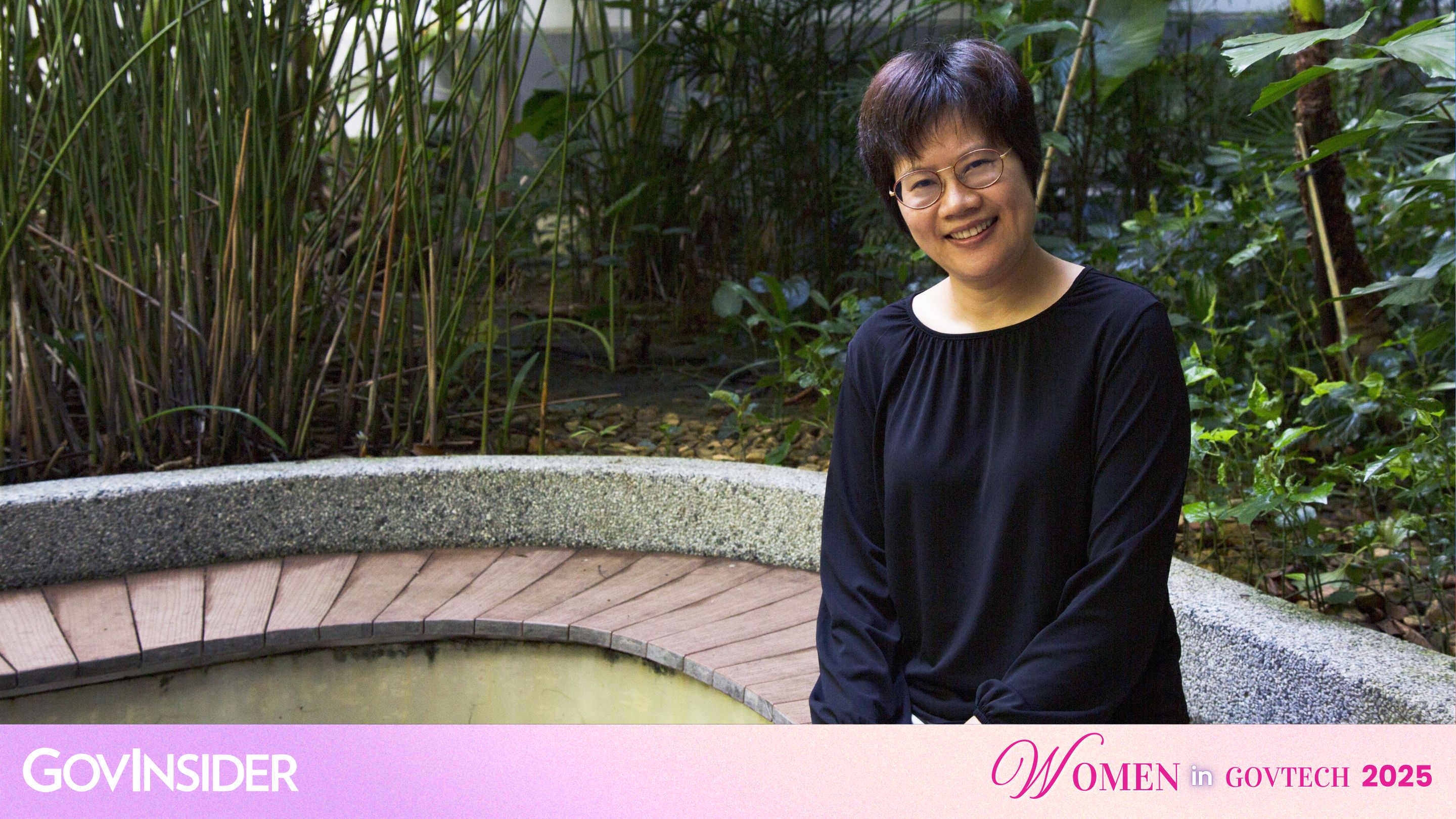
Assoc Prof Kelly Ke, College of Computing and Data Science, Nanyang Technological University, Singapore, shares her story. Image: NTU Singapore
1) How do you use your role to ensure that technology and policy are truly inclusive?
As an educator and a researcher, I try to make inclusion a practical part of how we teach and develop technology.
I actively support women entering STEM through mentorship, outreach activities, and the creation of learning and research environments where diverse voices are valued.
My research centres on developing artificial intelligence (AI) technologies that benefit a wide range of applications, including neuroscience, engineering design, biology and environmental sustainability.
My team openly releases our data, benchmarking, and codes to the public so that researchers, practitioners, and public-sector partners can adapt them based on their needs.
We aim to create technologies that are accessible, effective and beneficial to all communities.
2) What’s a moment in your career when you saw firsthand how technology or a new policy changed a citizen’s life for the better?
One stand-out moment came from a collaboration with a leading power systems company to support engine design.
We had developed AI models to automatically detect and track important airflow features, such as vortices and flow separations, from complex flow fields.
Before this, engineers often had to identify such features manually, which relied heavily on their experience and made it easy to miss subtle patterns.
During the collaboration, domain experts discovered that our models picked up small but critical flow features previously unnoticed, which could have serious consequences for the performance and safety of their engine designs.
It was very meaningful for me to watch them incorporate these models into their design workflow, knowing that it would make the systems people rely on every day more reliable.
3) What was the most impactful project you worked on this year, and how did you measure its success in building trust and serving the needs of the public?
My team developed new AI methods to identify connectivity patterns in the brain that may be linked to conditions such as autism, Alzheimer’s disease and other ageing-related neurological conditions.
These patterns can reveal very early signs of change, often before noticeable symptoms appear, and are crucial for timely support and intervention.
To ensure the work is trustworthy and useful, we partnered closely with neuroscientists and clinicians. They helped us to check whether the patterns our models highlighted made sense biologically and aligned with clinical observations.
For me, the most meaningful measure of success wasn’t just that our findings matched what’s already known, but that they highlighted patterns previously overlooked and facilitated related clinical research with unconventional hints.
4) What was one unexpected lesson you learned this year about designing for real people? This can be about a specific project or a broader lesson about your work.
When designing technology for real people, I realised how different the definition of “success” can be.
In AI research, we often rely on metrics, such as accuracy, precision, recall or benchmark performance, to evaluate our models.
These numbers matter, but I’ve learned they don’t always reflect what end users – neuroscientists in my case – truly need.
In neuroscience, interpretability often matters far more than metric-based performance.
Neuroscientists want to understand why a model makes certain predictions, what patterns it has discovered, and whether those patterns reveal novel biological mechanisms.
A simpler, more transparent model is preferred over a model that scores a few percentage points higher in accuracy but functions as a black box.
This taught me that designing for real people is about helping them make better decisions, not just meeting success metrics.
It reminded me to involve domain experts earlier and to prioritise explainability in designing our AI models.
It has also shifted how my team builds and evaluates our models, and deepened our commitment to technology that is not only accurate, but usable and trustworthy for the communities we aim to serve.
5) We hear a lot about AI. What's a practical example of how AI can be used to make government services more inclusive and trustworthy?
I believe AI can help governments serve people in ways that are both more accessible and more accountable.
On one hand, AI tools can make services easier to navigate by providing information in the languages, formats and communication styles that end users are most comfortable with.
This reduces the technological barriers that often prevent people from getting support.
On the other hand, these systems must be designed with transparent and rigorous decision-making logic.
This ensures that outcomes can be explained, audited and trusted, especially in areas where fairness and accuracy are critical.
6) How are you preparing for the next wave of change in the public sector? What new skill, approach, or technology are you most excited to explore in the coming year?
I am excited to strengthen collaboration between AI researchers, domain experts and public-sector practitioners so we can design tools that are technically sound, powerful and grounded in real-world needs.
As AI becomes more integrated into our daily lives, we need models whose reasoning can be explained and trusted. Developing such technologies is something my team is putting significant effort into.
7) What advice do you have for public sector innovators who want to build a career focused on serving all citizens?
Stay grounded in the people you hope to serve. Innovation in the public sector is not just about technology; it is more about understanding the needs of diverse communities and ensuring the technology meaningfully improves their experience.
To subscribe to the GovInsider bulletin, click here.
8) Who inspires you to build a more inclusive and trustworthy public sector?
I’m inspired by the people I work with, including colleagues, domain experts, industry partners, students and the end users of our models.
Their insights, experiences and ideas keep me focused on building technologies that are more inclusive and trustworthy.
9) If you had an unlimited budget, what would your dream project be?
To build a large, long-term initiative to uncover the mechanisms behind various brain conditions.
There is still so much that we don’t know about how the brain changes across different stages of life and why certain individuals develop cognitive or neurological disorders while others do not.
I’d bring together neuroscientists, clinicians, AI researchers and public-sector partners to gather high-quality, longitudinal brain data and develop interpretable models that can reveal meaningful patterns.
The aim would be not only to advance scientific understanding, but also to create practical tools that help communities detect risks earlier, support healthier ageing and improve overall quality of life.
10) Outside tech, what excites you the most?
Outside tech, I’m most excited by delicious food. I love exploring new restaurants and trying new recipes when cooking.
For me, food is a way to connect with people and enjoy life’s simple pleasures.