
Blessing Ajimoti, Principal Consultant, Public Digital, Nigeria
Meet the Women in GovTech 2025.
-1764552504886.jpg)
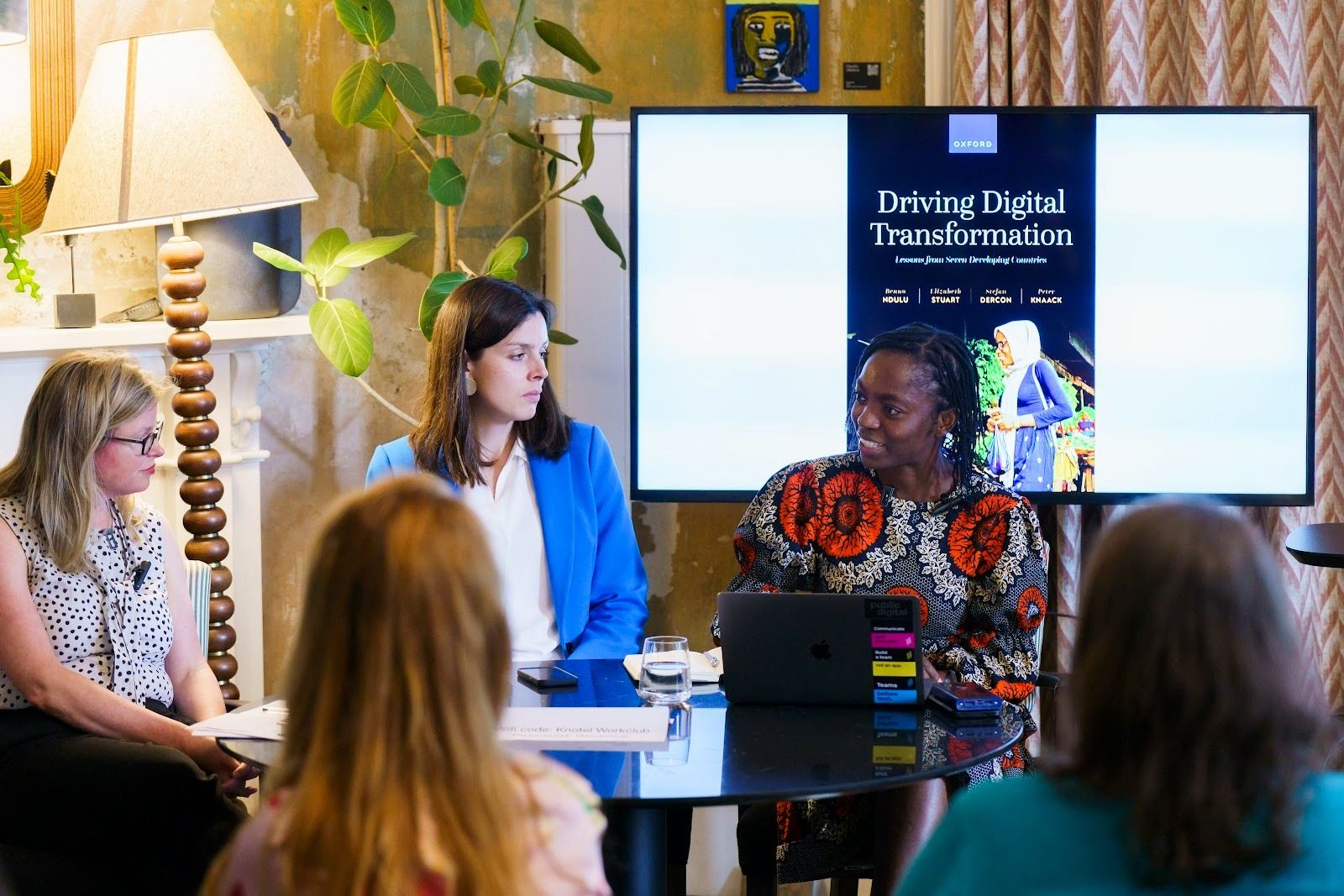
Blessing Ajimoti, Principal Consultant, Public Digital, Nigeria, shares about her journey.
1) How do you use your role to ensure that technology and policy are truly inclusive?
As a digital transformation professional, I work with governments globally to build their digital capabilities to deliver user-centred, effective, and sustainable services.
My work primarily focuses on two areas: delivering digital services with governments and advising global institutions on their strategy for investing in and supporting governments. User-centred design (UCD) is the core mechanism I use to ensure technology and policy are inclusive.
Services are only useful if they effectively solve user needs.
I work with governments to adopt a "learning by doing" approach, conducting user research, remaining agile and iterative, and using continuous learnings from regularly speaking with and observing users to inform policy and service delivery. True inclusion starts with deeply understanding your users.
2) What’s a moment in your career when you saw firsthand how technology or a new policy changed a citizen’s life for the better?
Simple changes can have a profound impact. A moment that often comes to mind involved work with a subnational government in Africa.
We were testing a service, and observing a blind person use it was immediately clarifying. Just by watching his interaction, we recognised critical accessibility features and functionalities that needed to be integral to the service's design and delivery.
This experience cemented why, at Public Digital, we emphasise starting with and regularly revisiting user research. It's the only way to genuinely understand and meet users’ evolving needs and expectations.
3) What was the most impactful project you worked on this year, and how did you measure its success in building trust and serving the needs of the public?
The work we are doing with GovTech Barbados on the digital transformation of government services has been the most impactful this year.
We are collaborating with the Government of Barbados on several initiatives, including the delivery of a unified digital front door for government services.
We recently launched the first iteration of this unified services platform and are now incrementally working on transforming the underlying services. While it's early days, the immediate public feedback has been encouraging.
A TV presenter in Barbados shared on air: “I went to alpha.gov.bb this morning for myself, just to test what it’s all about, and it really has simplified and answered a lot of simple questions that all of us simply have.
And so there must have been a lot of thought to go into designing and understanding its infrastructure, so you’re able to respond to what people’s lived experience is.”
That sentiment, that the service responds to people's lived experience, is the initial metric of success in building trust.
4) What was one unexpected lesson you learned this year about designing for real people? This can be about a specific project or a broader lesson about your work.
I worked on a digital transformation and interoperability in social protection project this year, and it highlighted a vital lesson: how you build and design a service can directly determine access to fundamental human needs.
Specifically, the complexity of the service design can be the difference between whether or not someone is able to access their social security payments and benefits, whether or not they access healthcare, and ultimately, whether or not they go hungry.
If the interface is too complex, the required documentation too burdensome, or the process too unreliable or unclear, the most vulnerable citizens will be excluded.
5) We hear a lot about AI. What's a practical example of how AI can be used to make government services more inclusive and trustworthy?
AI holds the potential to significantly accelerate service delivery and, therefore, increase inclusivity.
Practically, AI can help government teams rapidly prototype services that can then be tested quickly with real users across diverse needs and socio-economic contexts.
This speed-to-prototype capability is vital for quickly identifying and addressing the specific barriers in access faced by marginalized or underserved groups, ensuring the final services are designed with their needs baked in from the start.
To subscribe to the GovInsider bulletin, click here.
6) How are you preparing for the next wave of change in the public sector? What new skill, approach, or technology are you most excited to explore in the coming year?
I am preparing by focusing more intently on the intersection of the digital transformation of public services and AI.
I am eager to collaborate more with governments and global institutions to better understand how AI can be safely, ethically, and effectively leveraged to enhance the delivery of truly user-centred public services.
The goal is to ensure that the adoption and application of AI advances citizen-centric government.
7) What advice do you have for public sector innovators who want to build a career focused on serving all citizens?
My advice is simple: Do not just build technology. Instead, ensure that every step of your service delivery process, from inception to continuous improvement, is driven by a foundational and evolving understanding of real user needs.
Technology is a tool; understanding people and using the understanding to solve their problems is the service.
8) Who inspires you to build a more inclusive and trustworthy public sector?
The greatest inspiration comes from the people themselves: the citizens who walk into government offices to access the services they need.
I am especially inspired by the people who have to travel great distances and make repeated, burdensome trips just to complete a simple transaction.
Their perseverance and the time they lose motivate me to help governments design and deliver services that respect their time, their effort, and their dignity.
9) If you had an unlimited budget, what would your dream project be?
The complete overhauling and transformation of my country’s public service delivery system to one that is entirely digital, user-centred, accessible, and resilient.
10) Outside tech, what excites you the most?
Discovering and engaging with communities of people who share my interests.
This includes groups centered on my faith, as well as those focused on physical and professional growth, like running, health and wellness, professional development, and education.