
Brandon Lum, Manager, Development Office, National University Hospital, Singapore
Meet the young public sector officials in the inaugural Young & Official Report 2026.
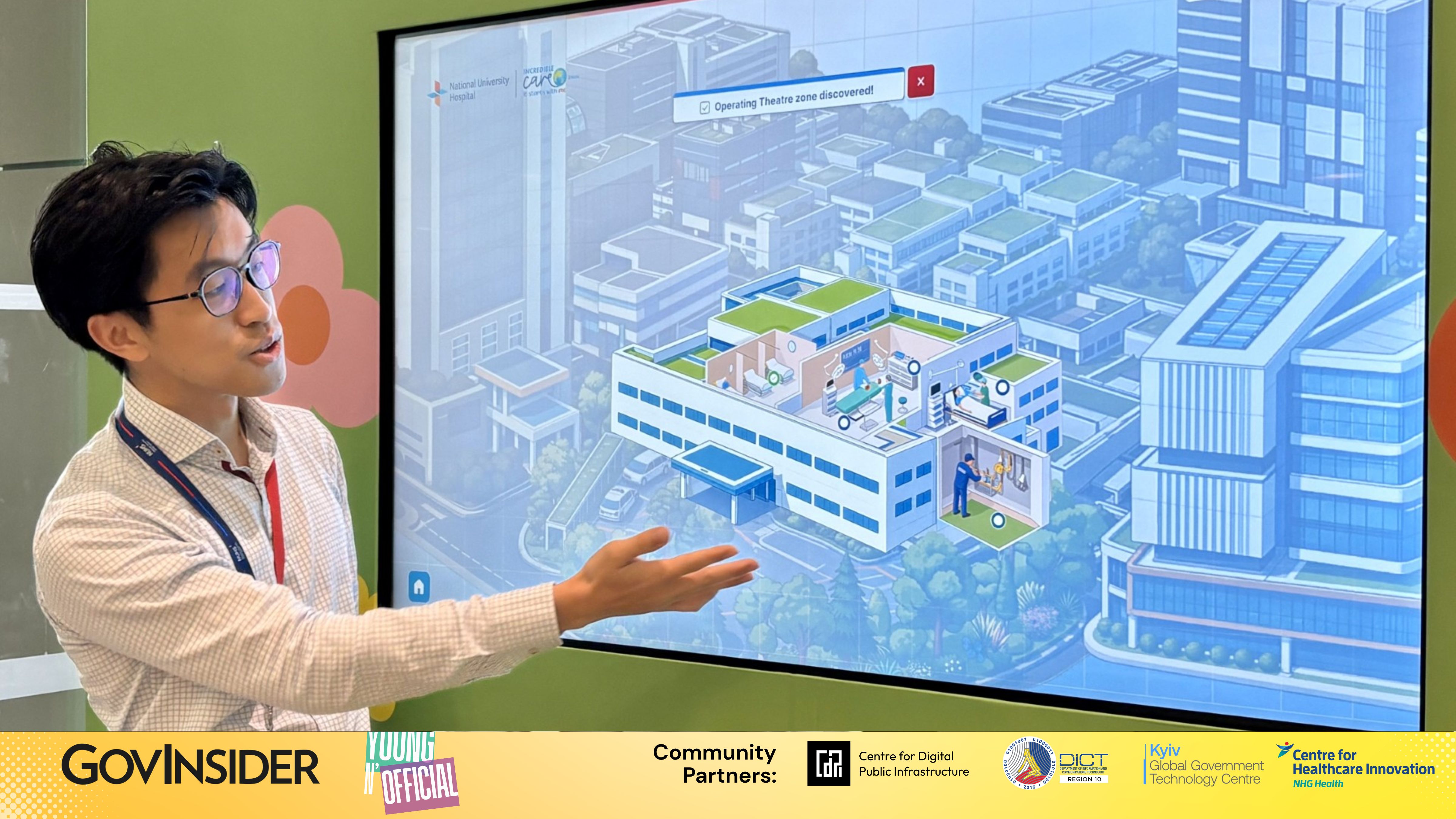
Brandon Lum, Manager, Development Office, National University Hospital, Singapore. Image: NUHS|.
1) What does public service mean to you? Can you share more about your role in the public sector?
Public service is my way of giving back to society and actively contributing to Singapore’s future.
Currently, I have roles with both the National University Hospital (NUH) and the National University Health System (NUHS).
As a member of the NUH Development Office, I oversee the hospital's physical redevelopment. Concurrently, I am a key member of the NUHS Office of Sustainability, focusing on decarbonising our healthcare system and steering the organisation towards our ambitious sustainability goals.
2) Tell us about a project you championed. What impact did it have on the community?
During my time in the Office of Sustainability, I have championed the development of our in-house carbon accounting methodology.
This framework allowed NUHS to pinpoint key focus areas in our drive toward sustainability. We shared this methodology with other healthcare institutions. This also included working with the NUS Centre for Sustainable Medicine to contribute towards their publication of Singapore’s healthcare carbon footprint.
Alongside my Chief Sustainability Officer and a small team, we also developed a unique sustainability metric that measures carbon emissions against clinical workload.
This is a critical factor for an ageing population like Singapore's, where healthcare systems must manage increasing patient volumes while simultaneously reducing their carbon footprint.
This efficiency metric, carbon per workload intensity, gives professionals in the field a pragmatic approach to sustainability, and it is something we aim to share across Singapore’s entire healthcare network.
I have also been privileged to publish these findings in scientific journals, helping to deliver these strategies to the broader medical community.
3) As a young professional, how has your unique background or perspective allowed you to identify a solution that others in your organisations might have overlooked?
I believe one of my strengths is being open to diverse perspectives and serving as a bridge across different stakeholders. My perspective is rooted in a structured approach to collaboration. By actively listening to diverse opinions and identifying the underlying interests of all stakeholders
Often, opportunities for progress exist between teams or disciplines that may not naturally interact closely.
By bringing together different viewpoints and identifying shared goals, this allows me to uncover synergistic opportunities and mutual gains that might otherwise be overlooked when teams operate in silos.
4) What is your personal strategy for maintaining your creative energy when faced with bureaucracy?
I believe bureaucracy is something we must learn to work with rather than work against. By understanding the perspectives and priorities of different stakeholders, we can better navigate challenges while still moving projects forward meaningfully.
Building genuine relationships with stakeholders has also been important for me. It allows me to better understand their operational realities, align interests, and collaborate more effectively in delivering outcomes.
5) If you had just one area to invest in to accelerate transformation in the public sector (regulation, technology, talent, etc.), which one would you choose and why?
I would choose to invest in talent development. This is something that I benefited from in my own journey.
The public sector already has many passionate and capable young officers with strong ideas and a desire to contribute.
Actively nurturing this talent, giving them the platform to voice their ideas, and equipping them to grow will be the most critical catalyst for long-term transformation in the public service.
6) What is your greatest ambition as you grow in your public service career?
My greatest ambition is to implement tangible, systemic changes that I can physically see in the Singapore of tomorrow.
Working on long-term, complex initiatives, such as the multi-phase redevelopment of NUH and the structural decarbonisation of our healthcare system, means that the results of our daily efforts may not be fully realised for years, or even decades.
My drive is to lay a robust foundation today that will future-proof both our healthcare infrastructure and our environmental resilience.
I want to look back and know that the sustainability methodologies we developed and the physical spaces we built have elevated the standard of care and safeguarded the well-being of generations of Singaporeans to come.
To me, true public service is about building systems that outlast us, and my ambition is to ensure those systems are both efficient and enduring.
7) What is a “universal value” that connects everyone in your department – from interns to directors – and how do you use that to drive collaboration?
The fact that we want the best for our patients, our staff and our organisation.
Being able to drive forward with this common value, we are able to better align our goals and create synergistic opportunities for collaborations (even beyond the normal job scope) to achieve our goals.
8) What is the best piece of advice you’ve got for the next generation of public servants?
My best advice is to embrace the inherent complexities of the public system as a natural part of the journey, rather than viewing them as barriers to progress.
Largescale public sector transformation often involves navigating dense bureaucracy and managing highly varied stakeholder interests. Instead of feeling deterred, lean into these challenges to deeply understand the landscape.
Keep your focus strongly anchored to your end goals, and consciously design your approach to build synergy across teams.
By actively listening, identifying the underlying interests of different parties, and acting as a bridge between departments, you can uncover mutual gains and turn administrative friction into collaborative momentum.
Remember that the most impactful project outcomes are rarely achieved in silos; they are the result of finding common ground and designing holistic solutions that serve the greater good.
9) What is a myth you wish to debunk about young public servants?
There is a misconception that young public servants are simply here to execute instructions.
In reality, we do not just deliver the work; we actively challenge the status quo and work hard to improve legacy processes with fresh, proactive ideas.
10) Write a letter to your future self in 2035. Please keep it within 200 words.
Dear Brandon,
It is now 2035, and the first phase of the National University Hospital redevelopment should finally be complete, with the next phase already underway.
This project has been the key milestone for the greater part of your career and will continue to be part of our healthcare landscape in years to come.
I hope you look back on this journey with pride, not just for the projects delivered, but for the people impacted along the way. The years would not have been easy, but I hope you stayed true to the vision you and the team set out to achieve: creating a hospital and healthcare system better prepared for future generations.
I also hope you carried forward the lessons, values, and leadership aspirations you held in 2026. That you continued to grow not only as a professional, but also as someone able to bring people together, navigate challenges with purpose, and contribute meaningfully to Singapore’s future.
Most importantly, I hope you never lost sight of why you started.
Brandon (2026)