
Clinical Asst Prof Charlene Liew, Director of Innovation, Radiological Sciences Academic Clinical Programme, SingHealth; Deputy Chief Medical Informatics Officer, Changi General Hospital, Singapore
Meet the Women in GovTech 2025.
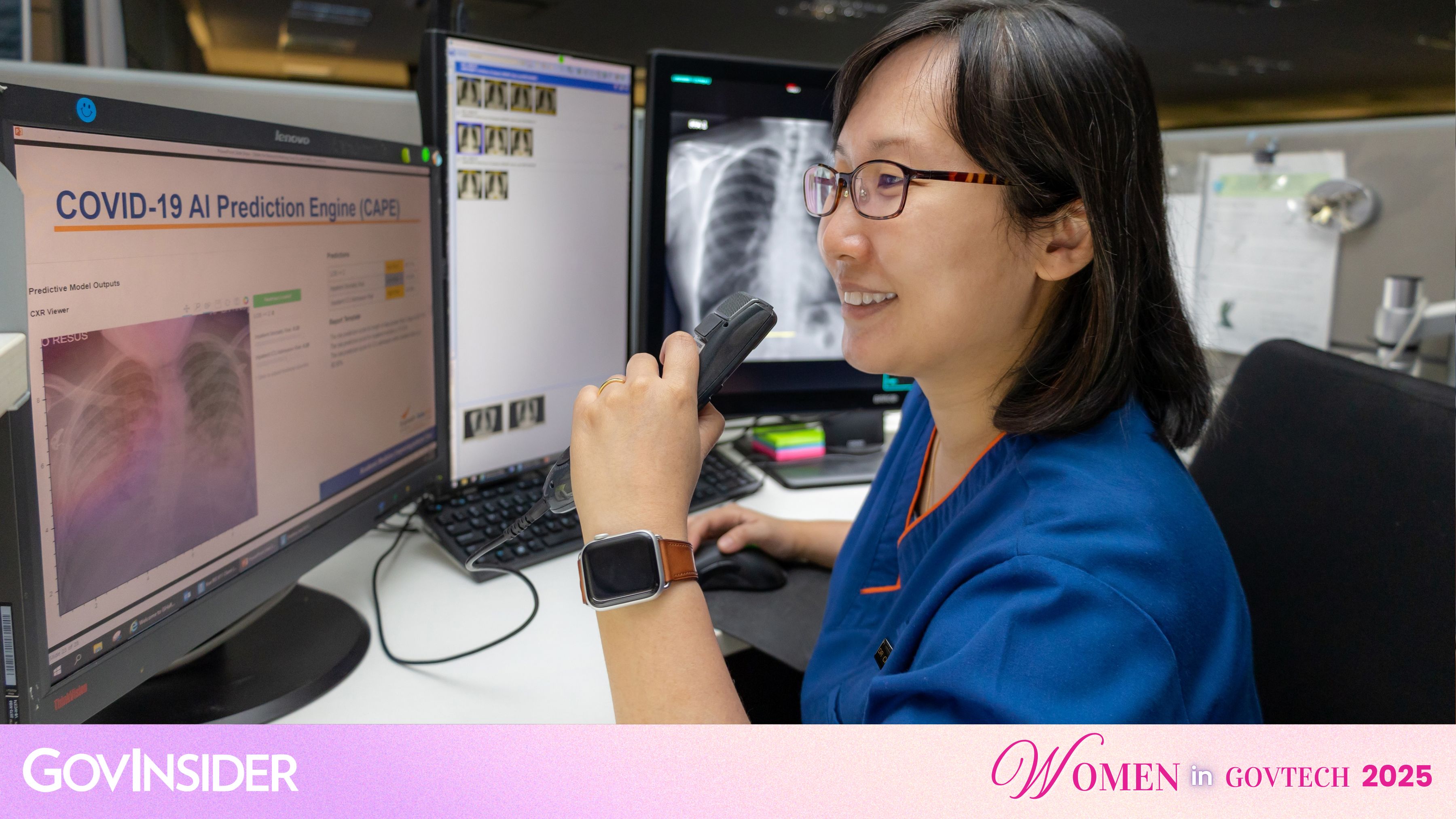
Clin Asst Prof Charlene Liew, Director of Innovation, Radiological Sciences Academic Clinical Programme, SingHealth & Deputy Chief Medical Informatics Officer, Changi General Hospital, Singapore, shares her journey. Image: SingHealth.
1) How do you use your role to ensure that technology and policy are truly inclusive?
I believe that the use of artificial Intelligence (AI) in medicine should be inclusive by design. We should be intentional in developing unbiased AI models that truly represent the populations who will use them.
In practice, this means my team and I take concrete steps to mitigate bias throughout our entire development process, starting from the selection of training datasets. After deployment, we continue evaluating our solutions and making adjustments to improve fairness and inclusivity based on real-world performance.
2) What’s a moment in your career when you saw firsthand how technology or a new policy changed a citizen’s life for the better?
One of the most impactful moments for me was when our chest X-ray triaging AI model went live at Changi General Hospital in 2024. I had the opportunity to see how this technology changed the patient experience in real-time.
While chest X-rays are a common and cost-effective diagnostic tool, interpreting the high volume of X-ray scans can be challenging due to workforce limitations.
While the technology didn't replace clinical judgment, it gave our healthcare teams a powerful tool to ensure that the patients who needed care most urgently received it fast and accurately.
Seeing that direct impact on patient outcomes - knowing that faster diagnosis could mean the difference between a routine treatment and a medical emergency - really reinforced why I do this work.
3) What was the most impactful project you worked on this year, and how did you measure its success in building trust and serving the needs of the public?
This year, my team deployed a load-balancing AI system that enables asynchronous reporting of normal X-rays, which has been one of our most significant projects in terms of direct patient impact.
The AI system uses machine learning to analyse network conditions and dynamically adjust resource allocation in real-time.
This means that we can offload normal reports to off-peak periods, which frees up radiologists during busy times to focus on complex studies that require urgent attention. This means patients with more critical conditions get their results faster when it matters most.
In terms of measuring success, we're currently conducting comprehensive studies on patient waiting times and satisfaction levels.
These metrics are crucial because they directly reflect whether our technology is genuinely serving public needs rather than just improving internal processes.
I'm confident this system will contribute to a faster and more productive patient experience, but what's equally important is that we're taking the time to rigorously evaluate its real-world impact.
Building public trust in AI healthcare solutions requires this kind of evidence-based approach to demonstrate tangible benefits.
4) What was one unexpected lesson you learned this year about designing for real people? This can be about a specific project or a broader lesson about your work.
I learnt that we need to design AI-enabled workflows not just for patients, but in my case, for our radiologists too. Radiologists need to be able to use AI seamlessly in their daily work, without additional cognitive burdens or tasks, for the technology to be effective in the long term.
This lesson has shaped how I think about designing healthcare AI; it’s not enough to focus solely on patient outcomes if the people delivering that care can't easily integrate the technology into their workflows.
5) We hear a lot about AI. What's a practical example of how AI can be used to make government services more inclusive and trustworthy?
One of the most practical approaches is using AI to educate the public about AI itself. This might sound circular, but it's actually quite powerful.
The connection to trust is straightforward: it's easier to trust something when you have more knowledge about it.
To subscribe to the GovInsider bulletin, click here.
When citizens understand how AI works, what it can and cannot do, and how it's being used in government services, they're better equipped to engage meaningfully with these technologies.
By teaching citizens how to use AI safely and responsibly, and also understand its benefits and limitations, we build greater AI literacy, which is a crucial skill in today’s society.
Ultimately, this creates a positive cycle: better-informed citizens lead to better feedback, which leads to more effective and trustworthy government services.
6) How are you preparing for the next wave of change in the public sector? What new skill, approach, or technology are you most excited to explore in the coming year?
I am most excited about exploring agentic AI, which allows multiple AI applications to combine and perform coordinated multi-step tasks with minimal human intervention – this has the potential for efficiency gains that are exponentially greater than traditional standalone AI systems.
7) What advice do you have for public sector innovators who want to build a career focused on serving all citizens?
My key advice is to always focus on the "why" behind your work; why is your project or idea important to citizens – does it address a problem that needs to be solved? Let this "why" be your inspiration and your guide.
8) Who inspires you to build a more inclusive and trustworthy public sector?
Albert Einstein, who reminded us that “concern for man himself and his fate must always constitute the chief objective of all technological endeavours... in order that the creations of our mind shall be a blessing and not a curse to mankind”.
9) If you had an unlimited budget, what would your dream project be?
I would work on providing universal healthcare for all humanity, which is only limited by resources and willpower, not due to the lack of technology.
10) Outside tech, what excites you the most?
I am thrilled to work with people from the up-and-coming generations - Gen Z and Gen Alpha, who are notably values-driven and passionate about innovation!