
Community relationships an important lifeline for New Zealand Police
The force’s Superintendent Rakesh Naidoo shares the benefits of building relationships with ethnic groups before crises, such as the Christchurch attack, occur to develop societal resilience.
-1753168185059.jpg)
NZ Police’s Superintendent, Rakesh Naidoo, shares how pre-existing ethnic community bonds have been key to strengthen the overall societal resilience in the aftermath of the 2019 Christchurch attack. Image: Rakesh Naidoo
Around the world, two major but unrelated developments, the rise of violent crimes and anti-immigrant sentiments are creating polarised societies that can disproportionately affect ethnic communities within societies.
And for law enforcement agencies, it is no easy feat to juggle their primary role alongside community building, often because the public mainly perceives these agencies through their enforcement role.
Speaking to GovInsider, New Zealand Police’s Superintendent, Rakesh Naidoo, emphasises that law enforcement agencies must proactively foster positive relationships and build the public's trust during peaceful times.
This creates a strong foundation to rely on when challenges come up.
“In most countries, your first interaction with the police is at a time of stress, hurt, or anger. It is either you need something, when you are in trouble, or when something goes wrong,” he notes.
Naidoo has spent 24 years in New Zealand Police specialising in working with ethnic communities. He is currently the national partnerships manager – ethnic.
Aspiration to build confidence in ethnic communities
Recalling his days at the police college, Naidoo observes that his peers aspired to become detectives or dog handlers. But even then, he felt a distinct calling to public service, specifically to build trust and confidence within ethnic communities.
This interest stemmed from his experience growing up during the Apartheid regime in South Africa.
He recalled the discriminatory experiences faced in South Africa by Indian politician Mahatma Gandhi and South Africa's first president Nelson Mandela.
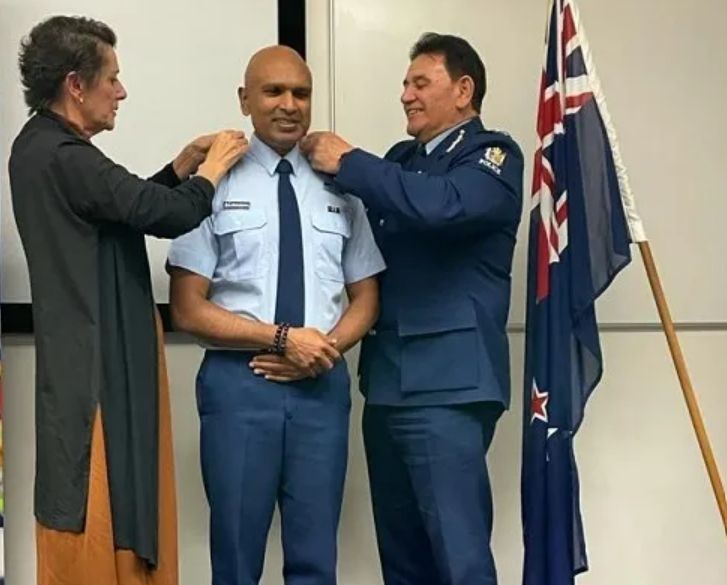
These accounts of ethnic prejudice have instilled a mission in Naidoo to create cohesive communities that value everyone, foster trust and challenge society to improve for all its members.
Starting as one of just a handful of Asian officers in Auckland (out of close to 10,000 uniformed officers) and later the only one in the South Island, he rose to become the New Zealand police's first commissioned officer from an ethnic community, and its first Indian-origin Superintendent.
To illustrate its commitment towards proactive community building, the police became the first government agency in New Zealand to have adopted an ethnic peoples’ strategy.
The strategy was launched in 2005 to improve its policing and engagement with ethnic communities.
Citing the example of the Christchurch mosque attack in 2019, which the government described as New Zealand's worst mass shooting, Naidoo stresses the importance of cultivating "before-time relationships" with ethnic community members.
He believes that these bonds have been key to strengthen the overall societal resilience in the aftermath.
To subscribe to the GovInsider bulletin, click here.
Recovering from the Christchurch attack
Beyond their immediate response to the crisis, the New Zealand Police engaged with the Muslim community to assist in their recovery efforts and to gain insights on future policy changes, says Naidoo.
Thanks to its pre-existing relationships with the community, the police were able to engage in a more impactful and compassionate response throughout the crisis and its aftermath.
For the affected, the need for safety would be followed by a quest for answers, which would come through subsequent hearings and recommendations, he adds.
After the Royal Commission of Inquiry around the Christchurch attack, an independent inquiry into an issue of strong public interest, was held, the police established a Community Reference Group involving members from the Muslim community.
“We wanted to make sure that communities were part of the design process around the recommendations, which was important for their dignity and the sacrifice that had taken place,” he explains.
The group’s purpose has been to guide and support the police in understanding and responding to the commission's over 44 recommendations aimed at various government agencies.
Ten years before the attack, the police had signed a Memorandum of Understanding (MoU) with the Muslim community as part of the force’s ethnic peoples’ strategy, which laid the groundwork for effective collaboration during the crisis.
To prevent future crises akin to the Christchurch attack, Naidoo underscores the need for transparent communication and collaboration with ethnic communities.
He adds that this can be achieved by actively involving their voices in designing solutions and addressing previous gaps.
The changing face of police
Naidoo shares that the New Zealand Police is increasingly taking a more collaborative and holistic approach to policing, which means officers now need a different set of skills.
In the 1970s and 1980s, police recruitment focused heavily on physical attributes like height requirements, he says.
Today, the emphasis has shifted towards cognitive functions, empathy, and cultural competence.
“We now primarily recruit officers who possess strong communication skills and emotional intelligence,” he says, adding that these qualities are crucial for effectively de-escalating situations and working with increasingly diverse communities.
“In today’s society, you’re seeing far more issues around mental health, stress, and people feeling disconnected from one another. The ability to talk to people and engage with them is a skill we highly value in the police,” he shares.
Policing becoming more collaborative and preventative
Naidoo adds that policing is increasingly moving away from punitive actions, focusing instead on preventative measures and tackling the underlying societal issues that contribute to crime.
This shift inherently calls for greater collaboration across all government agencies, he adds.
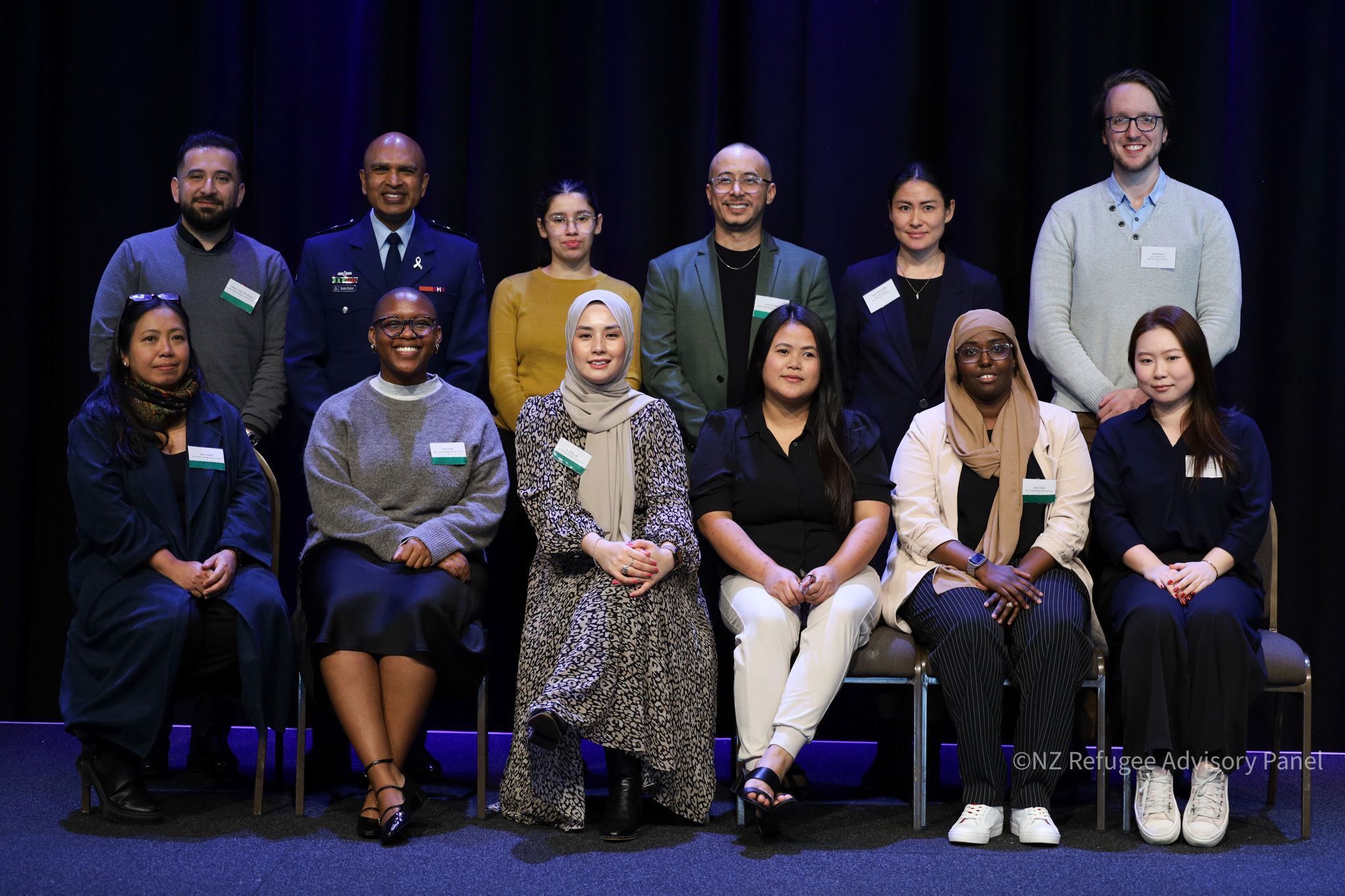
Preventative measures, including community building initiatives, must involve the police working across sectors to serve different populations, ranging from former refugees, international students, other newcomers and international tourists, he shares.
There have also been some innovative programmes targeted at addressing complex social problems.
For example, offenders accused of certain crimes like shoplifting or minor damage have the option to appear before a panel of their own community members.
This process encourages them to discuss what led to their actions, which could range from poverty to mental health issues, and the support they need to address the underlying causes.
“Sometimes, going to jail or paying a fine is the easier option [for the offender] than having to appear in front of your own community, sit down with them and talk about your problems, and address what needs to be done.
“We found [the community panel] to be hugely effective [in curbing the root cause of the problem],” he says.
Naidoo concludes with a hopeful note.
While a small segment of individuals, between five to 10 per cent, require tough punitive action, evidence in New Zealand suggests that most behaviours can be more effectively addressed and improved through alternative, non-punitive approaches, he observes.
This perspective continues to guide his team’s strategy to build a safer and more cohesive society.
Naidoo recently participated in a session on Rebuilding trust and cohesion after social tragedies at the International Conference on Cohesive Societies (ICCS) in Singapore in June. The key takeaways from the sessions can be accessed here.