
Daniel Chia, Senior Executive, Patient Experience Office, Khoo Teck Puat Hospital, NHG Health, Singapore
Meet the young public sector officials in the inaugural Young & Official Report 2026.
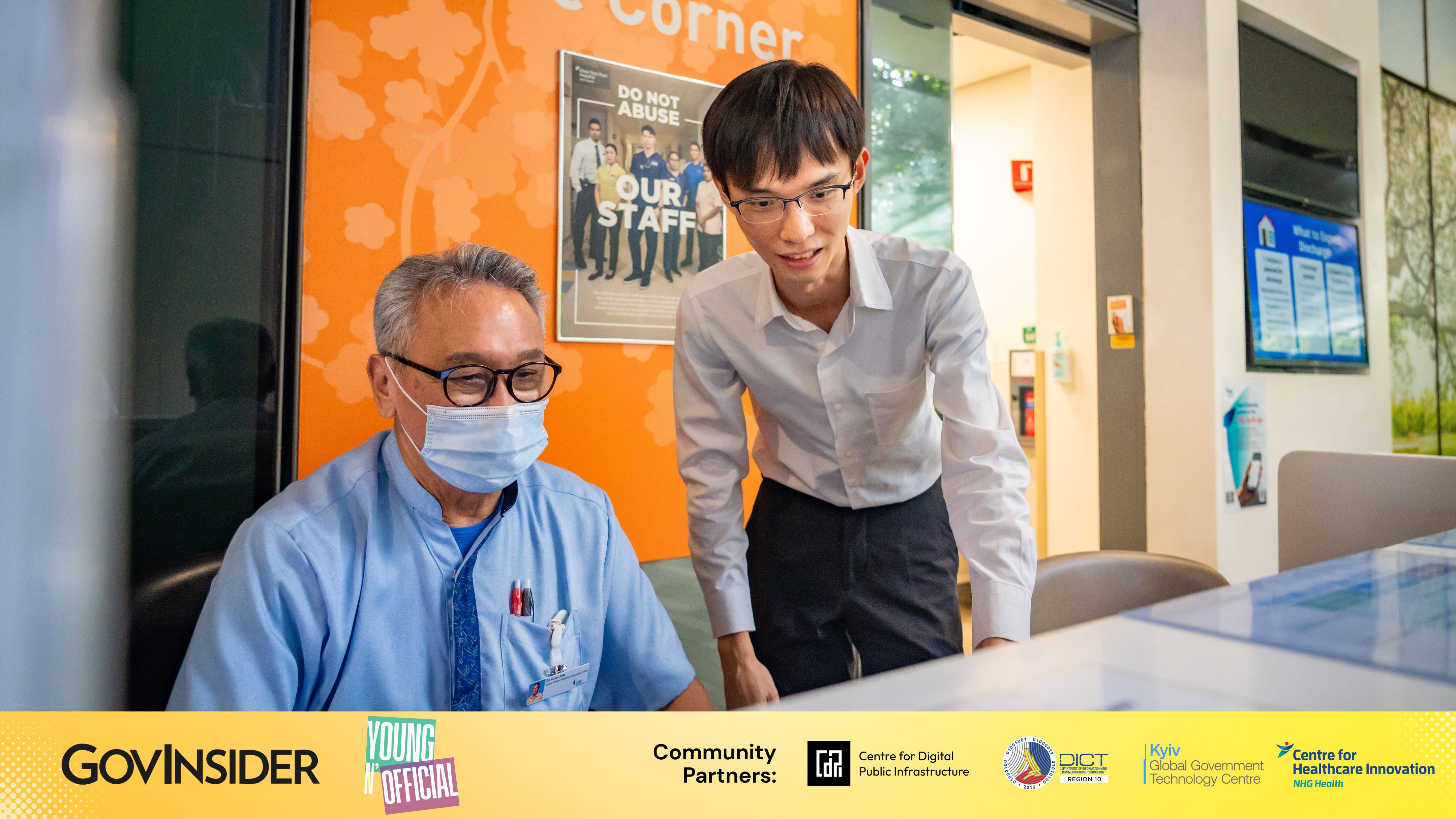
Daniel Chia, Senior Executive, Patient Experience Office, Khoo Teck Puat Hospital, NHG Health, Singapore. Image: NHG Health
1) What does public service mean to you? Can you share more about your role in the public sector?
Public service is about improving lives through systems that people can rely on, especially in healthcare where every process supports patient care.
In my role within the healthcare public sector, I focus on strengthening operations and ensuring that systems run smoothly while continuously identifying opportunities for improvement. While much of my work is behind the scenes, it is equally meaningful because effective processes enable better patient outcomes and more reliable care delivery.
2) Tell us about a project you championed. What impact did it have on the community?
I have been involved in strengthening how patient feedback is captured and translated into action, including working with NHG OneCRM and, more recently, leveraging Qualtrics to support Net Promoter Score (NPS) initiatives.
Before this, there was a longstanding gap where patient concerns were raised but not always consistently tracked, owned, or acted upon.
I worked with clinical and administrative teams to restructure how feedback was surfaced and assigned, so that the right people could respond at the right time.
The impact, while often invisible to patients, was felt in the quality of their experience. Teams were able to identify recurring concerns earlier, adjust workflows more responsively, and close the loop with patients more reliably.
For me, the most meaningful outcome was knowing that a patient's voice — shared in a moment of vulnerability — was no longer lost in the system, but genuinely heard and acted on.
3) As a young professional, how has your unique background or perspective allowed you to identify a solution that others in your organisations might have overlooked?
As a younger professional, I tend to approach systems with fresh eyes and a strong focus on user experience.
This has helped me question processes that are designed primarily for compliance but may create unnecessary friction for users.
In several instances, I identified administrative workflows that led to repetitive work and delays. By redesigning these processes with greater clarity and better coordination across teams, we were able to improve turnaround times and reduce inefficiencies—allowing clinical staff to focus more on patient care.
4) What is your personal strategy for maintaining your creative energy when faced with bureaucracy?
I focus on breaking down complex systems into smaller, solvable parts and driving incremental improvements that are both practical and compliant.
Even when progress feels gradual, I look for opportunities to simplify processes, improve communication, or strengthen coordination.
This mindset helps me stay solution-oriented and motivated, while still working effectively within organisational constraints.
5) If you had just one area to invest in to accelerate transformation in the public sector (regulation, technology, talent, etc.), which one would you choose and why?
I would invest in talent.
People ultimately determine how effectively policies are interpreted and how systems are implemented. In healthcare, equipping staff with digital literacy and systems thinking capabilities can unlock significant improvements.
When teams are empowered with the right skills and mindset, transformation becomes more sustainable and focused on delivering better outcomes for patients and the community.
6) What is your greatest ambition as you grow in your public service career?
My ambition is to grow into a role where I can shape systems that help improve healthcare delivery and patient experience, not just incrementally, but in ways that are felt by the people who matter most.
I hope to contribute strategically while staying grounded in operational realities—ensuring that policies and processes remain practical, inclusive, and patient-centred.
Beyond my own growth, I also hope to mentor others who are finding their footing in public service – to help them stay connected to their purpose, just as others have done for me. Ultimately, I want to look back knowing that the systems I help build made care more compassionate, more responsive, more human.
7) What is a “universal value” that connects everyone in your department – from interns to directors – and how do you use that to drive collaboration?
A shared commitment to patient-centred care.
Across all roles and levels, this common purpose creates a strong foundation for collaboration. By anchoring discussions around what is best for the patient, it becomes easier to align perspectives, build mutual understanding, and drive more effective teamwork.
8) What is the best piece of advice you’ve got for the next generation of public servants?
Stay connected to your purpose while remaining open to change.
Public service can be complex, but grounding your work in the needs of the community provides clarity and motivation. At the same time, being adaptable allows you to navigate and improve evolving systems.
9) What is a myth you wish to debunk about young public servants?
A common misconception is that young public servants are impatient or focused only on rapid change.
In reality, many are deeply committed to understanding complex systems and are willing to invest the time needed to drive meaningful, sustainable improvements.
10) Write a letter to your future self in 2035. Please keep it within 200 words.
Dear 2035 Daniel,
If you are reading this, I hope you have grown not only in responsibility but in perspective.
I hope you have remained open to learning and continue to listen to voices different from your own. Hold on to the belief that systems can be improved through thoughtful, incremental changes, especially when challenges ahead feel more complex than before.
I hope you had the courage to take on roles that stretched you and the humility to learn from setbacks. And when progress felt slow, I hope you reminded yourself that meaningful public service is a long journey—one built on consistency, purpose, and care for others.