
Dr Haresh S/O Singaraju, Head, Queenstown Polyclinic Family Physician, Associate Consultant, Accredited Family Medicine Specialist, National University Polyclinics, Singapore
Meet the young public sector officials in the inaugural Young & Official Report 2026.
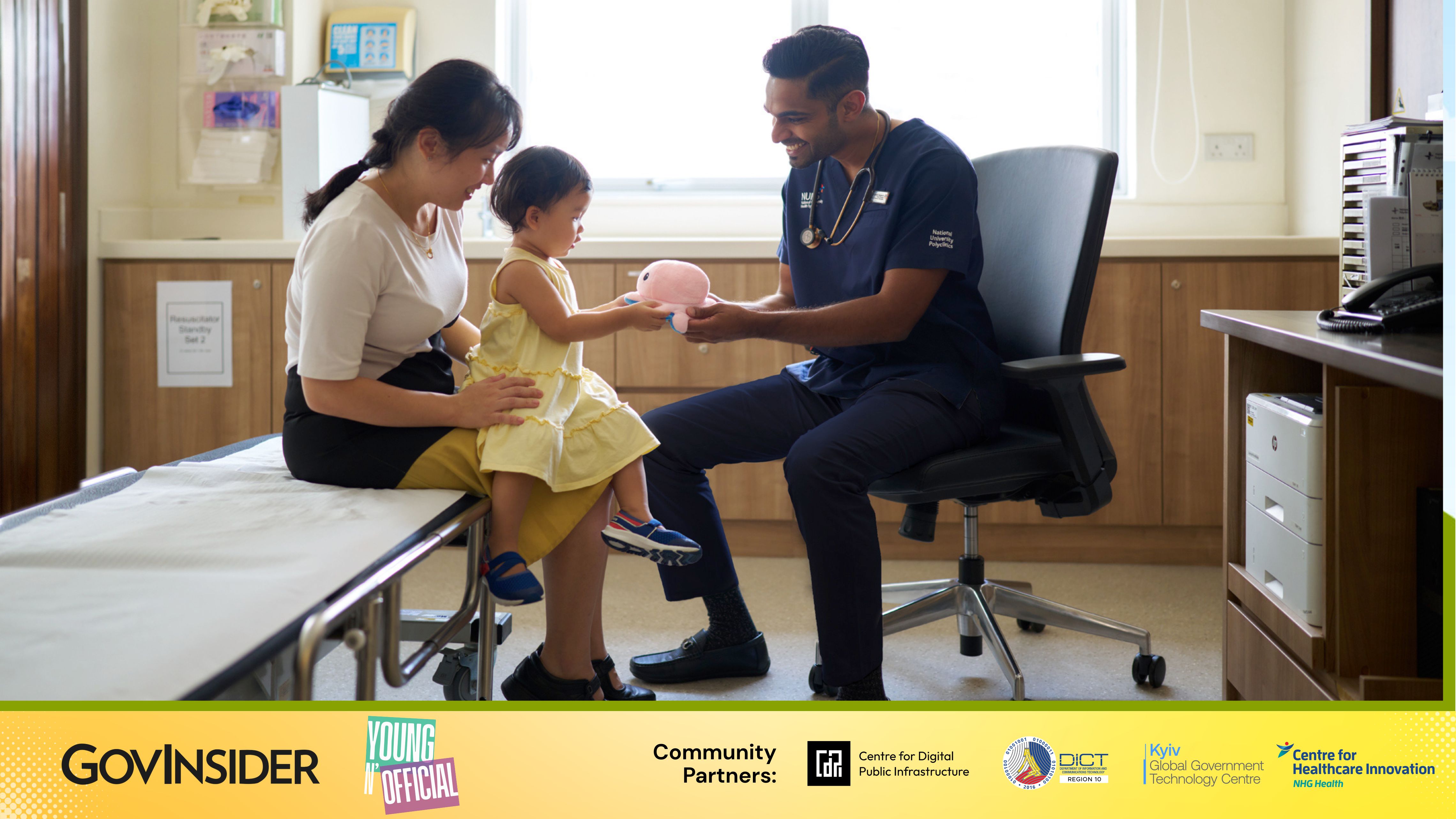
Dr Haresh S/O Singaraju, Head, Queenstown Polyclinic Family Physician, Associate Consultant Accredited Family Medicine Specialist, National University Polyclinics, Singapore. Image NUHS
1) What does public service mean to you? Can you share more about your role in the public sector?
Public service is the opportunity to be useful and give back to people, including those I will never meet, in ways they will never know, and to thank those working behind the scenes.
Each month, I serve in three capacities: family physician in the polyclinic, Head of Queenstown Polyclinic, and Nominated Member of Parliament.
Each role refines the others. The patient keeps the policy honest. Policy keeps clinical work scalable. Parliament connects both to the country.
2) Tell us about a project you championed. What impact did it have on the community?
At Queenstown Polyclinic, we run "Failure Fridays" where any team can identify what is not working, and we address it openly.
This led to our patient-journey redesign: clearer signage, relationship-centred communication training, and anonymous channels for staff to flag problems. Morale and patient experience improved.
Six months later, our compliments-to-complaints ratio remains between 6:1 and 8:1. We also refer roughly a dozen patients daily to neighbouring General Practitioners (GPs) and link many of them to Active Ageing Centres, demonstrating that better health involves the broader community.
3) As a young professional, how has your unique background or perspective allowed you to identify a solution that others in your organisations might have overlooked?
An elderly woman had been on strong analgesia for generalised body pain for years. Over multiple visits, I sat with her and spoke to her in Tamil.
Eventually, she broke down. Her husband had died. She was lonely. The pain was not primarily physical; it was depression and loneliness wearing a clinical mask.
Three lenses sharpened my understanding of her: family physician, polyclinic head, and community volunteer.
I called her children, who had not realised how much she was struggling, and they stepped back in.
I linked her to a nearby Active Ageing Centre, where she took up colouring and cooking and made new friends. Through our medical social worker, I referred her to the Community Intervention Team (COMIT) for psychological support. Her pain eased. Her analgesia came down. She walked back into her life with independence.
The biopsychosocial lens helped to hold her whole story as one piece. The presenting complaint is rarely the real problem. What you can solve depends on which rooms you have walked through.
4) What is your personal strategy for maintaining your creative energy when faced with bureaucracy?
I begin most days before my family wakes, with quiet reading and exercise. Recently, reflecting on systems-based thinking reminded me that systems are not broken but optimised for different problems than the ones before us.
That reframe changed how I approached a referral pathway that had frustrated me for months. Exercise keeps me present.
That trained presence, brought into the polyclinic, committee room, and corridor conversations, is where creative work happens. Bureaucracy slows you down, and sometimes that is the point. The friction forces you to understand systems well enough to change them from within.
5) If you had just one area to invest in to accelerate transformation in the public sector (regulation, technology, talent, etc.), which one would you choose and why?
Excellence. Not credentials, but the rarer combination of competence and heart. When linking our polyclinic to social prescribers, I encountered more polite barriers than open doors. The breakthrough was not a new policy or smarter technology.
It was finding people willing to step into each other's domains: clinicians curious about housing, community workers curious about glucose levels. Regulation can be redrafted. Technology can be procured.
People who can hold two sectors in their minds and care about both should be cultivated intentionally.
6) What is your greatest ambition as you grow in your public service career?
Picture a 65-year-old woman with worsening kidney failure. Her real story: a daughter who committed suicide, a flat too painful to return to, deteriorating finances. Three institutions see three different versions of her.
My ambition is to have her seen as one complete person: health, family, finances, neighbourhood, work. Not disconnected files.
The Organisation for Economic Co-operation and Development (OECD) Wellbeing Index captures this vision; our institutions are catching up.
I have seen what happens when systems communicate: social workers who know diabetes control, clinicians who know housing situations. Patient care transforms. My ambition is to build more bridges: one referral pathway, one inter-agency protocol, one willing colleague at a time, until connected care becomes the norm, not the exception.
7) What is a “universal value” that connects everyone in your department – from interns to directors – and how do you use that to drive collaboration?
Genuine care is everyone's responsibility. At Queenstown Polyclinic, a coordinator walked a patient to the bus stop in the rain, sharing her umbrella.
A colleague drove another to the accident and emergency (A&E) when she hesitated to go alone. A pharmacist drove to a patient's home to deliver the correct medication.
None of this appears in job descriptions. Patients do not experience us through our organisational charts. They experience the wait, the prescription labels, and the umbrellas in the rain. This extends to GPs we refer to and Active Ageing Centres we connect with. Care is everyone's responsibility.
8) What is the best piece of advice you’ve got for the next generation of public servants?
The long path is the short path.
The career most worth having is not built on the fastest promotions or most visible projects. It is built on patients you remember by name, communities you understand deeply, and colleagues who will answer your call in fifteen years.
That depth becomes the foundation on which everything else is built on.
Roll up your sleeves early and often. Walk into rooms you were not invited to. The polyclinic does not stop at the Ministry of Health’s door.
Parliamentary committees do not stop at chamber doors. The most important work happens at the edges, where two worlds meet, and nobody has figured out who is responsible.
9) What is a myth you wish to debunk about young public servants?
The myth: young public servants are an obedient groupthink followers. The truth I observe reveals a generation arriving with both conformity and challenge.
They question norms not to rebel, but because they have read the data, met patients, and walked the floors where policies land. I have been compliant in Monday crowds and an uncomfortable dissenter in Thursday meetings with macro-level stakeholders.
The difference is not character. It is whether anyone is willing to listen. Mistake their politeness for compliance, and you will lose them.
10) Write a letter to your future self in 2035. Please keep it within 200 words.
Dear Haresh,
You're 45 now. Keep the deathbed question close: who and what truly matter in life's final hour? Build towards that answer weekly, for yourself and your community.
If done correctly, you remain close to your wife and children, no longer small ones you tuck in nightly. You still exercise. You still see heartland patients regularly. The day you stop is when you forget what policy serves. You listen intently in high-stakes meetings, speaking less than you listen.
Singapore in 2035 should look different in one quiet way: people stepping into polyclinics, family service centres, or community events should be treated as complete lives, not separate files. If you helped close that gap by inches, the years were well spent.
Stay healthy. Stay teachable. Keep bedside books. You are one step closer to your mountain-self.
With love and steadier hands than at 35,
Haresh