
Dr Michael Warren Lim, Head, Bukit Batok Polyclinic, Family Physician, Associate Consultant, Accredited Family Medicine Specialist, National University Polyclinics, Singapore
Meet the young public sector officials in the inaugural Young & Official Report 2026.
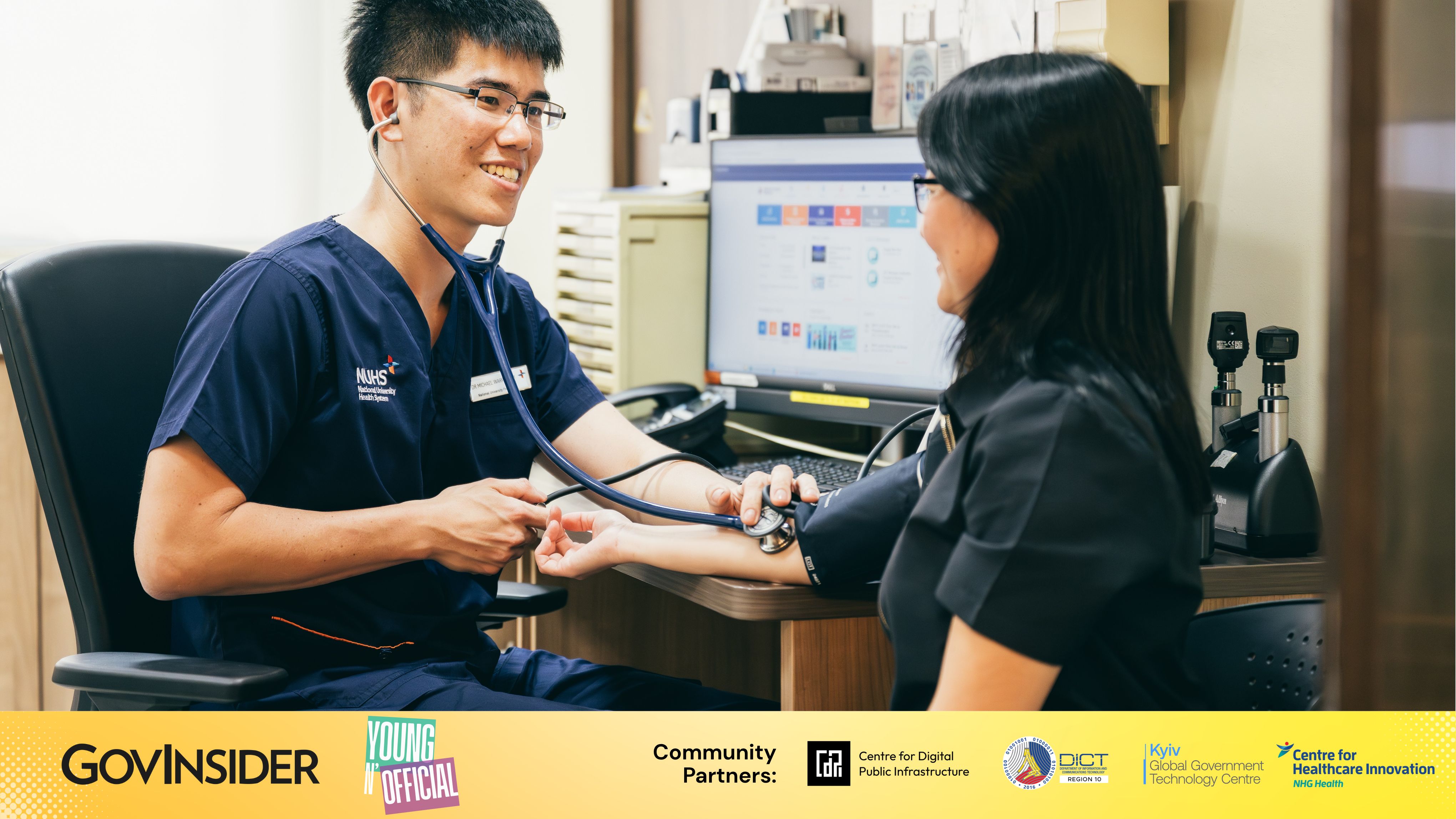
Dr Michael Warren Lim, Head, Bukit Batok Polyclinic, Family Physician, Associate Consultant, Accredited Family Medicine Specialist, National University Polyclinics, Singapore. Image: NUHS
1) What does public service mean to you? Can you share more about your role in the public sector?
I have been in public service as a doctor since my graduation in 2014 and was recently appointed as Head of Bukit Batok Polyclinic (BBK) in 2025.
I oversee the polyclinic's day-to-day operations.
We serve patients of all ages in BBK by providing comprehensive healthcare at every life stage from cradle to grave. A large proportion of our patients are low-income, for whom we strive to provide cost-effective and accessible care. Many of our patients have been coming to our clinic for decades and have formed firm relationships with our service staff.
To me, public service was why I pursued a career in medicine.
Doctors are generally respected by society, but implicit in that respect is an expectation that doctors should serve the public. I am glad to have received opportunities to serve the community here at many levels – not just through individual doctor-patient encounters, but also through team contributions and organisations.
2) Tell us about a project you championed. What impact did it have on the community?
I was a team leader in the polyclinic overseeing about 5,000 patients from 2022 to 2024, during which I designed and executed many initiatives to improve patient care.
We overhauled our documentation to ensure continuity of care between different healthcare professionals, expanded telemedicine services to improve accessibility of care to young working adults, and above all, strove to care for our patients holistically in the medical, psychological, and social dimensions.
Over three years of work, other than forming strong bonds with our doctors, many of our patients had improved medical outcomes, including reduced admission rates to hospitals and improved chronic disease management outcomes.
3) As a young professional, how has your unique background or perspective allowed you to identify a solution that others in your organisations might have overlooked?
In medical school and in my early career, I participated in many Overseas Community Involvement Projects (OCIPs) and was sent to developing countries.
I visited many communities with very limited access to healthcare and other public services. The Singaporean mindset was to view these communities with pity and concern: How could they live with the nearest hospital at least a day’s travel away?
How could they raise a family without access to healthcare, clean water, reliable electricity, or personal transport? However, what I saw was that these communities continued to survive and thrive despite the constraints of their circumstances.
The lesson I learnt is that people are fundamentally resilient in the face of limited resources and will find ways to thrive despite (or perhaps, because of) adversity.
This reminder kicks in whenever I grapple with problems for which the first reaction is to jump in and "fix" things like a good doctor. I have realised that the more sustainable solution is to create safe environments where people are motivated to use their skills and energy to solve their own problems, rather than reinforcing ‘learned helplessness’ where people wait for someone to solve them.
4) What is your personal strategy for maintaining your creative energy when faced with bureaucracy?
First of all, understanding that bureaucracies comprise people, and managing bureaucracy is actually managing people.
With rare exceptions, ideas rarely stand on their own merit alone. Equal effort must be spent managing relationships with people.
Secondly, putting oneself in other people’s shoes to understand their motivations and constraints goes a long way towards sharpening one’s relationship-management skills.
5) If you had just one area to invest in to accelerate transformation in the public sector (regulation, technology, talent, etc.), which one would you choose and why?
The last time I visited a bank physically, I was in university. Since then, banking has transformed such that most transactions are performed digitally and physical visits are rarely necessary.
Healthcare has not fully kept up with digital transformation, and our model of service delivery remains focused on physical visits. We assume that the elderly still prefer physical visits – but that assumption should be questioned.
This mindset must change – our population is already accustomed to banking, shopping, and accessing most government services digitally.
While physical visits most definitely still have their role in healthcare, for primary care in particular, more can be done to move care from the physical realm towards the digital/ virtual realms.
6) What is your greatest ambition as you grow in your public service career?
To maintain the time and space to be a good father to my children, regardless of what comes in the future for me as a public service employee.
7) What is a “universal value” that connects everyone in your department – from interns to directors – and how do you use that to drive collaboration?
That the best interests of the patient come first – but the system has to be sustainable.
That tension between the two principles animates the entire system of public healthcare, and the necessary task each day is to thread that needle.
8) What is the best piece of advice you’ve got for the next generation of public servants?
Sometimes one will encounter frustrations along the way, and the options one has are:
To swallow and forget about it
To decide the whole system is rubbish and ‘rage-quit’
To carefully keep a small fire burning, and one day, when the opportunity comes, to fix the thing that frustrated you.
Sometimes one has to do (1), but not forget that (3) is an option.
9) What is a myth you wish to debunk about young public servants?
That working from home is inefficient – quite the opposite, if used for the right kind of work.
10) Write a letter to your future self in 2035. Please keep it within 200 words.
“I hope that the kids are sleeping through the night now and that you have not fallen off the bike again or gained too much weight. Hopefully you managed to finish the clinic’s renovation without too much incident, and you were able to keep the team engaged over the years. Above all, I hope your patients have longer, healthier, and happier lives then they did 10 years ago.”