
Dr Phimraphas Ngamsantivongsa, Knowledge Management Officer & Project Manager, Defence Technology Institute, Thailand
By Sol Gonzalez
Meet the Women in GovTech 2025.
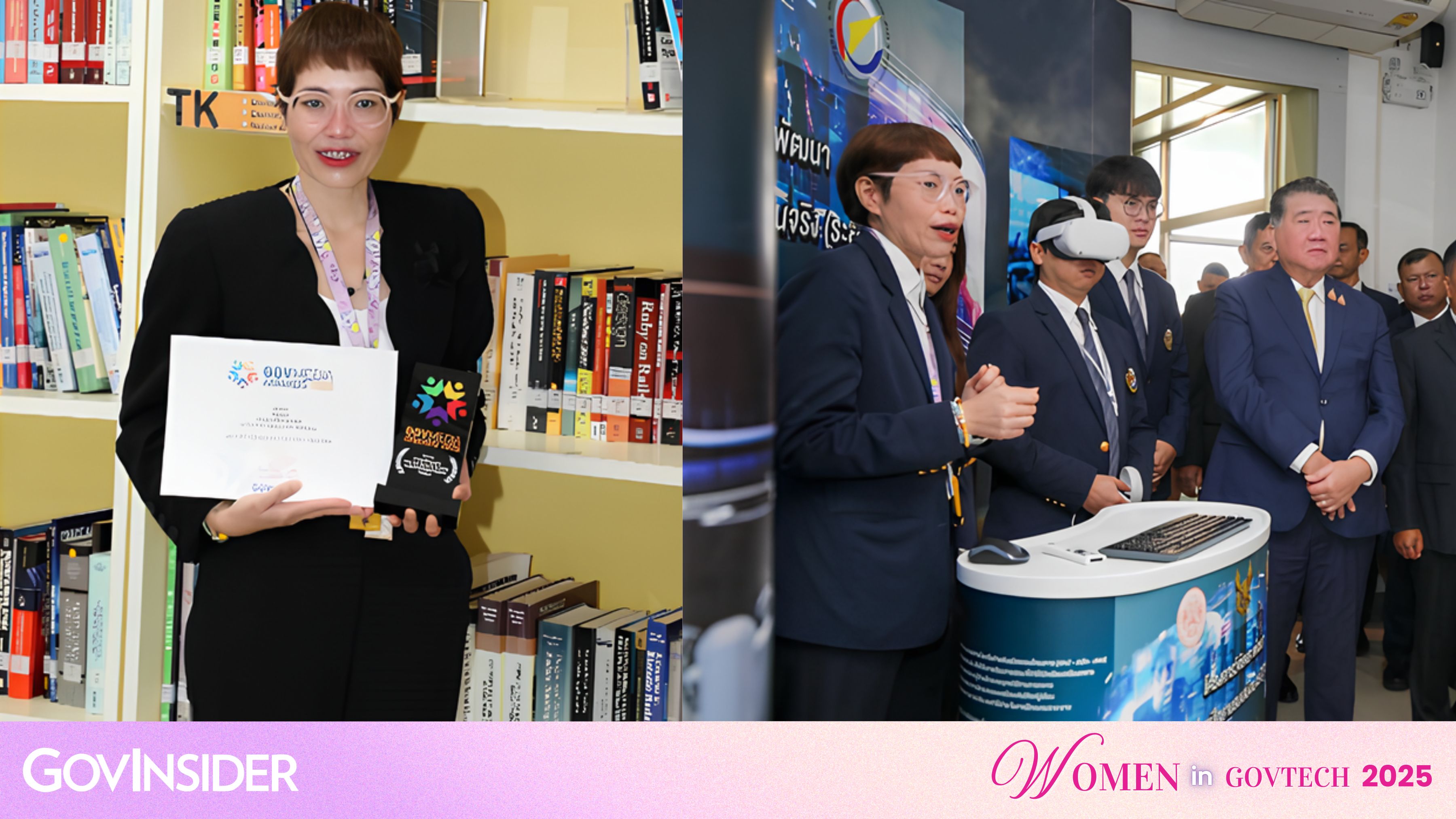
Dr. Phimraphas Ngamsantivongsa, Knowledge Management Officer & Project Manager, Defence Technology Institute, Thailand.
1. How do you use your role to ensure that technology and policy are truly inclusive?
As Knowledge Management Officer at the Institute whose strategic remit encompasses eight targeted defence-technology domains and whose principal policy is to become a regional leader in research and development while elevating the defence industry to the international stage, I served the institute as a Project Manager of the Disaster Management Project under the targeted military simulation and training technology.
In this capacity I combined technical leadership and knowledge stewardship. I engaged directly with the project’s flood-simulation system at a design and implementation stage to a structured knowledge-transfer program to migrate the project’s knowledge assets and operational protocols to stakeholders in Tha Wang Pha District, Nan Province. This work translated simulation-based research into practical capacity building, enhancing local flood-preparedness and demonstrating a model for operationalizing defence-technology research for civilian resilience.
2. What’s a moment in your career when you saw firsthand how technology or a new policy changed a citizen’s life for the better?
During 2023 and 2024, my project team and I conducted knowledge transfer activities related to the flood simulation system in Tha Wang Pha District, Nan Province. These efforts provided invaluable opportunities to engage directly with local stakeholders, including community members, the district sheriff, and the provincial governor. The system was well received by both local residents and decision-makers at the district and provincial levels, reflecting its relevance and applicability to real-world disaster preparedness.
One particularly insightful experience involved an in-depth interview I conducted with the deputy headwoman of a village that actively participated in the project’s workshops and implementation activities. She shared how the flood simulation system had been instrumental in guiding her community’s response and preparedness efforts during a major typhoon that severely impacted Nan Province for nearly three weeks in August 2024. This real-time application of the system underlines its practical value in enhancing community resilience to extreme weather events.
3. What was the most impactful project you worked on this year, and how did you measure its success in building trust and serving the needs of the public?
In 2025, I have taken on the role of project manager for the extension phase of the flood simulation system, which integrates updated spatial datasets and an enhanced early warning system. This initiative is supported by a research grant awarded by the National Research Council of Thailand. It builds upon the foundation of community trust established during the previous knowledge transfer project. Insights gained from a series of systematically designed questionnaires, administered throughout the knowledge transfer phase, were instrumental in identifying the specific needs of stakeholders in Tha Wang Pha District. These findings were synthesized to inform and strengthen the proposal that ultimately secured the grant.
In response to all the needs of the people and decision makers of Tha Wang Pha District, three objectives of the project are formulated to include further developing the flood simulation system by providing real-time water level images over Tha Wang Pha District, improving the spatial data of the flood simulation system to ensure accurate, reliable, and efficient damage assessments, and enabling flood simulation system warning services via web and mobile applications.
In recognition of its innovative approach to community-centered disaster risk reduction and technological advancement, the project was honored with the "Thailand Disaster Management of the Year" award by the GovMedia Awards 2025 in Singapore.
4. What was one unexpected lesson you learned this year about designing for real people? This can be about a specific project or a broader lesson about your work
While managing the project “Extension of the Flood Simulation System with Updated Spatial Data and Warning System,” an exciting development arose during a Zoom meeting with our colleagues from Chiang Mai University. They presented “FloodBoy,” an AI-powered innovation designed to mitigate flood risks by deploying flood monitoring stations across several areas in northern Thailand.
More recently, our team met with officials from the Department of Disaster Prevention and Mitigation, whose executives expressed strong interest in collaborating with us. The collaboration aims to integrate existing technologies with a relevant public sector to strengthen community preparedness and resilience against flooding, particularly in Nan Province.
5. We hear a lot about AI. What's a practical example of how AI can be used to make government services more inclusive and trustworthy?
An effective approach for designing government services or policies that truly benefit a broad population is to ensure public inclusion and engagement from the early stages of project development. Such early participation not only provides access to a rich source of training data but also fosters a collective sense of ownership among citizens. Embedding participatory inclusivity, active engagement, and shared ownership into government initiatives has the potential to mitigate public skepticism toward AI adoption and, in turn, strengthen public trust during the implementation and subsequent scaling of AI-driven services or policies.
6. How are you preparing for the next wave of change in the public sector? What new skill, approach, or technology are you most excited to explore in the coming year?
AI is increasingly becoming an integral part of everyday life, and the public sector is no exception. The next transformative wave is likely to involve AI systems progressively taking over routine functions traditionally performed by humans. This transition becomes particularly evident as societies move toward an aging population. With a growing number of retirees and limited replacements, valuable tacit knowledge and experiential skills risk being lost as individuals leave public service.
A promising direction for future exploration lies in developing systematic approaches to capture and translate this tacit knowledge into explicit forms that can serve as training data for AI systems, thereby preserving institutional expertise and enabling AI to effectively replicate critical human insights and competencies.
7. What advice do you have for public sector innovators who want to build a career focused on serving all citizens?
It is essential for public sector innovators to thoroughly examine the vision, mission, and objectives of their own organizations, as well as those of potential collaborators. Such alignment reflects the principle of the all for one not one for one, emphasizing collective purpose over individual institutional gains. Engaging with relevant stakeholders who share common values can effectively bring together the key elements of innovation, people, technology, and resources.
When public benefit and societal well-being are placed at the forefront, public agencies are more likely to find common ground, leaving little justification for declining opportunities for collaboration and cooperation.
8. Who inspires you to build a more inclusive and trustworthy public sector?
Former Taiwan President Tsai Ing-wen inspires me as she serves as an inspiring figure in promoting inclusivity and trust within the public sector.
Her leadership demonstrates how openness, transparency, and respect for diversity can strengthen the relationship between government and citizens. By prioritizing equal opportunity, civic participation, and ethical governance, she has shown that effective leadership requires both vision and empathy.
Her example motivates public sector innovators to create institutions that value collaboration, protect public interest, and uphold democratic principles.
Through such an inclusive and trustworthy approach, governments can better respond to social challenges and foster sustainable development for all.
9. If you had an unlimited budget, what would your dream project be?
I would expand my flood simulation project to cover all the 22 river basins of Thailand so that all 68 million people of the country could have access to the system that helps them to prepare for flood situations. Thailand is an agricultural nation and we rely our agricultural products mostly on seasonal rains.
My dream project would realize the real-time water level images publicly accessible across the country, would attain the national geo-spatial data of Thailand’s flood simulation system to ensure accurate, reliable, and efficient damage assessments, and would enable the national flood simulation system warning services via web and mobile applications.
10. Outside tech, what excites you the most?
Beyond my work in technology, I find inspiration in following K-pop as well as T-pop artists and idols, such as Super Junior, BTS, Ateez, Perses, and Net Siraphop (Thai artist). Their resilience, dedication, and perseverance through challenges provide motivation and a sense of healing during difficult times.
Witnessing their growth transforms fatigue into renewed strength and fosters a shared sense of pride between artists and fans. Their journeys inspire personal determination and reinforce the values of patience, hard work, and resilience as essential foundations for achieving meaningful success.