
Elizabeth Lee, Physiotherapist, Pioneer Polyclinic, National University Polyclinics, Singapore
Meet the young public sector officials in the inaugural Young & Official Report 2026.
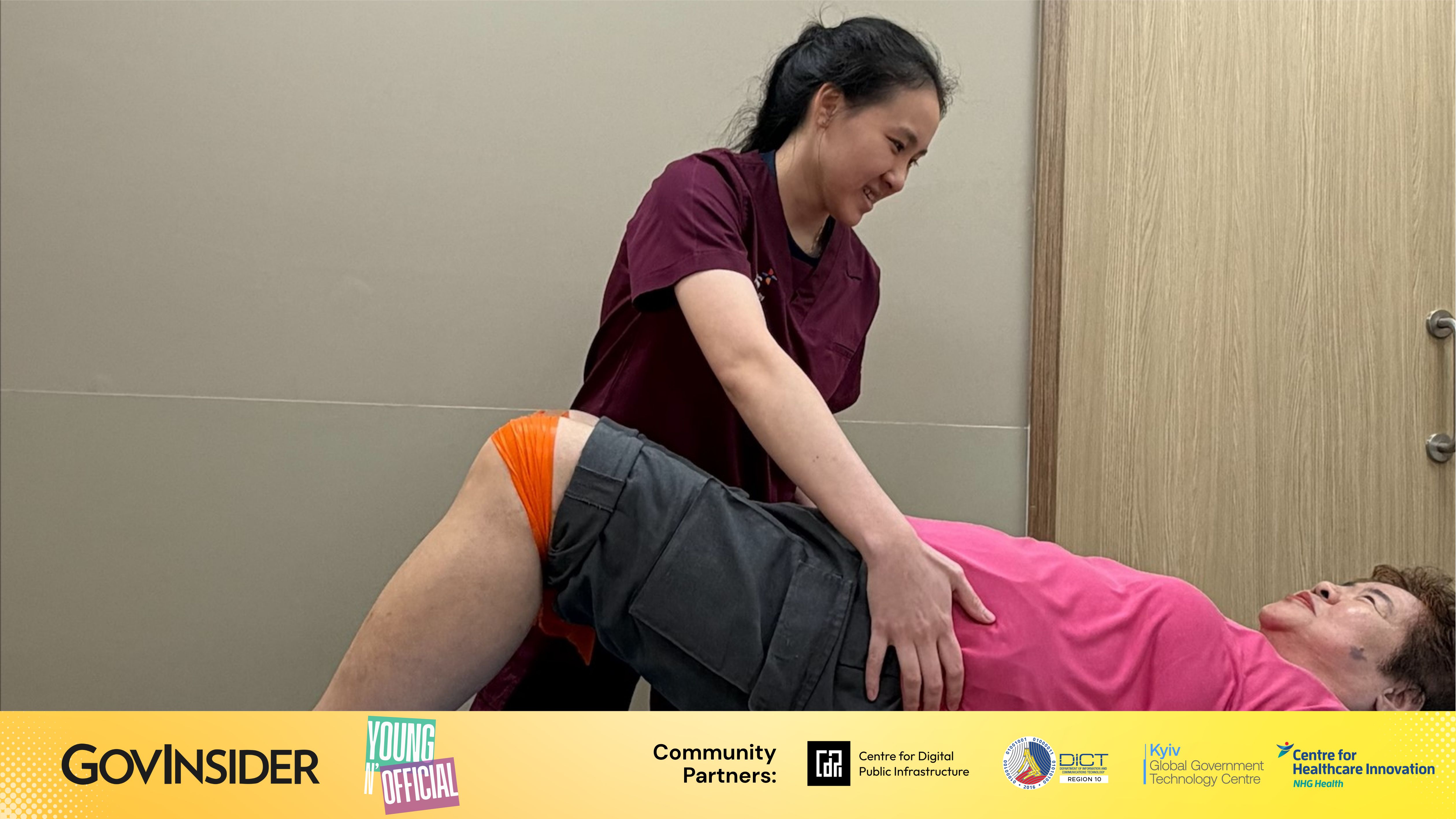
Elizabeth Lee, Physiotherapist, Pioneer Polyclinic, National University Polyclinics, Singapore. Image: NUHS
1) What does public service mean to you? Can you share more about your role in the public sector?
Public service, to me, is about doing work that meets the needs of the community and supports their overall well-being, especially for those from lower-income groups.
As a physiotherapist in a polyclinic, I help patients regain functional mobility and guide them in exercises that improve their quality of life.
In this setting, I focus on empowering patients to take ownership of their recovery by equipping them with tailored resources, such as individualised exercise programmes they can continue at home or at work.
What I find most meaningful is the challenge of designing exercises that are both effective and practical. By ensuring they are convenient and sustainable, I hope to improve patient adherence and support long-term recovery outcomes.
2) Tell us about a project you championed. What impact did it have on the community?
My primary project focuses on developing an exercise competency checklist for the therapy support team.
This aims to ensure therapy assistants are well-equipped to teach exercises safely and effectively, while also upskilling them to take on a more active role. In doing so, it helps to spread the workload among our team of physiotherapists and therapy assistants, while improving overall team efficiency.
My secondary project involves building an internal exercise database that includes step-by-step images and video demonstrations.
Currently, we rely mainly on written and visual instructions, which may not be sufficient for some patients, especially the elderly or their caregivers.
By providing clearer, more accessible resources, patients can better understand and adhere to their prescribed exercises. This initiative also allows us to curate and tailor exercises more effectively to individual needs, while moving towards a more digital and paperless system.
My longer-term goal is to enhance patient accessibility to early care. By leveraging these exercise videos, patients can begin simple exercises while waiting for their physiotherapy appointments, helping to bridge delays and support earlier intervention.
3) As a young professional, how has your unique background allowed you to identify a solution that others in your organisations might have overlooked?
My background in photography and videography has shaped the way I approach problem-solving in my role as a physiotherapist.
What started as a hobby during my secondary school days - capturing moments for my family, juniors, and community - gradually became a skill I never expected to use in healthcare. Yet, in my current role, those same skills are now applied to creating visual content for patient education.
Although I have only been with the organisation for about 21 months, this skillset gained recognition through my participation in the Allied Health Learning Festival, where I won the video competition in 2025 and the photography competition in 2026.
It was after the 2025 competition, just a few months into my role, that I began to see how these skills could be applied meaningfully in my work as a physiotherapist.
While this was not so much a solution that others had overlooked, there was a clear gap in how visual resources were being developed, with the team exploring external options to meet these needs.
Having an in-house understanding of both clinical content and visual storytelling, I proposed developing these materials internally. This approach allowed us to create more tailored, sustainable solutions, rather than relying on external resources that might be temporary or less aligned with our needs.
4) What is your personal strategy for maintaining your creative energy?
Thankfully, my creative energy stems from random ideas that pop naturally into my head. Because I enjoy doing what I do, I approach a new project with excitement over what I can possibly create, instead of seeing it as a chore or just another project.
As long as it is your passion, the energy and commitment you have towards your project will multiply naturally.
5) If you had just one area to invest in to accelerate transformation in the public sector (regulation, technology, talent, etc.), which one would you choose and why?
Processes and operations.
I think that more can be further improved or refined to better serve both the general public and the needs of internal staff.
6) What is your greatest ambition as you grow in your public service career?
I aspire to create meaningful impact not only in society at large, but also within my organisation—making a positive difference for both the community and my colleagues.
7) What is a “universal value” that connects everyone in your department – from interns to directors – and how do you use that to drive collaboration?
Mutual support. Physiotherapists consistently look out for one another, sharing the load and stepping in when someone is unwell.
Therapy assistants also support by guiding patients through exercises when needed. This culture extends across all levels, fostering understanding, flexibility, and trust, allowing us to manage our responsibilities effectively while balancing work and personal commitments.
8) What is the best piece of advice you’ve got for the next generation of public servants?
Always remember why you chose this path. Some days will feel routine; others, challenging, but return to your purpose—it will guide you through both the difficult moments and the ordinary ones.
9) What is a myth you wish to debunk about young public servants?
It does not mean they are any less capable. While less experienced, younger graduates often bring updated knowledge and fresh ideas—sometimes even contributing insights that their seniors can also learn from.
10) Write a letter to your future self in 2035. Please keep it within 200 words.
Dear Elizabeth in 2035,
You’ve journeyed through another nine years in this profession and have likely touched more than 10,000 lives through your care. I hope you still hold close the reason you began—to restore function, bring hope, and serve others with healing hands.
Remember the patients who placed their trust in you, the small but meaningful victories, and the colleagues who supported you along the way. Stay kind and grounded, and never lose the compassion that gives your work its true purpose.
Take a moment to reflect on how far you have come. So much of your early journey unfolded unexpectedly - winning first and third place among over 60 entries in the 2025 video contest, achieving top recognition again in the 2026 picture contest, and even being nominated for GovInsider. None of this happened by chance; it was made possible through divine guidance and grace.
I wonder how life looks for you now. I hope you have found joy in balancing work and family, something you have always valued. I hope the ideas you were nurturing have grown into something meaningful, fulfilling the purpose set before you.
Be proud of your journey, and continue to walk faithfully.