
Fidan Safira, Senior Researcher, Jakarta Smart City, Indonesia
Meet the Women in GovTech 2025.
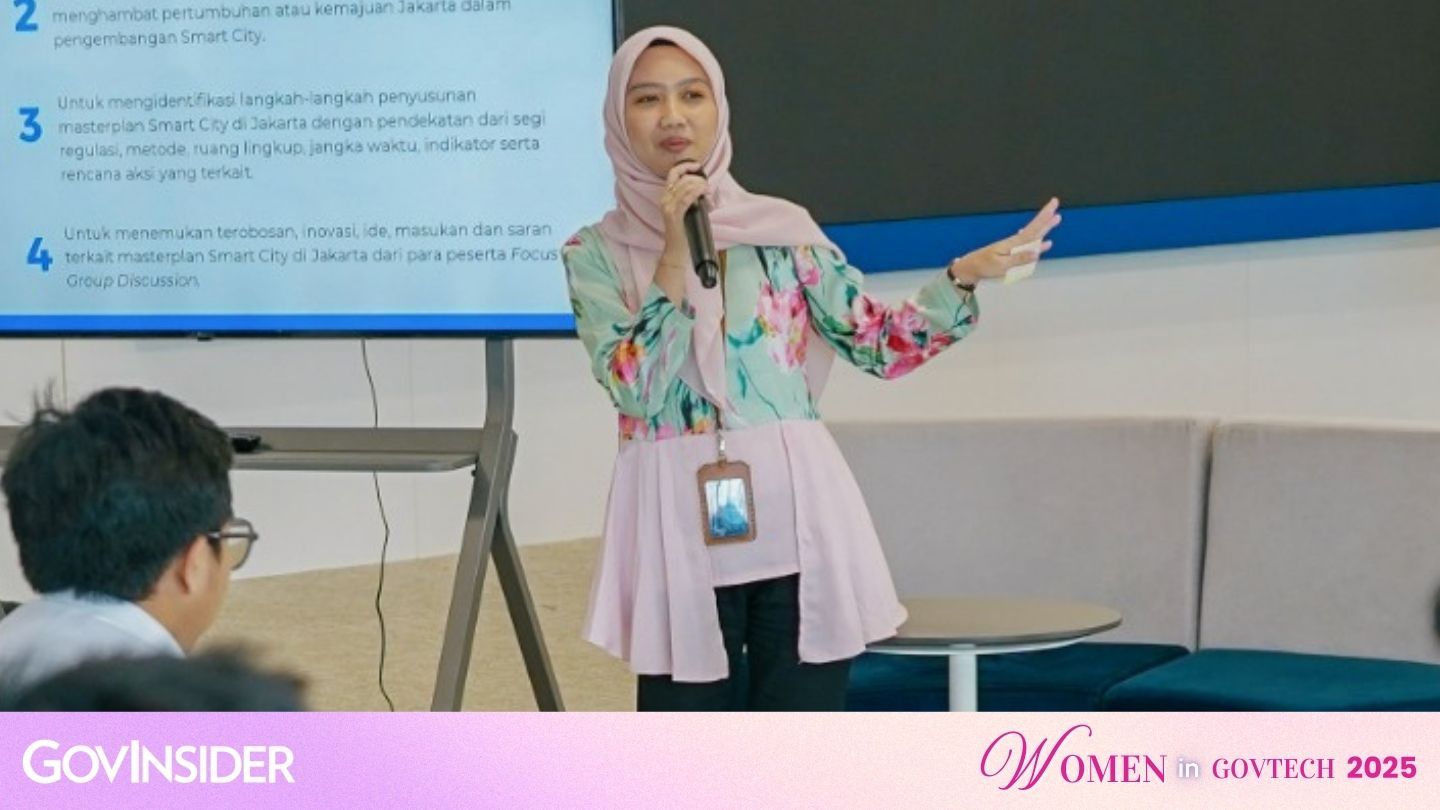
Fidan Safira, Senior Researcher, Jakarta Smart City, Indonesia, shares her story. Image: Jakarta Smart City
1. How do you use your role to ensure that technology and policy are truly inclusive?
I believe inclusivity begins with “listening and understanding”, and this is where my role as a researcher becomes essential.
Every policy and technology we design is grounded in user insights gathered through various methods to capture people’s real experiences as end-users.
For me, inclusivity is not just about building efficient systems, but ensuring that every product and policy we produce is genuinely relevant, easy to access, and able to reach all segments of society.
2. What’s a moment in your career when you saw firsthand how technology or a new policy changed a citizen’s life for the better?
One of the most memorable moments for me was when our Jakarta Smart City team developed the JAKI or Jakarta Kini (Jakarta Now) super app as the government’s main digital channel during the Covid-19 pandemic.
In a crisis, we worked at speed to deliver services that eased citizens’ lives – from vaccination registration and self-check features to real-time regional dashboards.
JAKI applied Privacy-Preserving by Design & Default in managing citizen reports. Through cross-agency collaboration and collective work, it successfully transformed into a safe and essential app for residents.
This experience taught me that technology is not merely a digital tool. It is a policy instrument which, when built with empathy and collaboration, can strengthen trust between government and citizens during times of crisis.
3. What was the most impactful project you worked on this year, and how did you measure its success in building trust and serving the needs of the public?
This year has been remarkable because Jakarta’s best practices through JAKI have begun to be adopted by other regions, such as Lampung Province and Karawang Regency – an important milestone in driving digital transformation at the local government level.
Through mentoring and joint assessments, we supported local governments in understanding how to build integrated, data-driven, citizen-oriented public digital services.
The focus was not only on technical app development but also on governance, citizen-feedback management, and public communication strategies to ensure digital services are genuinely used and trusted.
Another significant project was engaging young people through the Living Lab Student Challenge, part of the Jakarta Smart City Living Lab ecosystem.
The programme serves as a space for experimentation, learning, and collaboration among residents, academia, industry, and policymakers to collectively understand community needs and explore solutions to urban challenges.
From this initiative, ten student ideas were curated, and three were selected for implementation – showing tangible contributions from young people in shaping urban innovation.
4. What was one unexpected lesson you learned this year about designing for real people?
Digital transformation is not about technology. It is about behavioural and cultural change.
Building digital systems can be done quickly, but building trust, capacity, and a sense of ownership across all stakeholders takes time and requires a systematic approach.
I realised that developing digital systems is not about who is the most advanced, expensive, or unique – it is about how well the system simplifies processes and meets the needs of end-users.
I also learned that cross-disciplinary collaboration is essential for creating solutions that are sustainable and genuinely impactful for society.
To subscribe to the GovInsider bulletin, click here.
5. We hear a lot about AI. What's a practical example of how AI can be used to make government services more inclusive and trustworthy?
AI holds huge potential to drive more responsive, inclusive, and data-driven governance. It can help governments identify patterns in citizen needs, anticipate potential public issues earlier, and generate more targeted policy recommendations.
However, its use must align with principles of transparency, accountability, ethics, and personal data protection.
6. How are you preparing for the next wave of change in the public sector? What new skill, approach, or technology are you most excited to explore in the coming year?
My preparation is simple: always position myself as a lifelong learner and continue expanding my professional networks.
I am looking forward to technologies that enable personalised public servies – where government services can adapt to the unique needs of each individual while still prioritising privacy.
7. What advice do you have for public sector innovators who want to build a career focused on serving all citizens?
Do not hesitate to start small, because innovation in government often begins with simple changes.
Cultivate curiosity about public problems, practise empathy, always use data as a foundation for decisions, strengthen your advocacy skills, and most importantly: do it wholeheartedly!
8. Who inspires you to build a more inclusive and trustworthy public sector?
My greatest inspiration comes from the citizens themselves. Every piece of feedback, criticism, and every story they share reminds me that technology must never lose its human dimension.
I am also inspired by the gaps and challenges that exist.
These motivate me to create innovations that not only solve technical issues but ensure that public services are inclusive, relevant, and sustainable.
9. If you had an unlimited budget, what would your dream project be?
I would build technology that not only simplifies public services but also guarantees safety, equality, and fairness for all residents, especially women and marginalised groups.
Technology should serve as a tool to strengthen social justice, not merely administrative efficiency.
Digital platforms must create space for two-way dialogue through citizen participation mechanisms, service co-design, and accessible, meaningful feedback channels.
With this approach, digital government becomes not just technologically advanced but socially resilient, achieving governance that is adaptive, participatory, and trusted by all segments of society.
10. Outside tech, what excites you the most?
Public literacy. In the digital era, literacy determines how quickly and widely technology is adopted.
Citizens’ ability to understand and use technology is a key foundation for their active participation in governance and policymaking.
Digital literacy must be prioritised before we speak about technology or policy.