
Following the citizen's journey makes Denmark a world leader in e-government
Danish Agency for Digital Government’s Adam Lebech shares how the Nordic state uses digital government to uphold strong public trust, integrates public with private to create seamless digital experiences for citizens, and address digital sovereignty challenges.
Danish Agency for Digital Government’s Deputy Director-General, Adam Lebech. Image: Danish Agency for Digital Government
This story is part of GovInsider's Digital Government initiative, which aims to feature stories from digital government agencies around the world. Click here to view our interactive map.
It’s not a coincidence that some of the world’s most digitalised nations, be it Denmark, Estonia, or Singapore, have the highest levels of public trust in their governments.
Digital transformation is a two-way street for public trust.
For digital government initiatives to succeed, they need a foundation of citizen trust. In return, the same initiatives can help governments build trust by delivering better, more responsive services.
Denmark has consistently topped the UN E-Government Survey since 2018.
While a high-trust society has been a huge asset for the Nordic country’s digital government success, the trust must be continually maintained through deliberate actions, says the Danish Agency for Digital Government’s Deputy Director-General, Adam Lebech, to GovInsider.
According to him, an effective digital government goes beyond simply putting existing public services online, it also involves developing solutions based on real-world use cases.
“We put citizens at the centre of everything we do, and try to design digital services around them,” he explains, attributing his digital government success to adopting a customer-centric approach.
Adopting a customer-centric approach to digital approach meant that the agency would leverage data effectively and continuously refine solutions with users, he adds.
Seamless experience, enabled by strong data sharing culture
“To create a great digital government, you need to be able to use data across the government. Sharing and handling this data requires a lot of trust from citizens,” Lebech explains.
More than 50 years ago, the country decided to opt for a single national identifier (CPR) for all government services, which was later linked to a single digital key MitID, he says.
This laid the groundwork for a robust data foundation and a culture of data sharing between government agencies.
In turn, this was crucial for creating a consistent and user-centric experience for citizens as they accessed different digital services essential to their daily lives.
Deep public-private integration
While many countries have digital IDs, Denmark’s MiTID system is renowned in its deep integration across both public and private sectors like banking.
This public-private integration broadens the use case and encourages widespread adoption of digital government solutions among the citizens, he notes.
“People generally don’t care which agency is responsible for providing what services, they just want to get things done,” says Lebech.
To make it easy for citizens to move seamlessly between public and private services, the government has adopted a co-ownership model for its digital systems.
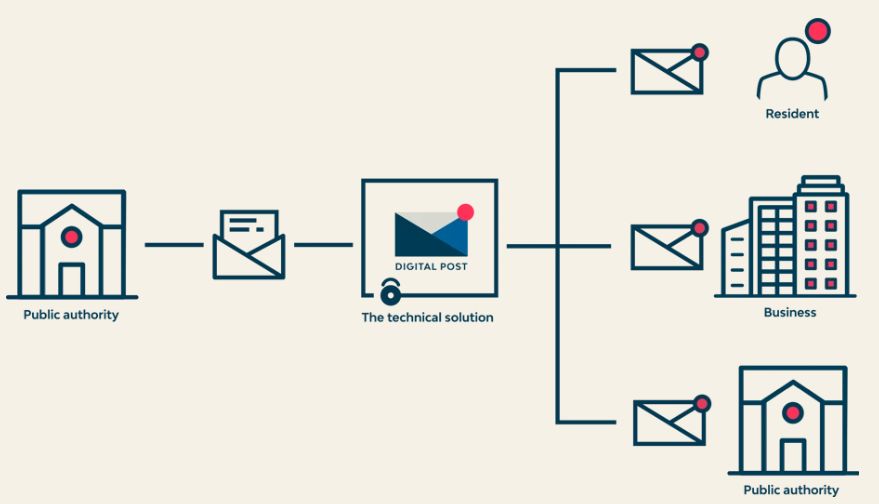
Different levels of government – national (40 per cent), regional (40 per cent) and local (20 per cent) – co-own key systems like the national citizen portal and the digital ID.
He shares the example of Digital Post. For more than 15 years, Denmark has mandated that all government communication across all levels be sent to citizens through a single location, eliminating the need for paper mail.
In an increasingly digitalised environment, Lebech says that technology and policy need to evolve together to serve and protect the public.
He adds that the government is actively passing new legislation and rules around e-government systems to protect people’s rights.
Building digital government around people, not processes
Following a trend seen in many governments today, the Danish government adopts an agile and iterative process to digital development.
“The wrong way to design digital systems is to think of it like building a skyscraper. You can’t plan everything at the start and then build it according to the plan,” he notes.
“You have to build these digital systems from the ground-up. Focus on small-scale use cases, like minimum viable products and pilots, test with users, then scale up,” he explains.
To illustrate this approach, he cites the agency’s process of developing its digital ID wallet app, with their usability experts going directly into real-life situations like supermarkets to test how the technology works.
Lebech's team learnt a key lesson in real-world testing: While observing how traffic police used their scan app for the digital driver's license, they discovered the officers' large gloves made the app impractical.
The direct and continuous testing with users during the development process allows the agency to strike the right balance between usability, security, and privacy, he notes.
For example, a system can be so usable that users compromise their own security, a major problem for digital ID systems.
By testing alongside diverse users, including people with disabilities, the elderly, and those with low digital literacy, the government can then fine-tune its solutions to ensure they are secure enough to be trusted, yet usable enough to be adopted by everyone, he adds.
Phased rollout of Denmark’s digital identity wallet
Following the "starting small and scaling up” approach, Denmark will implement its digital ID wallet in three phases, with the the first version scheduled to launch in early 2026.
According to him, the first phase of the project will focus on essential use cases like age verification.
The second phase will then scale up the number of users and include other use cases. The final phase will involve integrating with the private sector and aligning with broader European Union (EU) regulations.
Lebech explains that every country handles developing and implementing its own digital ID wallet app based on a shared architectural framework provided by EU, known as the eIDAS2.
The biggest challenges for national-level implementation are around user enrolment and service integration, he says.
This means getting citizens to enroll and actively use the app, as well as service integration, which is to onboard service providers and integrate their platforms into the app.
Digital sovereignty concerns
On the rising digital sovereignty concerns in the region, Lebech shares that Europe, including Denmark, are actively discussing the need to build their own technological capacities and reduce reliance on bigger tech firms outside the region.
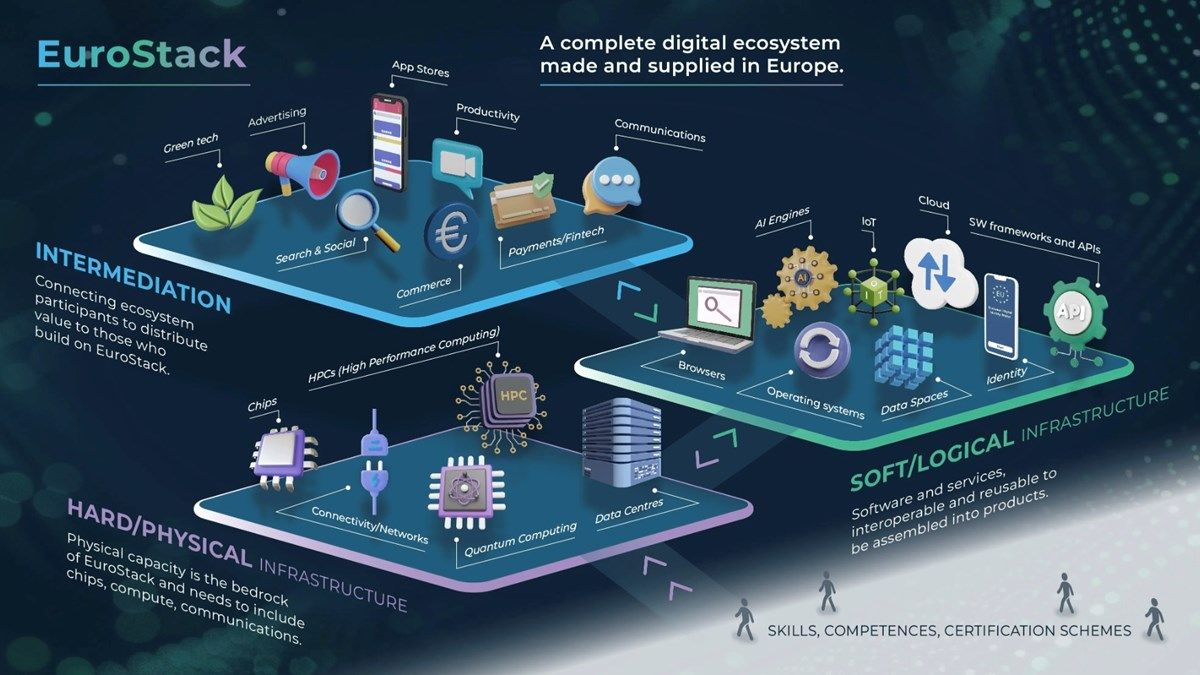
To help, the EuroStack initiative aims to map out the entire software and infrastructure stack to identify and reduce these dependencies, which he acknowledged as “a long-term effort.”
While key digital systems may use foreign vendors, they are hosted on-premises in Denmark and the agency owns the source code, ensuring that the government is not locked into a single vendor and can choose to switch vendors if they needed to, he adds.
Linux Journal recently reported that the Danish Ministry of Digital Affairs has committed to move away from using Microsoft Office 365 to open-source its operations with LibreOffice.