
Goh Su-Yen, Group Director, Innovation & Transformation, SingHealth, Singapore
Meet the Women in GovTech 2025.
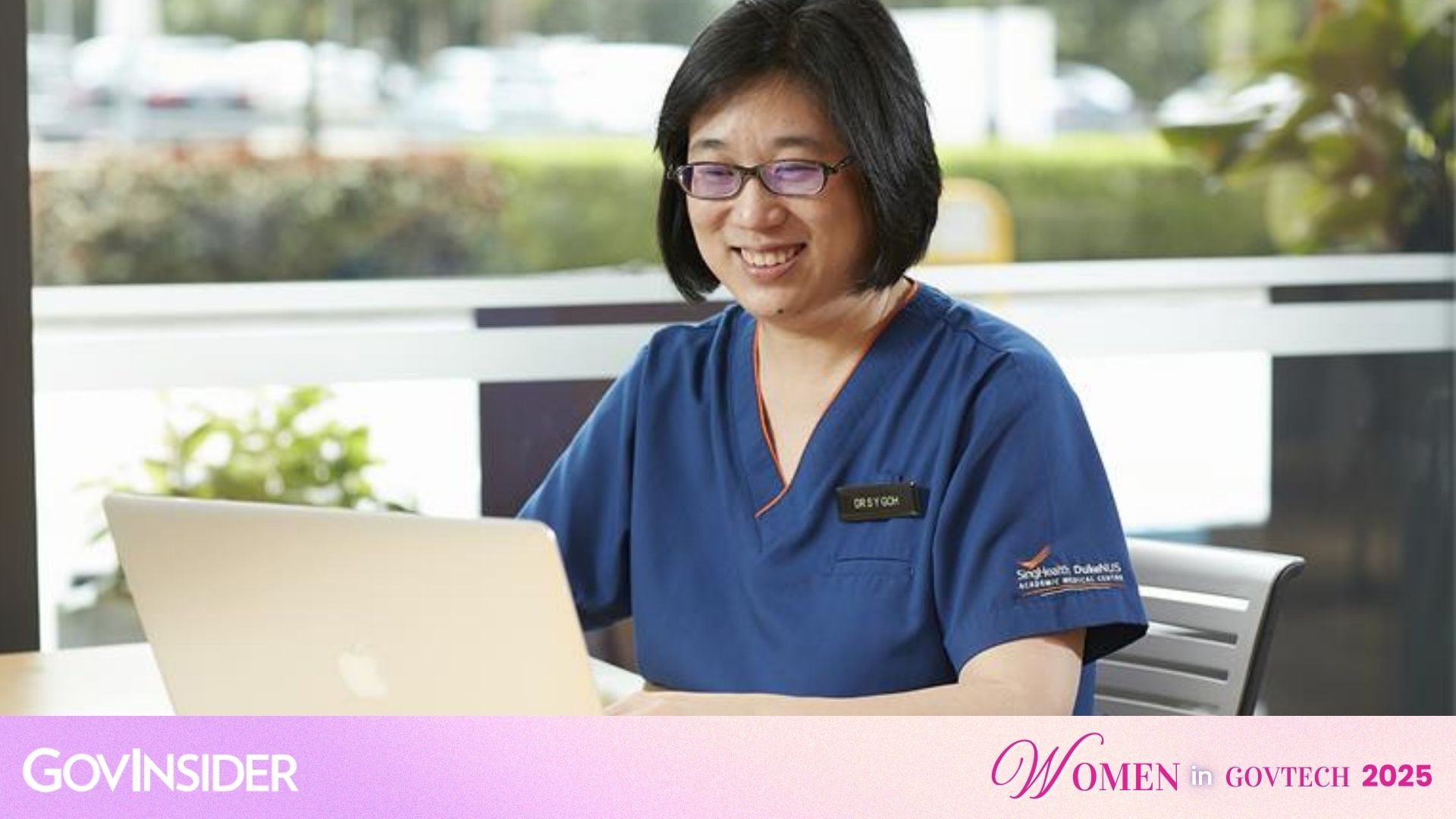
Goh Su-Yen, Group Director, Innovation & Transformation, SingHealth, Singapore, shares her story. Image: SingHealth
1. How do you use your role to ensure that technology and policy are truly inclusive?
Everything we do starts with listening – to patients, the public, and our staff.
At SingHealth’s Division of Innovation and Transformation (DO-IT), we have a vibrant culture of innovation that prioritises equity and inclusivity, where we drive positive change through technology. We ensure that our projects represent the needs and experiences of our end users, because they are the ones who matter most.
We help our staff at every level build digital skills and confidence. Whether you are just starting out or already tech-savvy, we want to ensure everyone can leverage digital innovation to make work better and easier for themselves.
2. What’s a moment in your career when you saw firsthand how technology or a new policy changed a citizen’s life for the better?
A patient of mine who had undergone a transplant and was on immunosuppression had a respiratory infection and would normally be confined in a single room in the isolation ward. While he understood the medical need for isolation, he and his family were dreading the psychological distress of curtailed family visits and the sterile environment of a hospital room.
They were delighted that we could offer him the safe alternative of mobile inpatient care at home through our SingHealth@Home programme. This meant he gets hospital-level care in his own home, with remote monitoring, chatbot support and home visits all working together.
This setup reduces the risk of picking up infections in hospitals, eases stress and loneliness by keeping loved ones close, and helps people recover better through improved sleep, nutrition and being able to move around in familiar surroundings. It also allows the hospitals to flex capacity beyond fixed beds, while continuing to deliver safe clinical care.
The hospital-at-home concept has been around in other countries, and I am glad Singapore has finally adopted it as a model of care, because it is a transformational process harnessing the benefits of technology and policy for our citizens.
3. What was the most impactful project you worked on this year, and how did you measure its success in building trust and serving the needs of the public?
Giving patients our undivided attention, especially during consultations, can be challenging as we multi-task listening and taking notes. To allow clinicians to truly engage their patients, we, together with Microsoft, co-developed Note Buddy, an ambient generative AI medical scribe that is capable of passively capturing consultations via room mics, suggesting diagnoses, and integrating with electronic health records.
It transcribes and summarises clinician-patient conversations in multiple languages. This has reduced documentation time by two to seven minutes per visit and reduced cognitive and administrative load by up to 40 per cent. Most importantly, it frees clinicians to focus more on connecting with their patients during consultations.
4. What was one unexpected lesson you learned this year about designing for real people?
When designing Note Buddy, we faced an unexpected challenge in getting clinicians to buy in. Clinicians push back when AI decisions feel like a black box without clear explanations, and they worry about errors that could increase their liability.
To overcome their resistance, we involved them early on in the system development process, explaining the justification behind our decisions and revising the system based on their input. We heard their concerns and sought to address them.
I am proud that as of December 2025, Note Buddy has assisted more than 4,900 staff to generate over 63,000 clinical notes.
To subscribe to the GovInsider bulletin, click here.
5. We hear a lot about AI. What’s a practical example of how AI can be used to make government services more inclusive and trustworthy?
Singpass uses AI-powered facial recognition for secure, quick login to government portals, allowing citizens to access services like CPF checks, passport renewals, and healthcare apps such as Health Buddy, where they can retrieve health records, order medications and make payments, all without using complex passwords.
This is a great use of AI to simplify digital interactions for those with lower technical capability, while still facilitating safe and secure access to their personal records and government service transactions.
6. How are you preparing for the next wave of change in the public sector? What new skill, approach, or technology are you most excited to explore in the coming year?
Preparing for the next wave of change in the public sector means treating AI literacy as a core professional competency, not a nice-to-have niche tool. As a patient – and public – facing institution, we should harness the enhanced capabilities that generative AI offers to benefit those we look after.
With that said, people should still be at the helm to ensure that we continue to maintain exemplary standards of accountability and empathy in clinical care.
7. What advice do you have for public sector innovators who want to build a career focused on serving all citizens?
Learn to innovate with and within bureaucracy. There will always be red tape and legacy systems, and these can frustrate public sector innovators. But you should always know your "why": who are you building these solutions for? What do your end users really need and want?
To ensure your solutions truly make a difference to citizens, walk the ground with them. Hear their perspectives and understand what matters to them. That's where real innovation begins.
8. Who inspires you to build a more inclusive and trustworthy public sector?
Daily interactions with patients are the inspiration. We have a fairly complex medical ecosystem, and our patients often have to navigate between primary and specialist care with multiple touchpoints across various care settings and different levels of urgency. It can be particularly challenging for those with lower health literacy, more chronic illnesses, and less access to quick or tailored help.
As we push for a digital-first approach in healthcare, we are mindful that anything we build has to include adaptations for patients who may have limited digital access, language barriers and caregiving burdens. It can be as simple as recognising that patients are rightly wary of phone scams and won't respond to SMS notifications that don't clearly show they are from a trusted healthcare institution – so we adapt our SMS format accordingly.
9. If you had an unlimited budget, what would your dream project be?
I would love to equip homes with an ambient unobtrusive health interface that merges AR/VR, non-invasive physiological monitoring and seamless communication with healthcare teams and social / community services.
It would be fascinating to have wall-embedded radar, thermal, and optical sensors to detect biometrics like heart rate variability, gait, posture, fall detection, and smart toilet analysis - all without needing wearable devices. The systems would need AI algorithms to interpret the multimodal signals and translate them into meaningful health insights while preserving user privacy.
I would also combine this with a mixed-reality interface for communication between the home occupants and their healthcare teams as well as family and friends - with a very intentional user interface design to be exceedingly simple and accessible by all levels of digital literacy.
10. Outside tech, what excites you the most?
I like solving problems. I particularly love challenging myself with tasks that others say cannot be done. This does not mean bulldozing one’s way through. In fact, sometimes the best results come from quiet diplomacy and patience.
I appreciate the concept of servant leadership, as well as the idea of sponsorship above just mentorship, and I will invest my time and energy into championing other women leaders in medicine and science, and help amplify their voice and confidence.