
How citizen developers can transform the public sector
By Sol Gonzalez
GovInsider’s first edition of Citizen Developer Day gathered public sector innovators and citizen developers to share insights on how low- or no-code is enabling every team member to be an agent of change.
-1751855896843.jpg)
The sessions at the Citizen Developer Day presented strategies to encourage low- and no- code practices to innovate processes in the public sector. Image: GovInsider.
The rapid pace of technological change means tech is no longer an exclusive domain of IT professionals.
The sessions at GovInsider’s inaugural Citizen Developer Day (CDD) on July 2 in Singapore proved that there has been a true democratisation of technical skills thanks to tools that allowed those with no software or coding skills to write programs.
One of the major points that came out of the event was that the public sector has been increasingly empowering and providing the required tools to non-tech employees to help them create applications that improve workflows and solve problems.
The speakers at CDD shared that the rapid evolution of technology brings along new tools that make the transformation journey easier. These tools include, among others generative artificial intelligence (GenAI) prompts that responds to natural human language, as well as low-code platforms for robotic process automation (RPA).
“As a consumer we often expect to be served. But as a citizen developer, you make the solutions, no waiting,” said VITAL Singapore’s Director of Service Partnership and Innovation, Alex Tang.
VITAL is the central agency for corporate shared services in the Singapore public service.
The sessions at CDD covered know-hows to adopt and sustain citizen developer strategies, and presented successful cases that enhanced productivity within the Singapore government.
Here are the highlights from the event.
1. First things first: a culture shift
A repetitive theme across all sessions was the need to cultivate a mindset or culture change at the organisational level to welcome the idea of ground-up innovation.
For the speakers in the first panel titled Idea to Impact: Accelerating Digital Government with Citizen Developers, this entailed socialising what citizen development means, how it works, and what its value for an agency was.
Promoting the idea that everyone regardless of their role can play a role in digital transformation is the first step to make the shift, said NTUC LearningHub’s Head of Technology Skills, Senthil Kumar.
The sentiment was shared by panellists in the How to Create a Citizen Developer Programme in the Public Sector session, who added that the three key aspects of creating the right culture for innovation were permission, leadership, and trust.
“Permission to fail, permission to start small, and permission to take on new tools. If [workers] don’t feel safe enough, innovation won’t happen,” said Ministry of Manpower (MOM)’s Digital Business Analyst, Information Systems and Technology Department (ISTD), Lara Chia.
To subscribe to the GovInsider bulletin, click here.
2. “I can do it too” – problem-solving proactively
Embracing citizen developer strategies allowed every team member to adopt a “I can do it too” mindset: by identifying a problem and working proactively toward a solution, the speakers said.
The last session of the event Citizen Developer Project Showcase was where low- and no-coders presented the applications and processes they built.
MOM’s Senior Digital Service Manager, Jimmy Neo, shared about the Interpreter Management System (IMS), a solution to address the inefficient process of Engagement and Approval to hire interpreters for migrant workers and enforcement officers when dealing with legal issues or investigations.
The IMS aimed to reduce admin burden and non-compliance among interpreters, enforcement officers, and finance teams, shared Neo.
Citizen developers were using and adapting Open Government Products (OGP)'s free, existing tools.
For instance, officers use Singapore government’s digital form builder, FormSG, to request interpreters more transparently, removing the need for direct calls.
When interpreters bid on opportunities, the documentation for every process – from service details, appointments and payment certifications – was all automated, by leveraging Singpass for authentication and data retrieval.
The integration with FormSG, Postman, Microsoft 365 (which acted as database), and Singpass were all done through Plumber, which was OGP’s tool for workflow automation.
That way, with no code, the IMS was able to simplify and streamline the process of engaging with interpreters.
Citizen developer movements could grow with events like hackathons to promote excitement and curiosity among non-techies, as well as providing the space for co-creation and knowledge-sharing, speakers shared.
3. Innovation is a marathon, not a sprint
Speakers highlighted that reliance on traditional methods made people hesitant to adopt new tools, also noting that workers with limited tech skills do not feel confident enough to innovate independently.
Agencies with an intent to innovate, sometimes made the mistake of trying to apply the most advanced technology to traditional systems. This often resulted in incompatibility, leading to a "fail one, fail all" mindset.
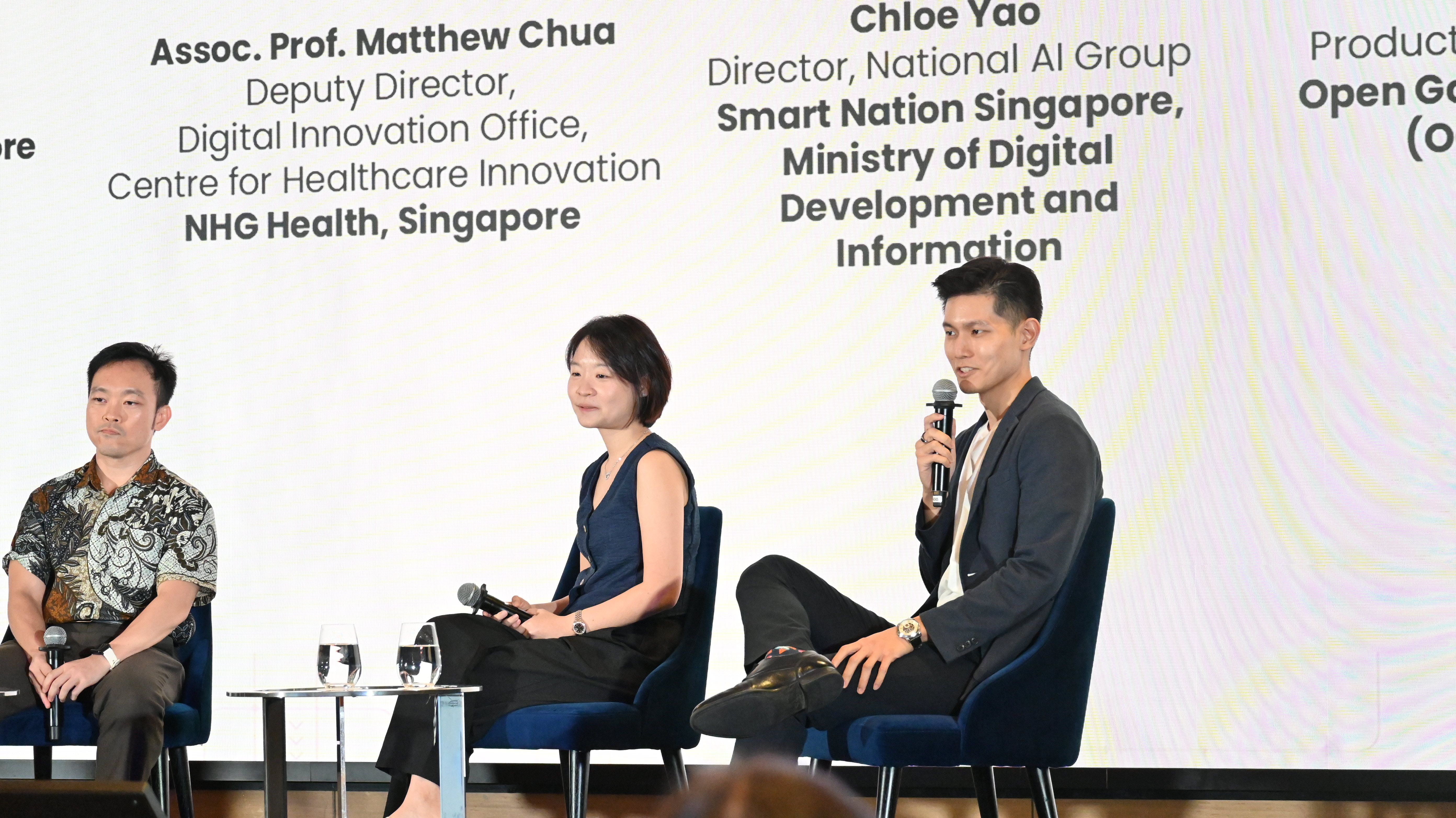
“Start small, like asking yourself ‘what is one process that I could simplify?’ and build up from there,” said Smart Nation Singapore, National AI Group’s Director, Chloe Yao.
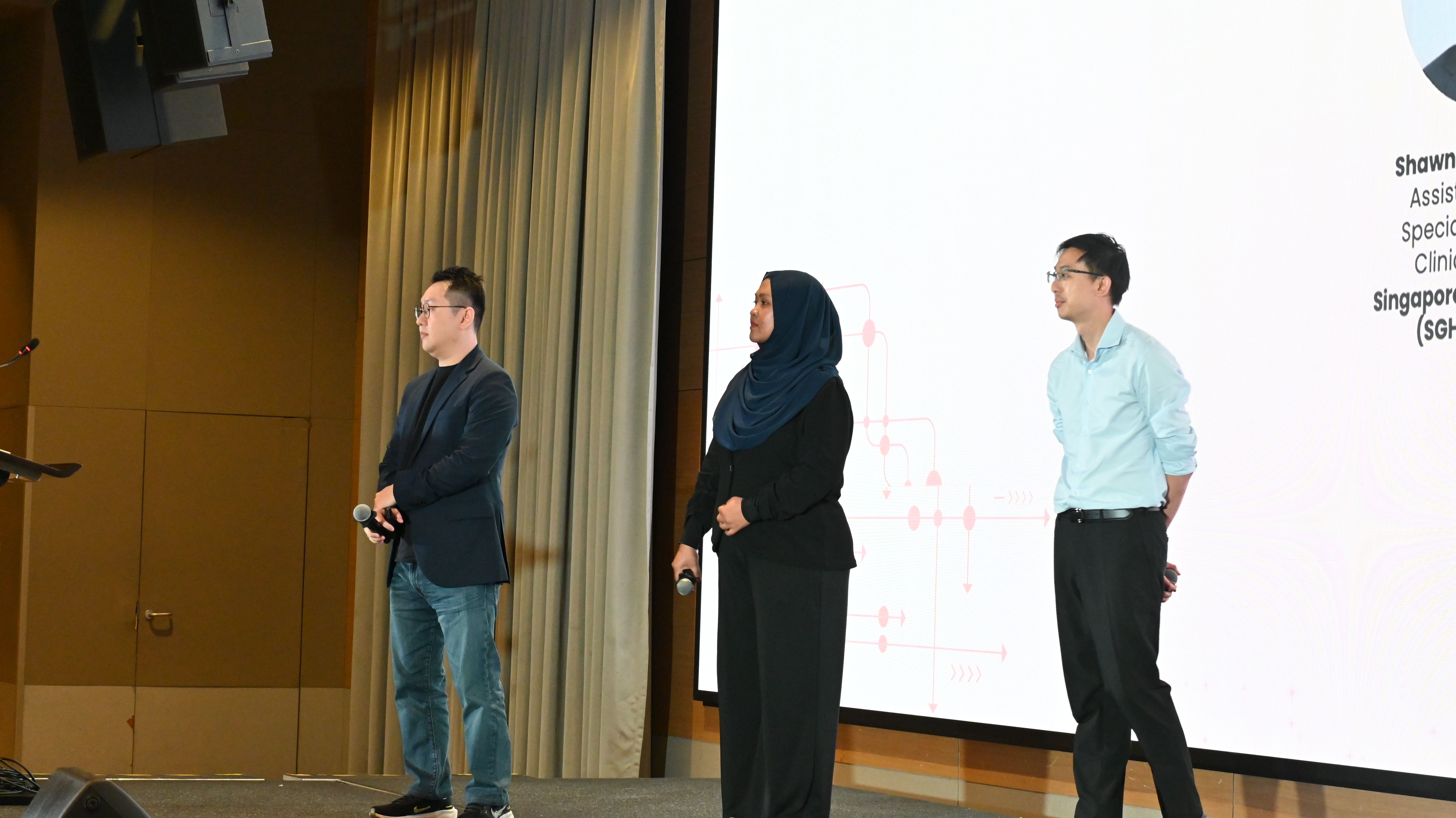
Instead of trying to automate or transform every process at once, adopting a case-based approach is better. This was what Singapore General Hospital (SGH) did to automate the Residency Posting Announcement (RPA) process.
Leveraging OGP’s FormSG, the citizen developers streamlined the process of administering residents’ information and compiling evaluation reports from multiple sources.
What once took over 80 hours of manually collating assessments and 240 hours a year to create individual profiles for feedback on every resident now took minutes to complete, shared SGH’s Division of Medicine’s Associate Executive, Siti Nurkiah Binte Mohd Amin.
Speakers across sessions agreed that with the right in culture in place and an open mindset to innovate, experimentation is a good way of testing if proof-of-concepts can turn into proofs-of-value.