
How Indonesia's education superapp Rumah Pendidikan won over UN and ITU's judges
Marking the first time an Indonesian entry won, Rumah Pendidikan’s win in the e-Government category of the WSIS Prizes 2026 is a testament to why technology should strengthen public trust and bring governments closer to the people they serve.
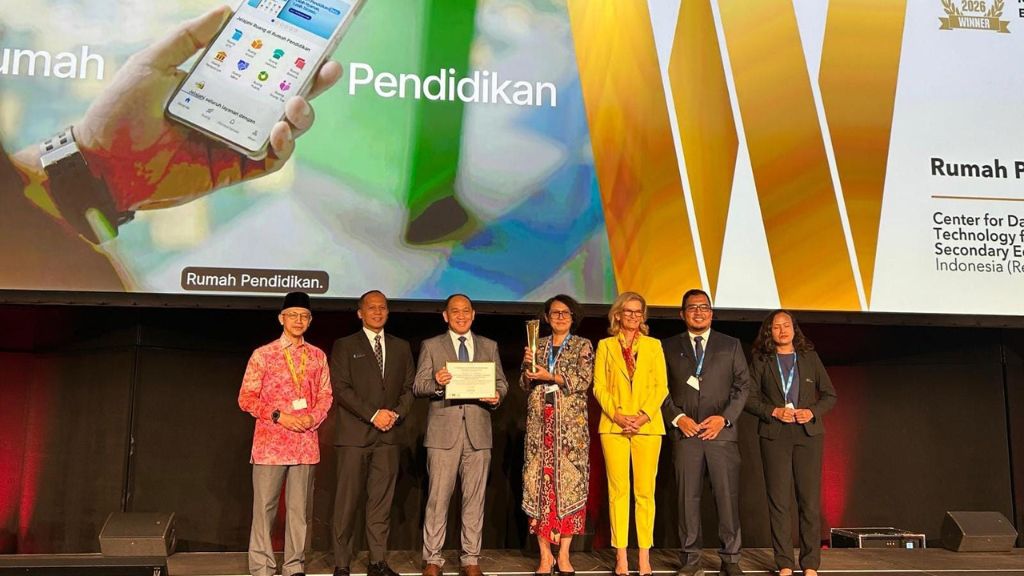
Indonesian Ministry of Primary and Secondary Education views Rumah Pendidikan's recognition as a Winner of the WSIS Prizes 2026 as an acknowledgement of the government's digital transformation efforts to deliver public services that remain relevant and responsive to citizen's needs. Image: Ministry of Primary and Secondary Education
For years, the success of digital government transformation is measured by quantitative indicators, such as the number of applications launched, amount of money spent, and how advanced the technology is.
Yet, citizens rarely question what technology their government uses.
What they care about is far simpler: whether public services are easier to access, faster, and genuinely improve their daily lives.
Digital transformation is not a race to build more applications. It is an effort to rebuild the relationship between the state and its citizens through public services that are simpler, more human-centred, and trustworthy.
When services are easy to use, transparent, and genuinely solve people's problems, trust in public institutions grows.
Conversely, overly-complex technology only widens the distance between government and citizens.
These were the key learnings that stayed with me as I attended the World Summit on the Information Society (WSIS) 2026 in Geneva, Switzerland, on July 9.
When Indonesia’s official superapp for education Rumah Pendidikan was announced as the winner of the e-Government category at the WSIS Prizes 2026, there was naturally a sense of pride.
Launched by the Ministry of Primary and Secondary Education (Kemendikdasmen), Rumah Pendidikan was designed to connect teachers, students, schools, parents, and government partners.
It marked the first time an Indonesian entry won since the awards’ launch in 2012, which was organised by the International Telecommunication Union (ITU) and the United Nations (UN).
Previously, Indonesia's highest achievement had been the “champion” distinction, awarded to the JAKI (Jakarta Now) superapp in 2021.
President Prabowo Subianto personally acknowledged the achievement during a plenary cabinet meeting at the State Palace on July 20.
From digitalisation to simplification
As an archipelagic nation comprising more than 17,000 islands, Indonesia faced significant challenges in ensuring equitable access to education.
While digitalisation has advanced rapidly, the country also came to recognise a fundamental irony.
Teachers had to switch between multiple applications to complete different tasks. Parents struggled to find the services they needed. Students moved from one platform to another simply to access learning resources.
Digitalisation has taken place, but the user experience has not become simpler.
It was here that I understood that integration was about far more than connecting different systems.
Integration meant reducing the administrative burden that citizens have carried for years.
Every form that has to be filled in repeatedly, every account that must be created again, and every piece of information requested multiple times takes away teachers' time to teach, parents' time to support their children's learning, and schools' time to focus on education itself.
Digital transformation should give that time back to people.
That is why Rumah Pendidikan was never designed as just another application. Instead, it was conceived as a shared home that brings together educational services for teachers, students, parents, schools, and local governments within a single integrated ecosystem.
Why “rumah”?
The term Rumah Pendidikan was first introduced by the Minister of Primary and Secondary Education, Prof Abdul Mu'ti.
To me, the choice of the word rumah – meaning "home" - carries far greater significance than simply serving as the name of a digital platform.
A home is a place where everyone feels welcome, receives support, grows, and can always return whenever needed.
This philosophy has since been translated into our RAMAH working culture – Responsive Responsive, Accountable, Service-oriented, Adaptive, and Harmonious – which served as the foundation for the ministry's digital services.
Today, Rumah Pendidikan integrates 66 education services, serves more than 6.9 million users, has recorded over 67 million visits, and is supported by more than 50 strategic partners.
More than 104,000 teachers in Indonesia's disadvantaged, frontier and outermost (3T) regions have used the platform to improve teaching and learning, while 339,000 educational institutions across 513 regencies and municipalities use Rapor Pendidikan (Education Report Card) as the basis for data-driven planning.
From schooling to learning
The most significant transformation I have witnessed is not technological, but conceptual.
For too long, we have associated education with schooling – something confined to school buildings and formal classroom hours.
Yet learning does not stop when the school bell rings.
Rumah Pendidikan seeks to promote a shift towards learning as a lifelong process that can take place anywhere.
Within this paradigm, teachers remain at the heart of education, while technology exists to strengthen their role rather than replace it.
Amid the rapid advancement of artificial intelligence (AI), this principle has become even more important.
AI can help teachers prepare lesson materials, analyse learning progress, and reduce administrative work. However, empathy, mentorship, and the relationship between teachers and students remain irreplaceable.
For this reason, I do not regard the WSIS Prizes 2026 as the end of the journey.
Rather, the award served as a reminder that digital transformation must not stop at building applications or adopting new technologies.
The next challenge was to ensure that public services continue to evolve, remain relevant to people's needs, and endure changes in leadership and technological trends.
I also believe that international awards represent only one form of recognition.
The most meaningful measure of success will always be the everyday experiences of citizens.
Perhaps, in the end, the true measure of digital transformation in education was remarkably simple.
It was the moment when people no longer ask which application they need to open, which form they must complete, or which office they have to visit, and instead they were free to focus on what truly matters: learning, teaching, and growing.
-------------------------------------------------------------------------------------
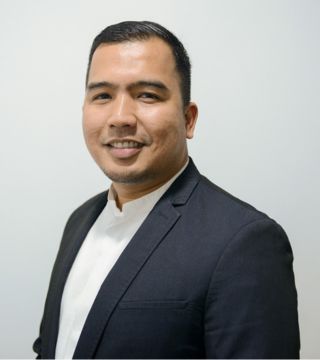
The author is Head of the Bureau of Communications and Public Relations at Indonesia's Ministry of Primary and Secondary Education. He previously served as Head of the Ministry's Centre for Data and Information Technology (2024–2026) and led Jakarta Smart City (2019–2023). He holds a Doctor of Philosophy (DPhil) in Cyber Security from the University of Oxford, UK.