Indonesia adopts student-centred approach to deliver high-quality learning with new platform
INA Digital Edu’s Ruang Murid (Student Space) platform helps to overcome geographic and connectivity barriers to provide seamless access to learning in the world’s fourth-largest education ecosystem.
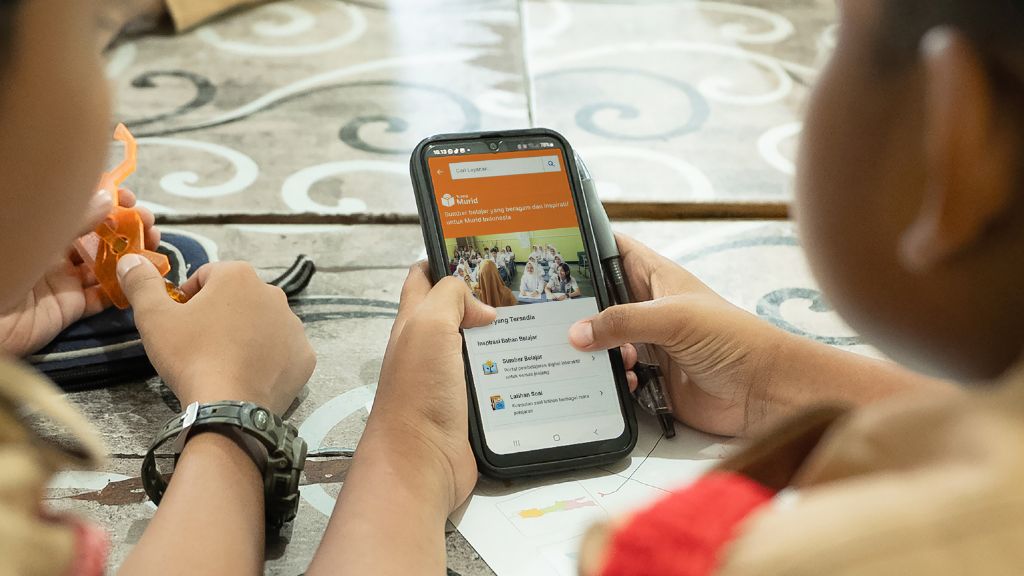
The Ruang Murid platform is part of Indonesia’s efforts to make learning high-quality, accessible, and engaging for students. Image: INA Digital Edu
Despite being the world’s fourth-largest education ecosystem – with more than 50 million students and four million teachers – students in Indonesia continue to face disparities in access to high-quality learning materials.
Diverse geographic and socio-economic conditions exacerbate these gaps, leaving many students facing barriers related to connectivity, devices, and affordability.
Ruang Murid (Student Space), a student online learning platform that is part of the Rumah Pendidikan (Education Home) super app, was developed to address these challenges.
“Ruang Murid was developed to expand access to quality education by providing a wide range of learning materials that are free to use, accessible across devices, and available even in low-connectivity environments,” says INA Digital Edu’s Deputy Head of Tribe, Tubagus Septian, to GovInsider.
INA Digital Edu is a tech team working with the Ministry of Primary and Secondary Education and is part of INA Digital under state-owned enterprise Perum Peruri.
The platform is currently available to students from early childhood education (PAUD) through senior high school (SMA/SMK).
According to Septian, INA Digital Edu has been improving access to learning through a web-based platform that requires no app installation, alongside offline document storage features that allow teaching materials to be accessed without an Internet connection.
In terms of content, the platform offers high-quality learning resources aligned with the national curriculum, including practice exercises across subjects, textbooks, and distance learning materials.
Less than a year since its launch in May 2025, the platform has delivered more than 3,500 learning materials and recorded over 25 million visits.
Student-centric design
In many government’s digital initiatives, adoption is often a weak point due to approaches that are oriented to agency’s needs over users.
As a result, many platforms were built but underutilised.
Ruang Murid has been designed to ensure that its features and learning content are focused on students’ needs.

The platform designers have been interacting with actual users from the onset of its development.
“Student involvement in the development process helps us deliver services that are simple, with interfaces and instructions that align with their intuition and needs, while remaining easy to use,” Septian adds.
Through readability and usability testing, the team ensures that both the content and interface are easily understood by students across different education levels.
This user-centred approach continues beyond launch.
Instead of relying solely on top-down mandate to use the platform, the development team and the ministry encourage adoption by engaging teacher and student communities.
“The more examples and inspiration that emerge organically from users, the wider the exposure of tangible benefits to other users,” he adds.
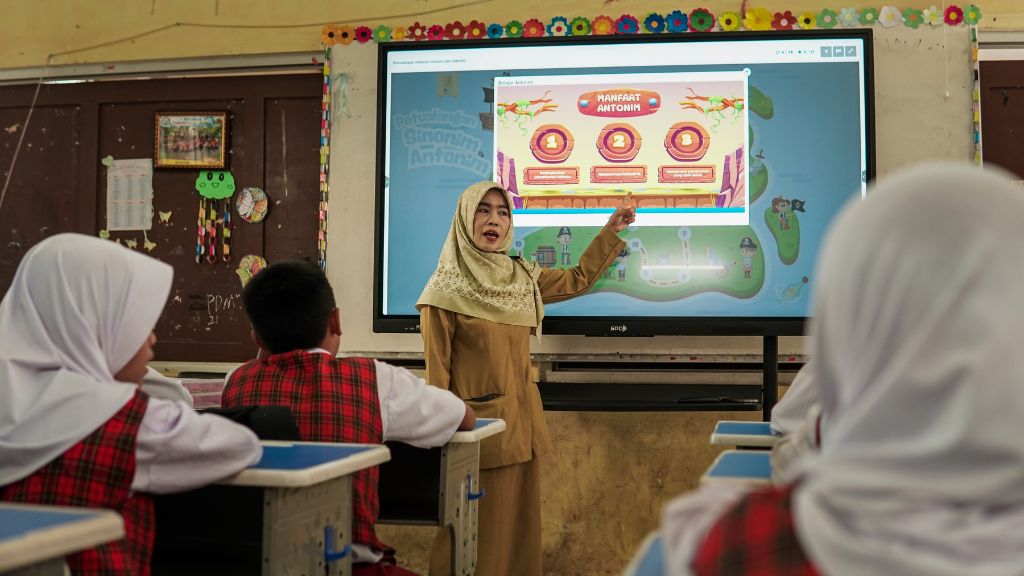
The platform is also integrated with the digital interactive boards, which further strengthened adoption.
Through large smart display devices provided by the ministry to schools, the learning process becomes more interactive, featuring content such as virtual experiments and educational games.
This shift encourages more active student participation in the learning process, while opening opportunities for more engaging and participatory teaching methods.
Leveraging AI for personalised learning
Following adoption, the next phase is ensuring that the platform remains relevant and personalised, so that each student receives materials tailored to their needs and learning progress over time.
This is where artificial intelligence (AI) comes in.
Ruang Murid uses Natural Language Processing (NLP) and Large Language Models (LLMs) to develop a deep understanding of the context of learning materials.
“This allows the system to automatically align thousands of content items from various sources with the latest national curriculum standards,” says Septian.
The team also employs hybrid classification pipelines, enabling AI to systematically and accurately categorise content. The result is more precise and structured content recommendations, helping students find relevant materials.
Human oversight has been built into the use of AI. When there is uncertainty in classification, content review is done by experts, he adds.
The golden triangle of education
As part of the broader Rumah Pendidikan superapp and ecosystem, Ruang Murid covers students, teachers and parents – what Septian calls “the golden triangle” of education.
By providing content access to parents, apart from teachers, the platform enables all three stakeholders to engage with the same resources, creating a more aligned and collaborative learning experience.
Within the Rumah Pendidikan superapp, teachers use the Ruang Guru dan Tenaga Kependidikan (Teachers Space) platform – formerly known as Merdeka Mengajar Platform – where they share teaching methods among their peers.
Meanwhile, parents use the Ruang Orang Tua (Parents Space) platform to monitor their children’s learning progress and support their educational needs at home.
“Moving forward, development will focus on enhancing the quality of the learning experience, from adding more interactive content and implementing a Learning Management System (LMS), to strengthening data-driven recommendations,” Septian concludes.