
Indonesia adopts use case approach to digital government
The upcoming pilot programme for the digitalisation of Indonesia’s social protection system (Perlinsos) marks a shift in the government’s strategy to strengthen integrated digital services, using this approach.
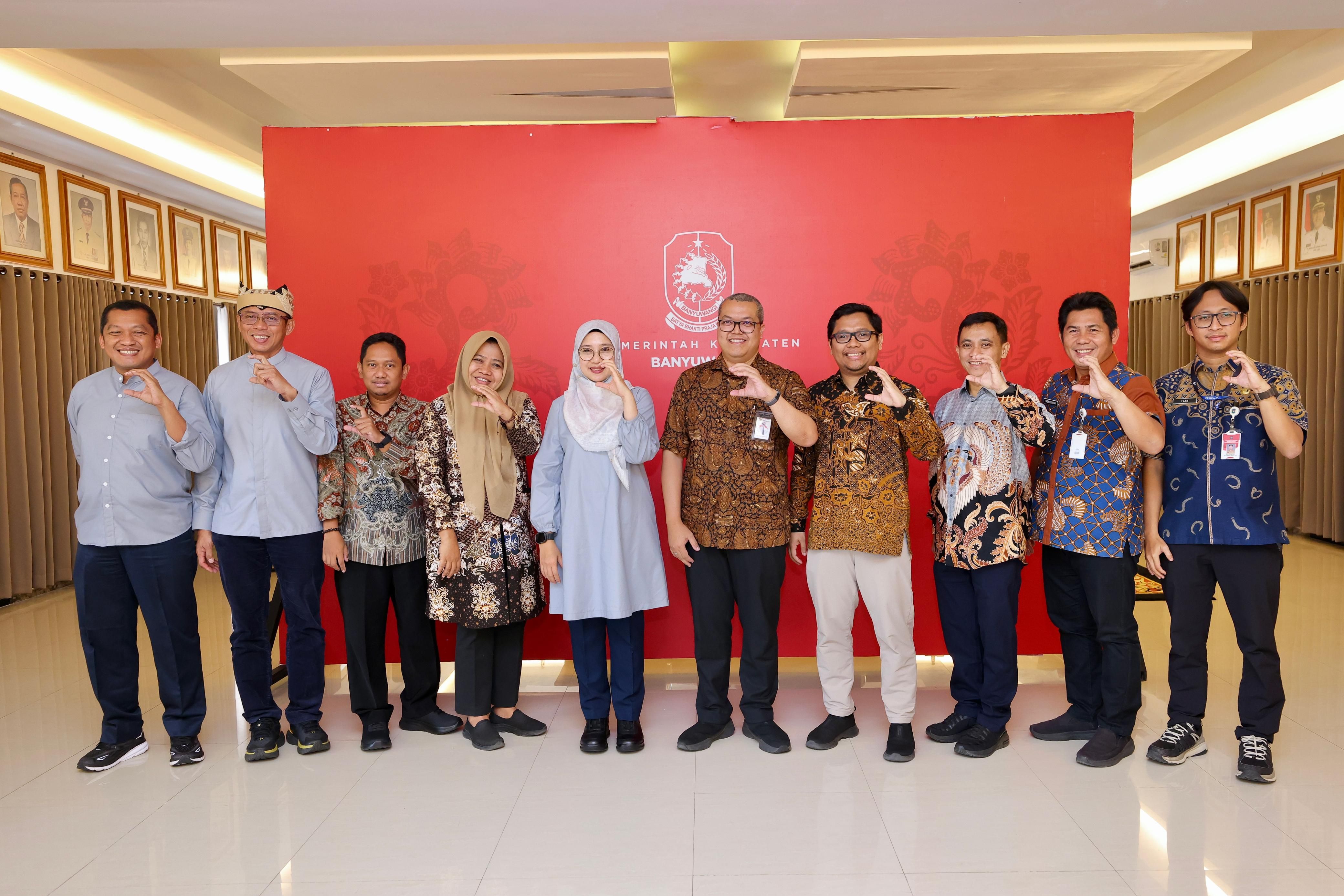
The inter-ministerial social protection programme (Perlinsos) digitalisation team will reform the country's social assistance system through a use case approach. Image: Ministry of Administrative and Bureaucratic Reform (PANRB)
When the public hears the term “digital government services”, what often comes to mind is just an app or a web portal interface.
In reality, the app or web portal is just the tip of the iceberg of a complex network known which only a few undersand. The network comprises things like data governance, business process integration, regulatory frameworks, funding structures, inter-agency coordination, and extensive change management, among others.
Recognising this reality—and learning from past evaluations of digitalisation programmes, the Indonesian government is now sharpening its digital government strategy by focusing on priority use cases.
This is meant to operationalise existing policies and comprehensive digital government standards more effectively.
“A use case is like a spotlight. Once there’s one concrete digital service under the spotlight, the entire complexity beneath the surface is pushed [up and needs] to be addressed,” says Special Advisor on Digital Transformation to the Minister for Administrative and Bureaucratic Reform (PANRB), Pandu Putra.
Speaking to GovInsider, Putra shares how the Perlinsos digitalisation pilot is being implemented through a sandbox approach—allowing the government to safely evaluate systems like data interoperability between ministries, identity verification mechanisms, and operational rollout in the field before scaling up to a national level.
Perlinsos as a priority use case
According to Putra, the decision to prioritise Perlinsos as a use case aligns with the National Medium-Term Development Plan (RPJMN) 2025–2029, which places poverty alleviation at the top of the agenda, with social protection reform as one of its key pillars.
It also responds to the urgent need to improve the management of social assistance programmes, which have struggled with data accuracy and targeting issues. The programme will adopt principles of Digital Public Infrastructure (DPI)—a concept strongly advocated by PANRB and other relevant ministries.
The pilot will initially focus on the Family Hope Programme (PKH) cluster, by strengthening the current targeting system.
This involves implementing a layered and dynamic verification mechanism based on the National Socio-Economic Single Data (DTSEN) as a baseline, complemented by near real-time cross-checking against datasets from multiple ministries.
Managed by Indonesian Statistics Bureau (BPS), DTSEN compiles various indicators—such as individual and family ID, employment status, asset ownership, and even sanitation and water access—to generate a composite score that defines a household’s welfare decile.
President Prabowo has designated DTSEN as the main reference for economic programmes, particularly those related to poverty alleviation.
Meanwhile, data interoperability between ministries will be enabled through the Government Service Exchange System (SPLP), developed by the Ministry of Communication and Digital Affairs (Komdigi).
“One of the things we’re testing is the verification process for citizens who apply to become PKH beneficiaries independently. With data interoperability, the government can have a strong and transparent basis for adding or removing someone from the assistance list,” Putra explains.
Although automation will be central to the pilot, Putra emphasises that manual field verification will remain available for special cases such as incomplete or unverifiable data.
On the citizen side, individuals will be able to apply and check their status through a dedicated portal built for this pilot. To access the portal, they will be verified through the Digital Population Identity (IKD) system to ensure authenticity.
“Those without smartphones can still be verified through appointed field agents or facilitators,” he adds.
To ensure privacy and legality, the programme will comply with the Personal Data Protection Law, including obtaining citizens’ consent for data processing.
To subscribe to the GovInsider bulletin, click here.
Testing the model
The Perlinsos pilot will be launched in Banyuwangi Regency, East Java, chosen for its strong readiness in terms of regulations, capacity, and a mature digital governance index.
“We selected Banyuwangi because it’s among the most prepared regions to implement this, both in regulatory readiness and digital capacity,” Putra says.
If successful, the government plans to expand the pilot in phases, first to the provincial level, then nationwide.
“This approach allows for continuous learning and improvement, with gradual scaling and managed risks,” he adds.
The results of the pilot will also inform the digital transformation blueprint for other use cases, not just other components of Perlinsos such as the Non-Cash Food Assistance Programme (BPNT) and other subsidies, but also broader sectors such as business licencing, public procurement, and civil service reform.
Putra stresses that the pilot will not interfere with ongoing social assistance programmes, which will continue using the existing processes. Additionally, this pilot does not yet cover the disbursement stage, as the current focus is on data verification and system integration.
Creating conditions for success
As a priority use case, the Perlinsos digitalisation programme involves multiple ministries: the Ministry of Social Affairs, Komdigi, PANRB, the National Economic Council, the Ministry of Home Affairs, Bappenas, and BPS—working under the coordination of Luhut Panjaitan, who serves as both Special Presidential Advisor for Digitalisation and Chair of the National Economic Council.
Moving forward, President Prabowo has instructed the formation of a special committee for digital government transformation, which will drive the implementation of various priority use cases. PANRB is expected to serve as the secretariat of this committee, alongside Komdigi, says Putra.
Putra describes PANRB’s role as creating the “enabling conditions for success”, by ensuring regulations, institutional support, infrastructure readiness, and close inter-agency coordination so that these digital use cases can be executed smoothly by the relevant technical ministries.
To support the Perlinsos pilot, PANRB continues to act as a facilitator, offering strategic support including stakeholder advocacy, policy alignment, facilitation of workshops, coordination support through PMO functions, and connecting ministries with development partners.
All materials and insights will then be shared across the ministries involved to enable them to implement the programme effectively, Putra concludes.