
Indonesia needs homegrown algorithms, data and talent for AI in cyber defence
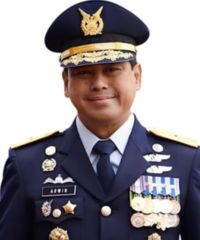
As artificial intelligence (AI) takes on more of the work in cyber defence, humans must remain the final safeguard, says Air Commander Arwin Datumaya Wahyudi Sumari.
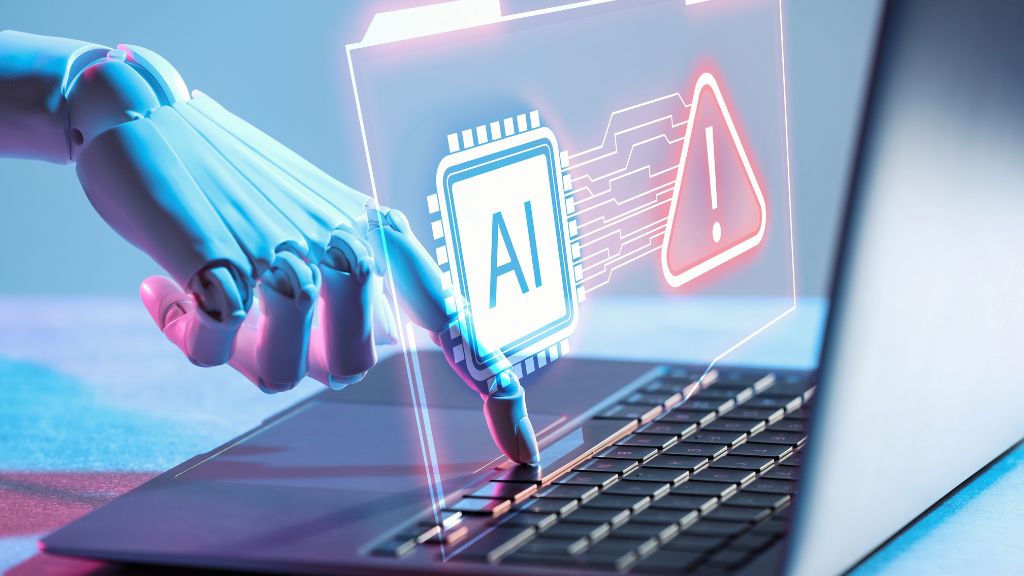
Artificial intelligence (AI) in cyber defence systems is used for data analysis and action recommendations, while humans retain control over strategic decisions. Image: Canva
Artificial intelligence (AI) can help Indonesia to strengthen its cyber defence, from detecting network anomalies and predicting attacks to processing large volumes of intelligence data.
Speaking to GovInsider, Air Commander, Special Staff to the Chief of Staff of the Republic of Indonesia Air Force and the Cognitive Artificial Intelligence Research Group (CAIRG)'s Chairman, Arwin Datumaya Wahyudi Sumari, cautions that the technology can be used for good or evil, depending on who uses it.
According to Sumari, AI can help accelerate tasks that are too large for humans to handle manually.
This capability is becoming increasingly important in command, control, communications, computers, intelligence, surveillance and reconnaissance (C4ISR) systems, which receive data in various forms.
“Data can come in the form of text, writing, audio, images and video. Can humans process that much data quickly? They cannot,” Sumari shares.
He notes that only machines have the capacity to process such volumes of data to generate insights that can inform decision-making.
For Indonesia, the challenge is not simply integrating AI into cyber defence systems but ensuring that the technology is used appropriately under human oversight and developed to meet national needs.
AI for predicting cyberattacks
He shares that the CAIRG research team has developed AI applications to predict cyberattacks, including estimating when an attack may occur and what type of attack it could be.
CAIRG is a cross-university research group that focuses on cognitive AI, an advanced type of AI that mimics human thought processes and learning abilities.
Its research covers areas including cybersecurity and defence technology.
These include the Cognitive Cyber Intelligence and Countermeasures System (C2ICS), designed for cyber intelligence and countermeasures, and the Airforce Multi-Intelligence System (AM-IS), which brings together multiple intelligence capabilities.
"The system will work after receiving instructions from humans. It then monitors network activity, analyses data flows, detects anomalies, and develops response recommendations," he says.
This means AI is not merely an early-warning system but can also develop a range of possible actions.
Humans as the final safeguard
However, the ability to process information does not mean AI should take over strategic decision-making.
In defence, even a minor error can trigger wider consequences.
Sumari says that systems should be designed with a human-in-the-loop approach: "Humans are placed at the final gate as a safeguard for the decisions that will be made.”
At the same time, humans are the weakest link in cybersecurity. Cyber threats do not always exploit technological vulnerabilities, as users themselves can become an entry point through social engineering.
This human-centred approach is a key element highlighted in the draft Presidential Regulation on the National AI Roadmap and the draft Presidential Regulation on AI Ethics, as well as the 2020-2045 National AI Strategy.
Sumari was involved in drafting the latter, particularly its defence and security part.
Building Indonesia’s own AI capabilities
Another challenge is ensuring that Indonesia is not merely a user of AI technology for defence, but also has the ability to understand and develop it.
“Developing AI for defence requires an ecosystem that includes computing infrastructure, data governance and access, as well as talent capable of developing and testing the systems,” he notes.
Developing such technology presents more fundamental challenges, ranging from algorithms to infrastructure and data.
For Sumari, the ability to develop Indonesia’s own algorithms is a foundation that needs to be strengthened to reduce dependence on foreign technology.
This must be supported by computing capabilities and data management, he adds.
Defence data also cannot always be treated like public data because it has varying levels of classification and sensitivity.
These points suggest that the questions facing Indonesia's defence establishment are as much about governance as about technology: who controls the algorithms, where sensitive data is stored and processed, and how much authority machines are given.
Sumari's emphasis on national ownership, data classification and human oversight speaks to all three.
The final component is talent. Indonesia needs people with the capacity to understand how AI technology works, manage its risks and determine how it should be used in a national defence context, he concludes.