Indonesia turns data governance groundwork into law to unlock data sharing across government
The Satu Data Law expands the scope of information that can be shared across government agencies, clarifies institutional responsibilities, and strengthens data quality oversight to support policymaking and public service delivery.

Indonesia is stepping up efforts to connect data across ministries, government agencies and local authorities through the One Data Indonesia Law, paving the way for better-targeted policies and public services. Image: Canva
Indonesia has spent the last few years building the foundations for better data governance. On October 6, it gave those efforts the force of law.
The Satu Data Indonesia Law (One Data Law) is meant to tackle fragmented data management, which has long made it difficult for government agencies to exchange data.
The law goes beyond connecting systems. It also sets out common standards, clarifies institutional responsibilities, and strengthens oversight to ensure data can better inform government decisions.
Data on population, education, economic conditions, and social assistance recipients sits across ministries, government agencies, and local governments, often in systems that do not talk to each other.
This can lead to decisions that rest on incomplete or outdated information that does not reflect people's circumstances.
“The critical problem isn’t that the data doesn’t exist, but that there is no one connecting it or with the authority to do so,” says Dini Maghfirra, Director of Development Data and Digital Government and the Executive Director of the Satu Data Indonesia Secretariat, Ministry of National Development Planning (Bappenas).
Maghfirra is one of the members of the team responsible for drafting the new law.
Expanding the scope and use of data
According to Maghfirra, the government's data needs have outgrown macro-level statistics such as rice production or agricultural land areas.
That is part of why the law goes further than previous efforts.
Social assistance programme, for example, depends on individual-level details, including names and addresses. Education services need records that follow students as they progress from one level to the next.
The new data law therefore expands the scope of information that can be used across government agencies.

In addition to statistical, geospatial, and financial data, the legislation covers administrative data and information generated by institutions outside the government.
“Data from state-owned enterprises, public insurance agencies, and other non-government institutions can also be used to support development planning and public service delivery,” she says.
The legislation also introduces National Basic Data (DDN) as a reference for development planning, fiscal policy and budgeting, as well as social assistance distribution.
This ensures that agencies use consistent references when formulating cross-sector policies.
However, she emphasises that data sharing does not mean all information must be collected in one place.
Through interoperability, information can be accessed across different systems without transferring control of the data away from its original producer.
“Interoperability simply connects these datasets without transferring authority over them from their original producers. The data stays where it is, but we can still use it,” she notes.
For this mechanism to work, agencies must adopt consistent standards covering definitions, criteria, metadata, reference codes, and data formats.
This allows information from different local governments to be compared using the same measurement criteria.
Alongside standardisation, regular data updates are also essential.
The new law therefore looks to the most local levels of government.
Villages and urban wards are tasked with identifying changes in people's circumstances that have yet to be captured, such as families who meet the eligibility criteria for social assistance but are missing from government databases, she adds.
Clarifying responsibilities and oversight
The new law also clarifies the roles and responsibilities of the different institutions involved in data management, including data producers, data custodians, data development agencies, and the Satu Data administrator, Maghfirra explains.
Data development agencies provide guidance to institutions based on the types of data they oversee.
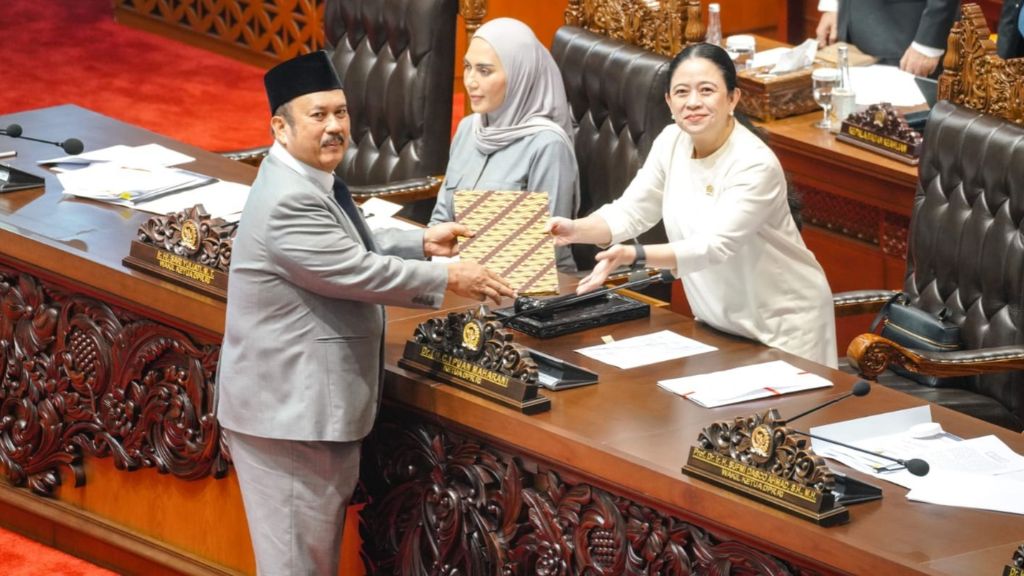
Bappenas, for instance, is responsible for guiding the management of administrative and registration data, while opulation data falls under the remit of the Directorate General of Population and Civil Registration (Dukcapil) at the Ministry of Home Affairs.
This division of responsibilities reflects the different requirements of each data category.
Population data requires consistent individual identities, while regional financial data needs standardised recording practices to ensure information from different regions can be compared.
Meanwhile, the Satu Data administrator has been granted greater authority to coordinate implementation and oversee compliance with data governance obligations.
“The Satu Data administrator has the authority to assess data quality and follow up with the data producers,” says Maghfirra.
Agencies that fail to meet standards or fulfil their data update obligations are required to make improvements.
The Satu Data Law also provides administrative sanctions, ranging from formal warnings to budget cuts.
However, the institutional structure and operational mechanisms of the Satu Data administrator still require further implementing regulations, which the law has set a deadline of no more than one year to establish.
During this transition period, Bappenas's Satu Data Indonesia Secretariat will temporarily carry out these responsibilities.
Turning data into better public services
Integrating government data is becoming an important part of Indonesia’s efforts to support national development programmes.
According to Maghfirra, Bappenas is developing the Integrated National Talent Management Database Information System (SIMT BDT-MTN) to connect talent records held by different ministries and government institutions.
By connecting information across institutions, the government aims to build a more comprehensive picture of talent capabilities and potential across different sectors.
This will support more targeted talent mapping, development, and management at both institutional and national levels.
“This will allow each agency to use available information to support its own talent management programme while strengthening talent management at the national level,” she says.
The same principle applies to social assistance.
Integrating population, education, and socio-economic data can help the government better identify people's needs and improve the accuracy of programme welfare targeting.
However, the wider use of individual data also makes personal data protection increasingly important.
"Information such as the names, addresses, and socio-economic circumstances of social assistance recipients will be managed in accordance with the relevant authorities and provisions of Indonesia's Personal Data Protection Law," she concludes.